


As an Amazon Associate I earn from qualifying purchases. If you buy through links in this article, we may earn a commission at no extra cost to you.
These are the 10 best DJI drones under 250 grams, every DJI model that stays beneath the weight line regulators care about most. Under 250 g, drones often skip registration for recreational flying and fall into the lightest, simplest category in many countries. We checked each pick against DJI’s own spec sheets and ranked all 10 on camera quality, obstacle sensing and flight time, so you can see exactly what the featherweight class can do.
Short on time?
Start with these three picks
One is the flagship of the class, one is its value sweet spot, and one proves a sub-250 g drone can now out-fly heavier rivals.

DJI Mini 5 Pro
The flagship of the featherweights: a 1-inch sensor, 4K/120 video and omnidirectional sensing at 249.9 g on the standard battery. The Plus battery flies longer but breaks the 250 g line, so light-class buyers should stick with the standard pack.
View on Amazon Read the full review ↓
DJI Mini 4 Pro
Nearly the full flagship recipe under 249 g: omnidirectional sensing, ActiveTrack 360, 4K/60 HDR and a 20 km O4 link. Only the smaller sensor separates it from the Mini 5 Pro, which makes it the value pick of the class.
View on Amazon Read the full review ↓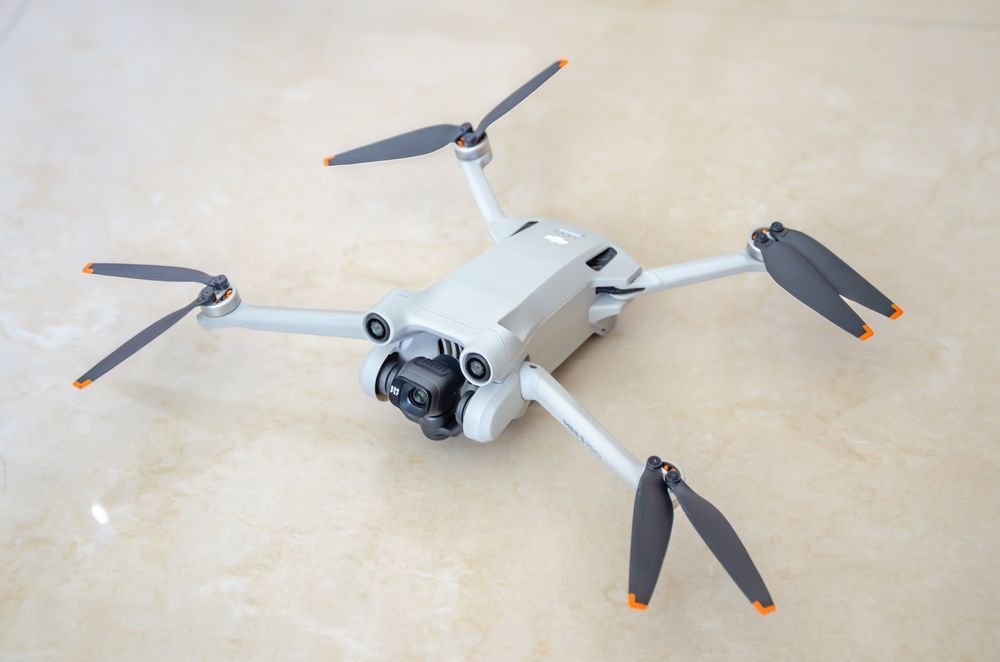
DJI Mini 3 Pro
The model that started the pro featherweight era: tri-directional sensing, 4K/60 and 48MP stills at 249 g, now discounted. Its transmission is a generation old, but the all-round package still earns its place.
View on Amazon Read the full review ↓The shortlist
Compare all 10 at a glance
In this class, weight is the entry ticket; the real contests are camera size, obstacle sensing and minutes per battery.
| Product / award | Best fit | Key decision point | Check current offer |
|---|---|---|---|
| 01. DJI Mini 5 ProBest overall | Best footage with registration-simple weight | 1-inch sensor, 4K/120; Plus battery breaks 250 g | View on Amazon |
| 02. DJI Mini 4 ProBest value | Most buyers in this weight class | Full sensing, 4K/60 HDR; smaller sensor than Mini 5 Pro | View on Amazon |
| 03. DJI Mini 3 ProBest proven all-rounder | All-round flying with sensing, for less | Tri-directional sensing, 4K/60; older transmission | View on Amazon |
 04. DJI Mini 3Best flight time | Long flights and stills on a budget | 38 minutes and a big sensor; no obstacle sensing | View on Amazon |
 05. DJI FlipBest for vlogging | Solo creators and vloggers | Palm launch, tracking; forward-only braking | View on Amazon |
 06. DJI Neo 2Best ultralight | Ultralight packing with a safety net | 151 g with full sensing; 19 minutes per battery | View on Amazon |
 07. DJI Mini 4KBest budget pick | First sub-250 g drone on a budget | 3-axis gimbal, 31 minutes; no tracking or sensing | View on Amazon |
 08. DJI NeoBest palm launch | Casual clips, families, tiny bags | Palm launch at 135 g; light wind only | View on Amazon |
 09. DJI Mini 2 SEBest simple and light | Minimum fuss, phone-screen footage | 2.7K camera; 31 minutes, very easy to fly | View on Amazon |
 10. DJI Mini 2Best 4K legacy pick | Discount hunters who fly deliberately | 4K/30 and strong wind rating; discontinued line | View on Amazon |
Look closer
Our 10 picks, explained
These picks come from desk research, not hands-on testing: we verified every weight against DJI’s official specification pages, then cross-checked capabilities against owner feedback and published reviews of the shortlisted models.
DJI Mini 5 Pro
The Mini 5 Pro rewrites what this weight class can do. The 1-inch, 50MP sensor captures stills and 4K/120 video with low-light headroom no other sub-250 g drone approaches, and the rotating gimbal shoots true vertical video for social formats. Omnidirectional obstacle sensing backed by a forward LiDAR watches for the wires and branches that end small-drone flights, while the O4+ link is rated to 20 km. At 249.9 g with the standard battery it keeps the registration-simple status that defines this list, and 42 GB of internal storage removes the forgotten-card problem. The discipline it asks is simple: resist the Plus battery if the weight class is why you bought it.
- Takeoff weight
- 249.9 g with standard battery
- Flight time
- 36 min (52 min with Plus battery)
- Camera
- 1-inch CMOS, 50MP, 4K/120
Reasons to choose it
- Only 1-inch sensor camera in the class
- Omnidirectional sensing plus front LiDAR
- True vertical shooting, 42 GB internal storage
Trade-offs to know
- Plus battery crosses 250 g into registration territory
- Flagship price in a mini frame
Choose this if: you want the best possible footage while keeping takeoff weight under the line.
Consider another option if: the flagship price is hard to justify, the Mini 4 Pro keeps most of the ability for less.
DJI Mini 4 Pro
If the Mini 5 Pro is the class ceiling, the Mini 4 Pro is the class bargain. It keeps the features pilots actually use daily: omnidirectional obstacle sensing, ActiveTrack 360 for follow shots, true vertical video, 4K/60 HDR and 10-bit colour, on a frame that stays under 249 g with the standard battery. The 34 minute rated flight time stretches to 45 with the Plus battery, with the usual weight warning. What you give up against the flagship is sensor size, and with it some dusk performance and the 4K/120 mode. For daylight and travel work, most owners will never feel the gap, which is why this is the one we recommend first to friends.
- Takeoff weight
- Under 249 g with standard battery
- Flight time
- 34 min (45 min with Plus battery)
- Camera
- 1/1.3-inch CMOS, 48MP, 4K/60 HDR
Reasons to choose it
- Omnidirectional obstacle sensing, rare at this weight
- ActiveTrack 360 and true vertical video
- 20 km O4 link, flagship grade
Trade-offs to know
- Sensor trails the Mini 5 Pro at dusk
- Plus battery also crosses 250 g
Choose this if: you want flagship safety and tracking without the flagship bill.
Consider another option if: low-light footage is your priority, step up to the Mini 5 Pro and its 1-inch sensor.
DJI Mini 3 Pro
The Mini 3 Pro was the first drone to prove that 249 g did not have to mean basic. Its obstacle sensing watches forward, backward and down, its 1/1.3-inch sensor shoots 4K/60 video and 48MP stills, and the gimbal rotates for true vertical clips. Rated flight time is 34 minutes, or 47 on the Plus battery that crosses the weight line. Against the Mini 4 Pro it loses omnidirectional sensing, some range and the newest transmission, and stock is ageing, so buy new from a reputable seller. As an all-rounder that balances camera, safety and price, it has been recommended for years for good reason.
- Takeoff weight
- 249 g with standard battery
- Flight time
- 34 min rated (47 min with Plus battery)
- Camera
- 1/1.3-inch CMOS, 48MP, 4K/60
Reasons to choose it
- Tri-directional obstacle sensing
- 4K/60 video, 48MP stills, vertical shooting
- Now sells at mid-range prices
Trade-offs to know
- Sensing misses the sides and top
- Older model, check stock and warranty
Choose this if: you want a balanced, sensing-equipped Mini and value a proven design.
Consider another option if: you want sensing in every direction, the Mini 4 Pro is the upgrade.
DJI Mini 3
Flight time is the Mini 3’s headline and it is a genuine one: 38 rated minutes on the standard battery, the best in this class, stretching to a claimed 51 minutes on the Plus battery for pilots who do not mind crossing the weight line. The camera matches the Mini 3 Pro’s 1/1.3-inch sensor, so stills are detailed and 4K HDR video holds up in mixed light, and the rotating gimbal shoots true vertical. What DJI removed to hit the price is assistance: no obstacle sensing, no subject tracking and HDR capped at 4K/30. Flown deliberately over open ground, it is the photographer’s featherweight; flown casually in clutter, look elsewhere on this list.
- Takeoff weight
- 249 g with standard battery
- Flight time
- 38 min rated (51 min with Plus battery)
- Camera
- 1/1.3-inch CMOS, 48MP, 4K HDR
Reasons to choose it
- Longest flight time in the class, 38 minutes
- Large 1/1.3-inch sensor for the price
- True vertical shooting for social formats
Trade-offs to know
- No obstacle sensing at all
- HDR video limited to 4K/30
Choose this if: you shoot landscapes and stills in open spaces and value minutes in the air.
Consider another option if: you fly near obstacles while learning, the Mini 3 Pro adds sensing for a step up.
DJI Flip
Most sub-250 g drones assume a pilot behind a controller; the Flip assumes the subject and the pilot are the same person. It takes off from your palm, follows with subject tracking and lands back in your hand, all behind full propeller guards that make close, casual flying far less stressful. The camera is no toy: a 1/1.3-inch sensor with 4K/60 HDR that matches the Mini 4 Pro generation, plus a 31 minute battery when you do fly it conventionally with a controller. Drawbacks are the bulky fold compared with a Mini and obstacle braking that only guards the front, so fast reverse moves demand care.
- Takeoff weight
- Under 249 g
- Flight time
- 31 min
- Camera
- 1/1.3-inch CMOS, 48MP, 4K/60 HDR
Reasons to choose it
- Palm launch and tracking for solo filming
- Full propeller guards as standard
- 1/1.3-inch sensor with 4K/60 HDR
Trade-offs to know
- Bulkier fold than the Mini line
- Obstacle braking is forward only
Choose this if: your videos star you, and you shoot alone more often than not.
Consider another option if: you shoot scenery rather than yourself, the Mini 3 packs smaller and flies longer.
DJI Neo 2
The Neo 2 sits 100 g below the line, and that gap changes how a drone gets used. It disappears into a jacket pocket, launches from an open palm and lands back on it, and its full propeller guards make it the least worrying drone here around families and pets. The surprise is the safety tech: omnidirectional obstacle sensing, previously a flagship feature, now guards a 151 g selfie drone. Video steps up to 4K/60 from a 1/2-inch sensor, and tracking modes follow walks and rides without a controller. Endurance is the tax: about 19 minutes a battery, and breezes push it around more than a Mini.
- Takeoff weight
- 151 g
- Flight time
- About 19 min per battery
- Camera
- 1/2-inch CMOS, 12MP, 4K/60
Reasons to choose it
- Omnidirectional sensing at just 151 g
- Palm launch and landing, full guards
- 4K/60 video and subject tracking
Trade-offs to know
- About 19 minutes per battery
- Light frame is pushed around by wind
Choose this if: you want the lightest possible DJI that still watches where it is going.
Consider another option if: you need longer flights and calmer wind manners, the Mini 4 Pro is the step up.
DJI Mini 4K
Plenty of drones promise 4K under 250 g; the Mini 4K delivers it the DJI way, on a mechanical 3-axis gimbal with GPS holding the hover. That combination is why it anchors the budget end of this list: footage is stable, the 10 km link is dependable, and the frame folds to almost nothing at 246 g. The omissions are the assistance layer: no obstacle sensing, no ActiveTrack, no HDR video, and a 1/2.3-inch sensor that prefers daylight. Owners who learn on it tend to keep it as a second drone long after upgrading, which says plenty about the fundamentals. For a first featherweight, it is the safe, sensible spend.
- Takeoff weight
- 246 g
- Flight time
- 31 min
- Camera
- 1/2.3-inch CMOS, 12MP, 4K/30
Reasons to choose it
- True 4K on a 3-axis gimbal
- 31 minute rated flight time
- Cheapest current DJI in the class
Trade-offs to know
- No obstacle sensing or subject tracking
- Smaller sensor, daylight-first footage
Choose this if: you want a proper DJI camera drone and the smallest possible bill.
Consider another option if: you want the drone to follow you, the DJI Flip adds tracking and palm launch.
DJI Neo
The Neo’s trick is removing every excuse not to fly. No unfolding, no pairing ritual: choose a mode, offer your palm, and it is airborne, framing you with subject tracking while its guards keep the world at a safe distance. The 1/2-inch sensor records 4K/30 that looks great on phones, and at 135 g it is closer in spirit to a flying action camera than a traditional drone. The limits follow from the size: roughly 18 minutes per battery, a Level 4 wind rating that grounds it on gusty days, and no obstacle sensing. As a second drone or a family clip-maker, those limits barely register; as your only drone for big landscapes, they will.
- Takeoff weight
- 135 g
- Flight time
- About 18 min per battery
- Camera
- 1/2-inch CMOS, 12MP, 4K/30
Reasons to choose it
- Lightest DJI at 135 g
- Palm launch, controller-free tracking
- Full propeller guards, very approachable
Trade-offs to know
- About 18 minutes per battery
- Level 4 wind rating, calm days only
Choose this if: you want instant, casual aerial clips with zero setup and minimal weight.
Consider another option if: you want sensing and 4K/60 in the same palm format, the Neo 2 is the upgrade.
DJI Mini 2 SE
Not every buyer wants a spec sheet; some want a drone that just works, and the Mini 2 SE is that drone in this weight class. Under 249 g, it folds into a coat pocket, hovers with GPS precision, returns home on command and shoots automated QuickShot moves that make beginners look practiced. The 2.7K/30 camera is the visible compromise, clean on phones and tablets, soft on a large television, and there is no sensing or tracking to assist you. Battery life is a strong 31 minutes and the 10 km link is generous for the class. As a gentle, inexpensive way into sub-250 g flying, it remains easy to recommend.
- Takeoff weight
- Under 249 g
- Flight time
- 31 min rated
- Camera
- 1/2.3-inch CMOS, 12MP, 2.7K/30
Reasons to choose it
- Very simple to learn and fly
- 31 minute rated flight time
- QuickShots for easy polished clips
Trade-offs to know
- Video tops out at 2.7K, no 4K
- No obstacle sensing or tracking
Choose this if: you want light, simple and dependable, and watch footage on a phone.
Consider another option if: you want 4K headroom for bigger screens, the Mini 4K is the small step up.
DJI Mini 2
The Mini 2 taught a generation of pilots that 249 g could mean serious. Its numbers still read well: 4K/30 on a 3-axis gimbal, 31 minutes per battery, OcuSync 2.0 transmission to 10 km and Level 5 wind resistance, a rating several newer featherweights do not match. That wind figure matters in this class, where light frames get pushed around. What it lacks is everything DJI has added since: no obstacle sensing, no tracking, no HDR, and a daylight-first 1/2.3-inch sensor. It is a discontinued line, so remaining stock, battery freshness and warranty deserve a careful check. At the right discount, it is the thinking pilot’s bargain.
- Takeoff weight
- 249 g
- Flight time
- 31 min
- Camera
- 1/2.3-inch CMOS, 12MP, 4K/30
Reasons to choose it
- 4K/30 video with a 3-axis gimbal
- Level 5 wind resistance, best of the older models
- 10 km OcuSync 2.0 link
Trade-offs to know
- Discontinued, remaining stock only
- No tracking or obstacle sensing
Choose this if: you found one new at a discount and fly in open, breezy places.
Consider another option if: you want a current, supported model, the Mini 4K is its successor in this class.
Buy with confidence
How to choose a DJI drone under 250 grams
Four checks that matter when every gram counts and the camera still has to deliver.
01. Understand what 250 g actually buys you
The 250 g line is a regulatory shortcut, not a quality mark. In many countries, drones under it skip registration for recreational use and sit in the most permissive category, though operator rules and camera-drone exceptions still apply in places. It also shapes the hardware: every drone here is small, quiet and easy to carry, which is why travellers love the class.
02. Watch the battery, not just the drone
DJI quotes sub-250 g weights with the standard battery. The optional Plus batteries for the Mini line add real flight time but push takeoff weight past 250 g. If your reason for buying light is registration simplicity, the Plus battery quietly removes it. Check the exact figure for the configuration you will actually fly.
03. Match the sensor to your light
This class spans two sensor generations. The 1/2.3-inch cameras in the Mini 4K and Mini 2 are daylight tools. The 1/1.3-inch cameras in the Mini 3, Mini 3 Pro, Mini 4 Pro and Flip handle dusk far better, and the Mini 5 Pro’s 1-inch sensor is in another league again. Golden-hour shooters should buy the biggest sensor they can carry.
04. Sensing is the real generational gap
The newest light drones watch for obstacles in every direction; older ones watch in three directions or none. If you fly near trees, boats or buildings while learning, omnidirectional sensing on the Mini 5 Pro, Mini 4 Pro and Neo 2 is worth more than raw camera numbers. Open-country flyers can safely save with an unsensed model.
Behind the recommendations
How we selected these products
This guide is built on desk research, not hands-on testing. Every weight in this list was taken from DJI’s official specification pages and refers to takeoff weight with the standard battery, the configuration DJI certifies for the sub-250 g class. We then compared cameras, sensing systems and flight times across the class and cross-checked the shortlist against owner feedback and published reviews in October 2026.
- Weight verification: takeoff weights checked line by line against DJI specification pages; Plus battery weights flagged wherever they cross 250 g.
- Camera and flight performance: sensor size, video modes, flight time and transmission compared across the whole sub-250 g DJI range.
- Limitations: we did not weigh or fly these drones ourselves, and registration rules differ by country and change often, so confirm your local rules before relying on the 250 g advantage.
Common questions
Before you buy
Do drones under 250 grams need registration?
Often not for recreational flying, which is the main attraction of this class. Many countries exempt sub-250 g drones from aircraft registration, though some still require operator registration, and a few register all camera drones regardless of weight. Cities and parks can ban flights entirely. Treat the weight as a head start and check your aviation authority’s current rules.
Does the Plus battery really take a Mini over 250 grams?
Yes. DJI’s Plus batteries for the Mini 3, Mini 3 Pro, Mini 4 Pro and Mini 5 Pro raise takeoff weight above 250 g, which can move the drone into a heavier regulatory category. The drones fly perfectly well on them, and the extra minutes are tempting, but if you bought light to stay registration-simple, fly the standard battery and keep the Plus for places where the extra weight changes nothing.
Which sub-250 g DJI has the best camera?
The Mini 5 Pro, by a clear margin: its 1-inch, 50MP sensor and 4K/120 video sit in a class the others cannot reach, and it still weighs 249.9 g on the standard battery. The 1/1.3-inch models, the Mini 4 Pro, Mini 3 Pro, Flip and Mini 3, form the second tier, all noticeably stronger at dusk than the 1/2.3-inch budget models.
Is a 135 g drone like the Neo as capable as a 249 g Mini?
For short, close flights, surprisingly close: the Neo shoots stabilised 4K and tracks subjects from a palm launch. The Minis pull ahead on flight time, wind resistance, range and camera control, and they feel calmer in real weather. The Neo trades those for size, price and guards. Pick based on where you fly, not just the spec sheet.
Choose your featherweight
Start with the DJI Mini 5 Pro if you want the best camera this class has ever carried. Choose the Mini 4 Pro for flagship habits at a friendlier price, and the Mini 3 if long flights matter most. Whichever you pick, fly the standard battery when the 250 g line is the point.
Sources and verification
Product specifications and claims in this guide were checked against the following sources, listed by name as a record of what was consulted.
- DJI Mini 5 Pro, Mini 4 Pro, Mini 3 Pro, Mini 3, Mini 4K, Mini 2 SE, Mini 2, Flip, Neo and Neo 2 official specifications (dji.com), including takeoff weights with standard batteries
- Manufacturer user manuals for each shortlisted drone (DJI)
- National aviation authority guidance on sub-250 g drone categories and registration
- Published reviews and owner feedback for the shortlisted models, cross-checked in October 2026