


As an Amazon Associate I earn from qualifying purchases. If you buy through links in this article, we may earn a commission at no extra cost to you.
These are the 10 best cinematography drones across every brand, ranked on sensor quality, color science, lens flexibility and how the aircraft behaves when a director is watching the monitor. DJI’s flagships set the pace, but Autel’s aperture control and geofencing freedom earn real places here, and one quiet French outlier still does things nothing else can. Whatever your production style and budget, one of these ten belongs on your call sheet.
Short on time?
Start with these three picks
One flagship that leads the field, one 6K Autel that argues back, and one ProRes specialist for color-critical sets.
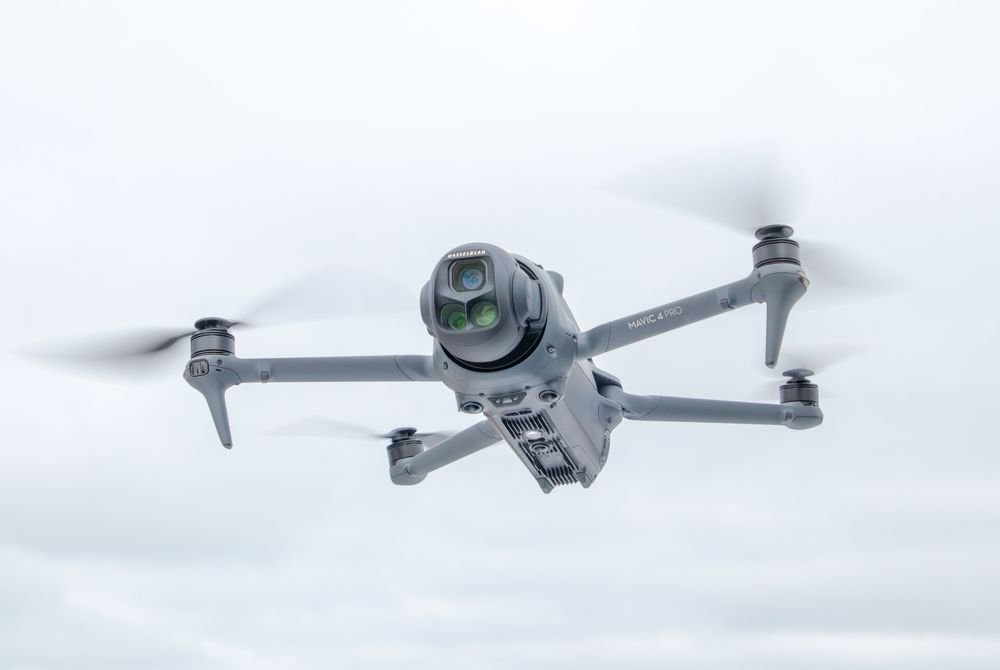
DJI Mavic 4 Pro
A 4/3 Hasselblad camera shooting 6K/60 HDR, two telephoto lenses and a fully rotating gimbal: the most complete cinema drone that folds. The trade-off is 1,063 g and flagship cost.
View on Amazon Read the full review ↓
Autel EVO II Pro
A 1-inch sensor shooting 6K video and 20MP stills through an adjustable f/2.8 to f/11 aperture, with 10-bit A-Log and no geofencing. The trade-off is a mature platform at 1,191 g with a smaller ecosystem behind it.
View on Amazon Read the full review ↓
DJI Mavic 3 Pro Cine
The Mavic 3 Pro’s triple-camera system recording Apple ProRes 422 HQ to a 1TB internal SSD, built for pipelines that grade hard. The trade-off is file size: ProRes consumes storage several times faster than H.265.
View on Amazon Read the full review ↓The shortlist
Compare all 10 at a glance
For cinematography, the sensor and the color pipeline matter first, lens choice second, and brand rules like geofencing more than most buyers expect.
| Product / award | Best fit | Key decision point | Check current offer |
|---|---|---|---|
| 01. DJI Mavic 4 ProBest overall | Commercial cinematography at the highest level | 6K/60 HDR, triple camera; heavy, premium priced | View on Amazon |
| 02. Autel EVO II ProBest 6K alternative | Resolution-led productions outside the DJI system | 6K, adjustable aperture, no geofencing; 1,191 g | View on Amazon |
| 03. DJI Mavic 3 Pro CineBest ProRes workflow | Color-critical commercial productions | ProRes 422 HQ, 1TB SSD; storage-hungry files | View on Amazon |
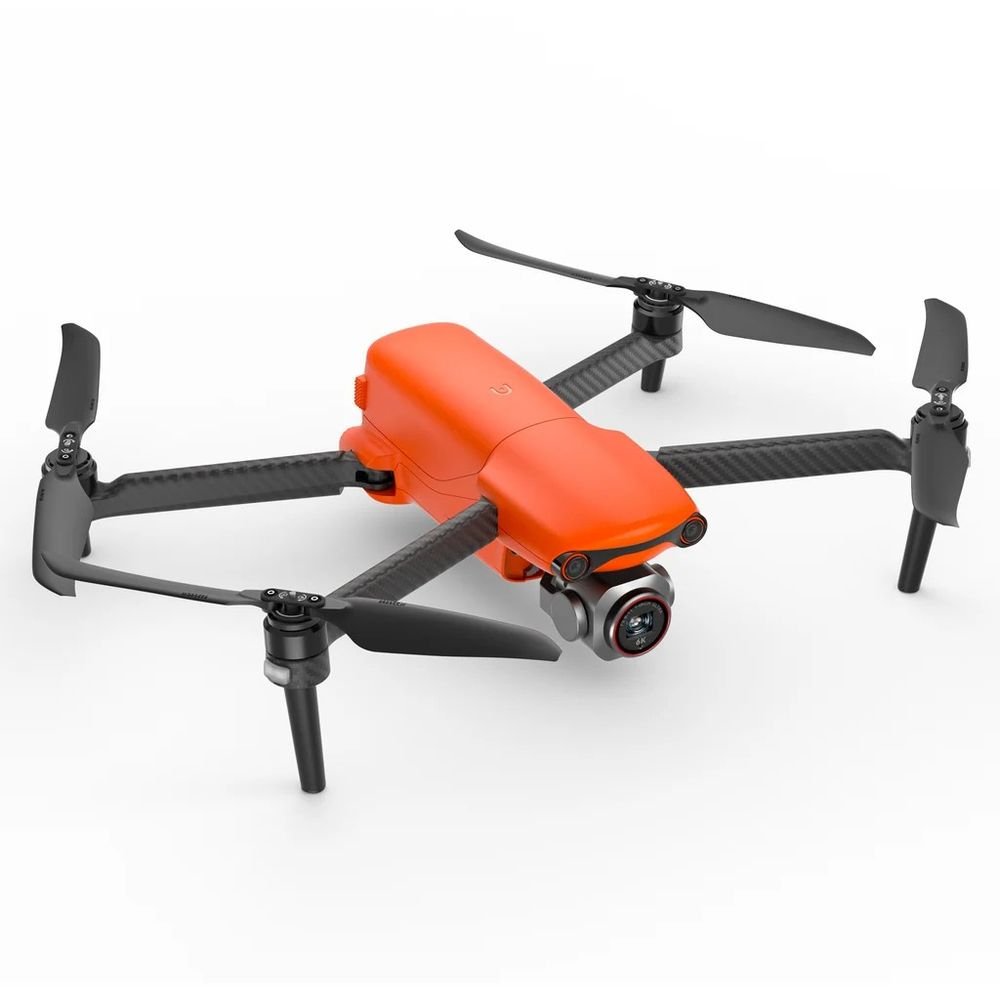 04. Autel EVO Lite+Best adjustable aperture | Exposure-led stills and video work | 1-inch, f/2.8 to f/11; three-direction sensing | View on Amazon |
 05. DJI Air 3SBest travel cinema | Cinematographers who travel with their kit | 1-inch wide plus 70mm tele; 724 g | View on Amazon |
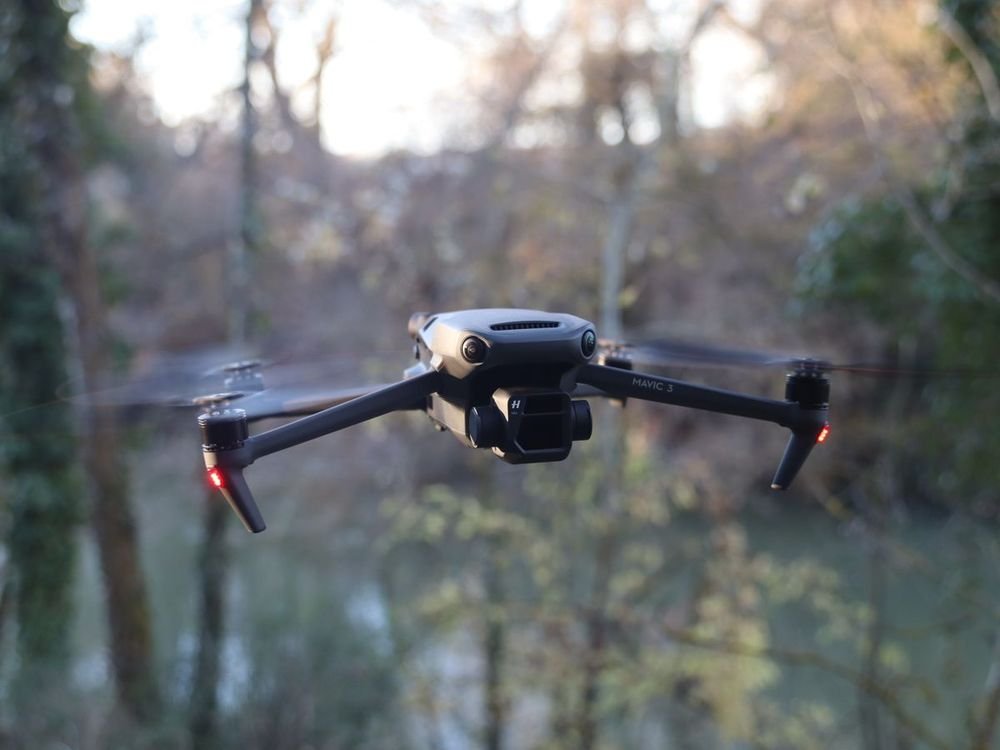 06. DJI Mavic 3Best Hasselblad value | Single-lens cinema on a mature budget | 4/3 Hasselblad, 5.1K/50; weak tele camera | View on Amazon |
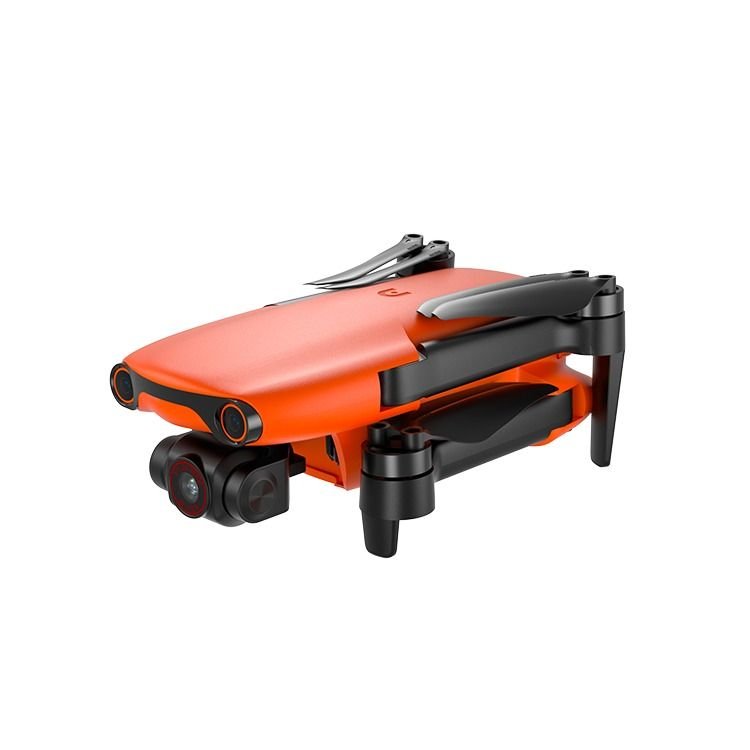 07. Autel EVO Nano+Best sub-250 g alternative | Low-light stills and light film support | RYYB sensor, 249 g; video capped at 4K/30 | View on Amazon |
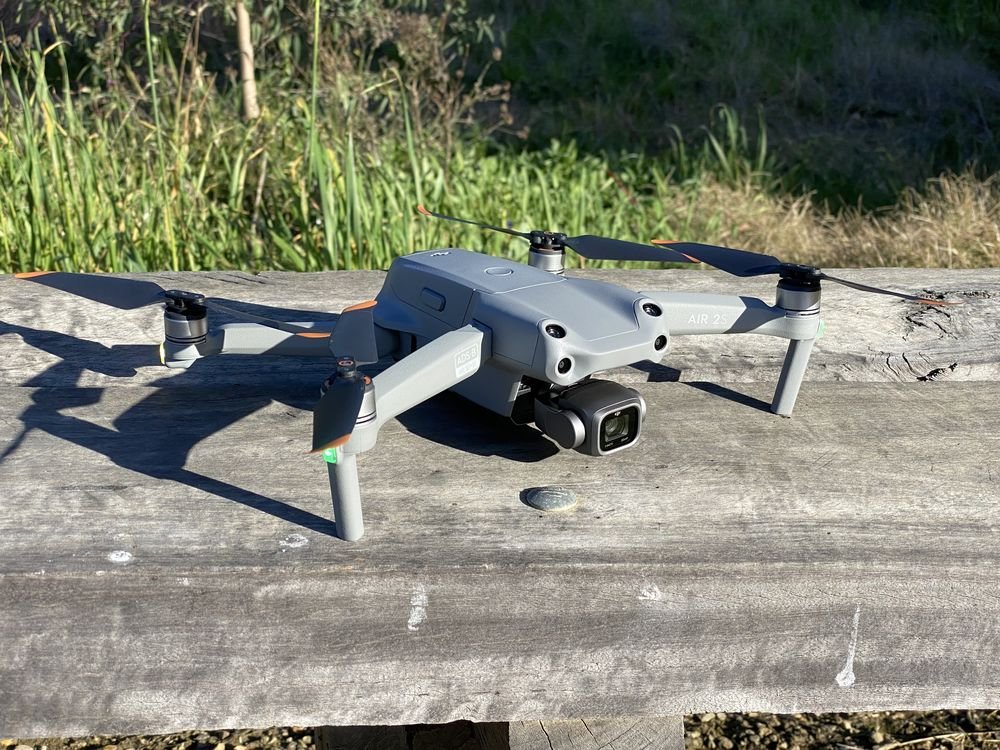 08. DJI Air 2SBest legacy 5.4K | 1-inch footage on a legacy budget | 5.4K from 1-inch sensor; 31 minute flights | View on Amazon |
 09. DJI Avata 2Best FPV cinema | FPV one-takes and interior tours | 4K/60 HDR through goggles; 23 minute flights | View on Amazon |
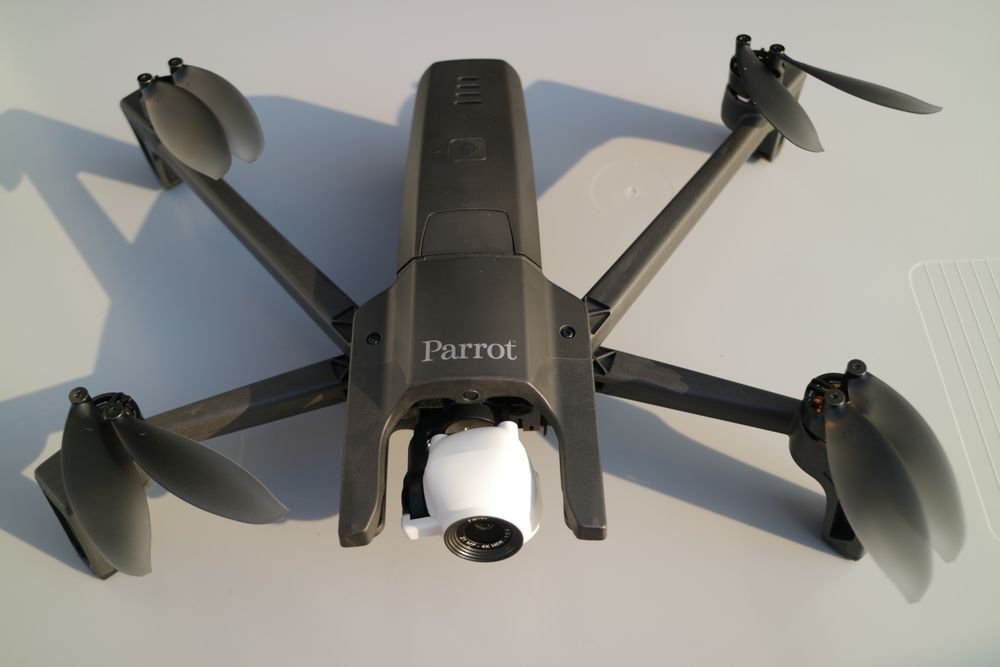 10. Parrot AnafiBest quiet zoom option | Upward shots, zoom work and quiet locations | 180 degree tilt and lossless zoom; legacy platform | View on Amazon |
Look closer
Our 10 picks, explained
These picks come from desk research, not hands-on testing: we compared manufacturer camera specifications across brands line by line, then cross-checked owner feedback and published cinematography reviews to see which claims hold up on real productions.
DJI Mavic 4 Pro
Cross-brand lists still start here, because no rival currently assembles this much cinema capability in one folding aircraft. The 4/3 Hasselblad main camera records 6K/60 HDR and 4K/120 with an adjustable f/2.0 to f/11 aperture, while the 70mm and 168mm telephotos deliver compressed cinema language without a second aircraft. The Infinity Gimbal rotates fully, adding vertical and roll moves to the director’s vocabulary. Ten-bit D-Log and Hasselblad Natural Colour give colorists a file that behaves like a ground camera’s, and a rated 51 minutes aloft covers a location in one battery. Autel counters with aperture philosophy and freedom from geofencing; on pure image and versatility, the Mavic 4 Pro remains the one to beat.
- Takeoff weight
- 1,063 g
- Flight time
- 51 min
- Camera
- 4/3 Hasselblad, 100MP, 6K/60 HDR, triple camera
Reasons to choose it
- Finest image in a folding drone
- Three cinema focal lengths
- Rotating gimbal, 51 minute flights
Trade-offs to know
- Heaviest and priciest pick here
- DJI geofencing applies
Choose this if: the production budget allows the best and your aerials anchor the edit.
Consider another option if: geofencing or aperture workflow rules your shoots, the EVO II Pro argues a different philosophy.
Autel EVO II Pro
The EVO II Pro was ahead of its time and time has been kind to its spec sheet. The 1-inch, 20MP sensor records 5472 by 3076 video, effectively 6K, at 30fps and 4K/60, in 10-bit A-Log at up to 120 Mbps, through a lens that stops from f/2.8 to f/11 for genuine exposure control. Twelve-sensor omnidirectional sensing, a rated 40 minutes aloft and a 15 km tri-band SkyLink make it a complete working aircraft, and Autel’s absence of geofencing means a permitted shoot starts when you arrive, not when a server agrees. It is heavy, its design language is older, and parts and service run through a smaller network than DJI’s. As a cinema camera, it remains entirely credible.
- Takeoff weight
- 1,191 g (V3)
- Flight time
- 40 min
- Camera
- 1-inch CMOS, 20MP, 6K/30, 10-bit A-Log
Reasons to choose it
- 6K recording from a 1-inch sensor
- Adjustable aperture, 10-bit A-Log
- No geofencing built in
Trade-offs to know
- Heavy, mature platform
- Smaller service and accessory network
Choose this if: you want resolution, aperture control and unlock-free flying more than ecosystem depth.
Consider another option if: your pipeline is DJI-shaped end to end, the Mavic 4 Pro integrates without friction.
DJI Mavic 3 Pro Cine
Post-production is where cinematography budgets quietly bleed, and the Mavic 3 Pro Cine is engineered to stop the bleeding. It encodes Apple ProRes 422 HQ from its 4/3 Hasselblad wide, 70mm and 166mm cameras, so aerials enter a cinema timeline natively and withstand the aggressive grades that make compressed footage crumble. The 1TB internal SSD is not a luxury at ProRes data rates; it is what makes a full shooting day possible. The aircraft beneath matches the Mavic 3 Pro: 5.1K/50 wide-camera recording in the compressed formats, 43 minute flights, full sensing. Newer DJI sensors out-resolve it, and no Autel offers ProRes at all. When the deliverable is graded ProRes, this remains the only folding drone that truly speaks the language.
- Takeoff weight
- 963 g
- Flight time
- 43 min
- Camera
- 4/3 Hasselblad, triple camera, ProRes 422 HQ, 1TB SSD
Reasons to choose it
- ProRes 422 HQ on three cameras
- 1TB SSD built for set work
- Footage intercuts with cinema cameras
Trade-offs to know
- ProRes storage demands are severe
- Premium pricing over the standard Pro
Choose this if: your clients deliver in ProRes and your colorist bills by the hour saved.
Consider another option if: your pipeline is compressed and proud of it, the Mavic 4 Pro spends the same money on newer sensors instead.
Autel EVO Lite+
Ask a ground cinematographer what drone cameras lack and the answer is exposure control. The EVO Lite+ answers it directly: its 1-inch, 20MP sensor works through an adjustable aperture, so the 180-degree shutter discipline survives changing light without landing to swap ND filters, and stills gain real depth control. Video runs to 6K/30 and 4K/60 with HDR modes, and Autel rates 40 minutes per battery with a 12 km SkyLink. The honest limits are the 8-bit A-Log profile, which gives graders less than DJI’s 10-bit files, and forward, backward and downward sensing only. For photographers crossing into film and pilots who think in f-stops, it is the most camera-like drone here.
- Takeoff weight
- 835 g
- Flight time
- 40 min
- Camera
- 1-inch CMOS, 20MP, 6K/30, adjustable aperture
Reasons to choose it
- Adjustable aperture transforms exposure workflow
- 1-inch sensor, 6K recording
- No geofencing built in
Trade-offs to know
- 8-bit A-Log limits grading
- No side obstacle sensing
Choose this if: aperture discipline defines your shooting style and ND swapping slows your sets down.
Consider another option if: grading depth is the priority, the Mavic 3 Pro Cine sits at the opposite extreme of color data.
DJI Air 3S
Location cinematography rewards the kit that actually arrives, and the Air 3S is the largest cinema capability that still packs like a camera bag extra. Its 1-inch, 50MP wide camera records 4K/120, the 70mm telephoto compresses distant ridgelines and architecture, and both shoot 10-bit D-Log M at up to 130 Mbps for footage that grades with intent. Omnidirectional sensing with forward LiDAR was designed for the low-light hours when locations look their best, and DJI rates 45 minutes per battery. Against the Mavics it concedes sensor size on the wide camera and everything on absolute image quality. Against everything else that fits this easily into a travel kit, it is not close.
- Takeoff weight
- 724 g
- Flight time
- 45 min
- Camera
- 1-inch 50MP wide plus 70mm tele, 4K/120
Reasons to choose it
- Two cinema focal lengths that travel well
- LiDAR sensing for golden-hour work
- 45 minute flights
Trade-offs to know
- Telephoto sensor is smaller
- Registration required in most countries
Choose this if: your cinematography happens on location, far from home, with everything in one bag.
Consider another option if: the work is studio-adjacent and weight is free, the Mavic 4 Pro is the bigger tool.
DJI Mavic 3
The Mavic 3’s main camera started the modern cinema drone era, and the image it makes has not expired. The 4/3 Hasselblad sensor, 20MP with f/2.8 to f/11 aperture control, records 5.1K/50 and DCI 4K/120 in 10-bit D-Log and HLG, with the depth and highlight behavior that smaller sensors imitate but do not match. A rated 46 minutes aloft and omnidirectional sensing keep it working like a current professional tool. The caveats are generational: the 162mm telephoto is a modest 1/2-inch camera, transmission is the older O3+, and the Pro models added the lens system this one gestures at. Bought at the prices mature flagships command, the wide-camera cinematography per dollar is superb.
- Takeoff weight
- 895 g
- Flight time
- 46 min
- Camera
- 4/3 Hasselblad 20MP, 5.1K/50, DCI 4K/120
Reasons to choose it
- 4/3 image quality at a classic price
- Adjustable aperture, 10-bit D-Log
- 46 minute rated flights
Trade-offs to know
- Telephoto camera is dated
- Older O3+ transmission
Choose this if: you compose on the wide camera and want the big-sensor look without the current flagship bill.
Consider another option if: telephoto cinematography is core to your work, the Mavic 3 Pro Cine and its siblings complete the system.
Autel EVO Nano+
The EVO Nano+ exists because of one sensor decision: its 1/1.28-inch RYYB array replaces the green pixels of conventional sensors with yellow ones, gathering substantially more light. For stills, the 50MP results at dawn and dusk embarrass rival minis, and that sensitivity is why a cinematography list makes room for it: establishing stills, timelapse plates and low-light support shots are real production work. Video is 4K/30 HDR, competent and daylight-happy, without the frame rates or log depth of DJI’s minis. Tri-directional sensing, Dynamic Track 2.1 and a rated 28 minutes complete a 249 g package with no geofencing. It is the specialist’s mini, chosen for its sensor rather than its spec breadth.
- Takeoff weight
- 249 g
- Flight time
- 28 min
- Camera
- 1/1.28-inch RYYB CMOS, 50MP, 4K/30 HDR
Reasons to choose it
- Best low-light stills in the mini class
- Sub-250 g with no geofencing
- 50MP stills with real dynamic range
Trade-offs to know
- Video capped at 4K/30, no log profile
- Thinner ecosystem and support
Choose this if: your productions lean on aerial stills and low-light plates more than moving footage.
Consider another option if: motion is the medium, DJI’s Air 3S is the complete cinema tool this one supports.
DJI Air 2S
Resolution bargains rarely come with big sensors attached, which is what makes the Air 2S interesting for cinematography. Its 1-inch, 20MP camera records 5.4K/30, giving editors genuine crop and downsample headroom for 4K delivery, plus 4K/60 and 1080p/120 in 10-bit D-Log M and HLG. The footage intercuts credibly with modern 1-inch material because, sensor for sensor, it is modern material. Age shows around the camera: 31 minute flights, four-directional rather than omnidirectional sensing, and the older O3 transmission at a rated 12 km. None of that appears in the rushes. For an editor building a cinema kit around image quality per dollar, the Air 2S remains a shrewd, proven buy.
- Takeoff weight
- 595 g
- Flight time
- 31 min
- Camera
- 1-inch CMOS, 20MP, 5.4K/30, 10-bit D-Log M
Reasons to choose it
- 1-inch sensor with 5.4K oversampling
- 10-bit color that still grades well
- Lighter than the current Air models
Trade-offs to know
- 31 minute flights, four-direction sensing
- Single camera, no telephoto
Choose this if: image quality per dollar is the brief and you can live with one excellent lens.
Consider another option if: endurance and sensing matter as much, the Air 3S is this drone’s modern answer.
DJI Avata 2
Every cinematography toolkit needs a chaos instrument, and the Avata 2 is the reliable one. The 377 g ducted frame, flown in first person through Goggles 3, produces the unbroken fly-through shots that tourism, property and brand films now treat as standard deliverables. Its 1/1.3-inch sensor records 4K/60 HDR across a 155 degree field of view, and RockSteady stabilization keeps even aggressive lines composed. Batteries rated at 23 minutes and the absence of obstacle sensing define it as a professional’s tool rather than a beginner’s toy: the pilot is the safety system. Intercut with conventional aerials, its footage gives an edit energy nothing else in this guide can manufacture.
- Takeoff weight
- 377 g
- Flight time
- 23 min
- Camera
- 1/1.3-inch CMOS, 12MP, 4K/60 HDR, 155 degree FOV
Reasons to choose it
- FPV one-takes no hover drone can shoot
- Powerful stabilization for wild lines
- Ducted frame works indoors
Trade-offs to know
- Requires real FPV skill
- No obstacle sensing
Choose this if: your films need movement through spaces, not just above them.
Consider another option if: your cinematography is composed and hovering, start with the Air 3S and add FPV later.
Parrot Anafi
Cinematography occasionally needs the shot nobody else can frame: straight up a cliff face, under a bridge deck, or a zoomed subject filmed without a telephoto drone’s presence. The Anafi’s hybrid gimbal tilts 180 degrees vertically, a trick no other pick here performs, and its 21MP Sony sensor delivers 4K UHD HDR and 4K Cinema 24fps with up to 2.8x lossless zoom. At 320 g with an unusually quiet acoustic signature, it works in sensitive locations that bigger aircraft disturb. The honest context is age: Parrot has moved on from consumer drones, so batteries, parts and app support are a shrinking resource, and there is no obstacle sensing. As a specialist’s second aircraft, its talents remain unmatched at any price.
- Takeoff weight
- 320 g
- Flight time
- 25 min
- Camera
- 1/2.4-inch Sony CMOS, 21MP, 4K HDR, 180 degree tilt
Reasons to choose it
- Films upward, unique in this guide
- Lossless zoom without a big telephoto
- Quiet, light and discreet
Trade-offs to know
- Legacy platform, shrinking support
- No obstacle sensing
Choose this if: your cinematography needs upward angles, quiet operation or zoom discretion above all.
Consider another option if: you need a supported, current platform, the Air 2S is the sensible professional alternative.
Buy with confidence
How to choose a cinematography drone
Four questions that decide which brand’s cinema drone belongs on your productions.
01. Look past DJI, honestly
DJI builds most of this list for good reason: sensors, codecs and reliability. But Autel’s EVO line offers two things DJI does not: adjustable apertures on 1-inch and larger sensors, and no built-in geofencing, so a legal shoot never waits on an unlock server. Weigh those freedoms against DJI’s deeper accessory ecosystem and wider service network.
02. Aperture control versus ND filters
Fixed-aperture drones manage exposure with ND filters; you land, swap glass, and relaunch. The Autel EVO Lite+ and EVO II Pro adjust aperture in flight, f/2.8 to f/11, which keeps a shot rolling through changing light and simplifies stills work. For run-and-gun productions it is a workflow advantage specs tables understate.
03. Know your color pipeline
Every serious pick here records a flat 10-bit profile: DJI’s D-Log family, Autel’s A-Log on the EVO II Pro. What differs is ecosystem: LUTs, monitoring tools and editor presets overwhelmingly target DJI footage. If your post house works in ProRes, only the Mavic 3 Pro Cine here delivers it natively.
04. Support is a production feature
A cinema drone is a working tool: batteries, propellers and repair turnaround decide whether it earns on schedule. DJI’s service network and parts availability are the industry’s deepest, Autel’s are respectable and thinner, and Parrot’s consumer line is a legacy platform now. Buy the support structure your deadlines can tolerate.
Behind the recommendations
How we selected these products
This guide is built on desk research, not hands-on testing. We compared official manufacturer specifications for every current drone with a serious cinematography claim, across DJI, Autel and Parrot, then cross-checked the shortlist against owner feedback and published reviews. Specifications were rechecked against the sources below in October 2026. Where brands quote figures differently, such as flight time or range, we report the manufacturer rating and treat it as a ceiling.
- Image pipeline: sensor size, resolution and frame rates, color depth, log profiles and codecs, compared across brands on equal terms.
- Production fit: aperture control, lens systems, geofencing policy, storage and flight time, weighted for working film sets.
- Limitations: we did not shoot productions with these drones for this guide, and two picks are mature platforms, so confirm availability and support before buying.
Common questions
Before you buy
Is DJI still the default choice for film work?
For most productions, yes: the Mavic line’s sensors, codecs and ecosystem are the benchmark, and crews know the workflow. Autel is the credible alternative when its advantages are decisive on your shoots: aperture control, no geofencing, and in the EVO II Pro a 6K 1-inch camera that predates and still rivals newer rivals.
What does no geofencing actually change on a shoot?
DJI drones check location databases and can require an online unlock before takeoff in controlled areas, even with permission in hand. Autel drones carry no such system, so a lawful, authorized flight starts immediately. The legal responsibility is identical; the friction is not. Many professional pilots keep one of each for exactly this reason.
Which of these drones grades best in post?
The Mavic 3 Pro Cine, recording ProRes 422 HQ, gives colorists the most to work with, followed by the Mavic 4 Pro’s 10-bit D-Log from its 4/3 sensor. Autel’s EVO II Pro records 10-bit A-Log that grades well once you build the transform, since fewer ready-made LUTs exist for it.
What is the best budget cinematography drone here?
The Parrot Anafi, if you accept a legacy platform: its zoom and upward-tilting gimbal shoot angles nothing else here can. For buyers who need current support and parts, the honest budget answer is a previous-generation DJI like the Air 2S, whose 1-inch 5.4K camera still produces professional footage.
Choose your cinema camera
Start with the Mavic 4 Pro for the finest all-round cinema image, and the EVO II Pro when 6K resolution and flying freedom lead your brief. Let the Mavic 3 Pro Cine settle any argument where the deliverable is graded ProRes.
Sources and verification
Product specifications and claims in this guide were checked against the following sources, listed by name as a record of what was consulted.
- DJI Mavic 4 Pro, Mavic 3 Pro Cine, Air 3S, Mavic 3, Air 2S and Avata 2 official specifications (dji.com)
- Autel EVO II Pro, EVO Lite+ and EVO Nano+ official specifications (autelrobotics.com)
- Parrot Anafi official specifications (parrot.com)
- Manufacturer user manuals for each shortlisted drone (DJI, Autel, Parrot)
- Published cinematography reviews and owner feedback for the shortlisted models, cross-checked in October 2026