

As an Amazon Associate I earn from qualifying purchases. If you buy through links in this article, we may earn a commission at no extra cost to you.
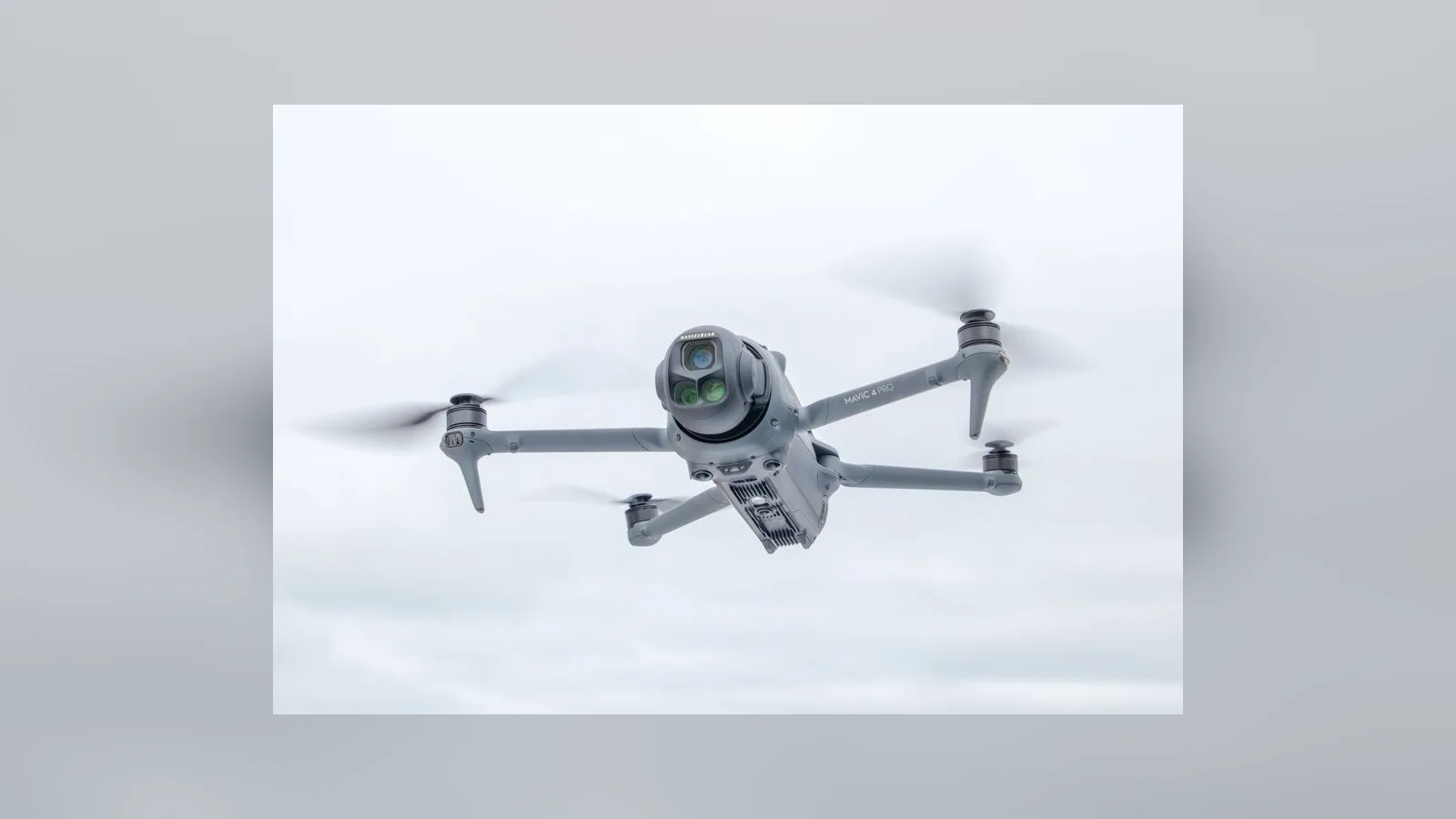
These are the 10 best camera drones for photography, ranked the way stills shooters judge a camera: sensor size first, then resolution, RAW flexibility and lens choice. Video matters here only where it helps the photo work. Every pick shoots RAW stills, and the list runs from a 100MP flagship to a sub-250 g travel camera, so you can match the sensor to the prints you actually make.
Short on time?
Start with these three picks
One carries the biggest sensor in the sky, one shrinks flagship stills under 250 g, and one adds a real telephoto to the kit.
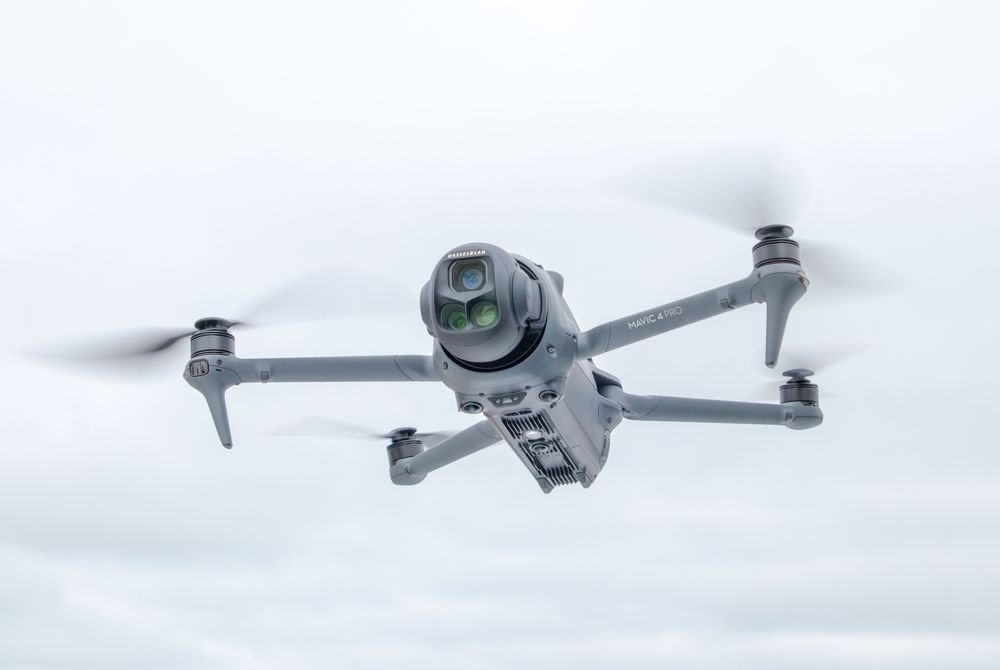
DJI Mavic 4 Pro
The flagship stills camera: a 4/3 Hasselblad sensor shooting 100MP RAW stills, with two telephoto cameras behind it and 51 minutes in the air. It is heavy, top-tier gear, and the detail at print sizes is the reason why.
View on Amazon Read the full review ↓
DJI Mini 5 Pro
The travel photographer’s flagship: a 1-inch sensor with 50MP DNG stills and 4K/120 video, at 249.9 g with the standard battery. The Plus battery flies longer but crosses into registration weight, so choose batteries by destination.
View on Amazon Read the full review ↓
DJI Air 3S
Two real cameras in one body: a 1-inch 50MP wide and a 70mm telephoto for compressed landscapes and detail shots, with 45 minute flights and 42 GB of storage. At 724 g it is a deliberate carry, not a pocket drone.
View on Amazon Read the full review ↓The shortlist
Compare all 10 at a glance
For stills, three things decide print quality: sensor size, true RAW resolution, and whether the lens set covers the shots you plan.
| Product / award | Best fit | Key decision point | Check current offer |
|---|---|---|---|
| 01. DJI Mavic 4 ProBest overall | Landscape and commercial stills | 4/3 sensor, 100MP RAW; 1,063 g flagship body | View on Amazon |
| 02. DJI Mini 5 ProBest under 250 g | Travel and hiking photography | 1-inch 50MP DNG stills; Plus battery breaks 250 g | View on Amazon |
| 03. DJI Air 3SBest dual camera | Versatile landscape shooters | 1-inch wide plus 70mm tele; 724 g working weight | View on Amazon |
 04. DJI Mavic 3 ProBest telephoto reach | Telephoto-first photographers | Three lenses to 166mm; 958 g, previous flagship | View on Amazon |
 05. Autel EVO Lite+Best DJI alternative | DJI-free landscape work | 1-inch 20MP, adjustable aperture; 6K/30 video | View on Amazon |
 06. DJI Mavic 3 ClassicBest value flagship sensor | Purist landscape shooters | Same 4/3 sensor as Mavic 3; no telephoto camera | View on Amazon |
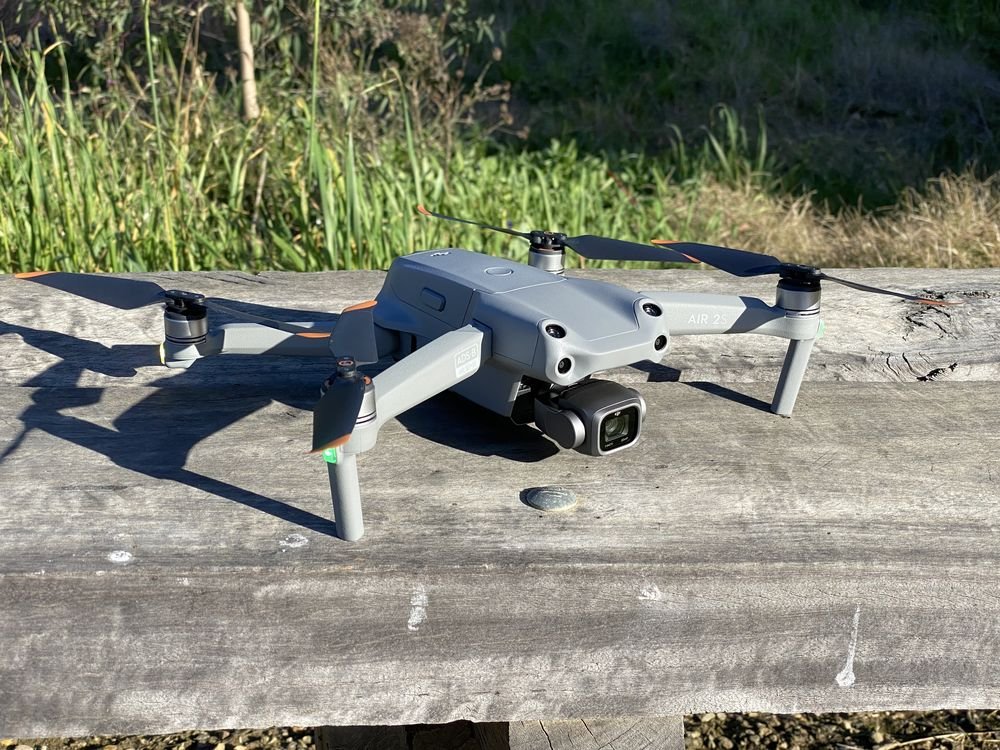 07. DJI Air 2SBest mid-range classic | Budget-conscious stills shooters | 1-inch 20MP RAW; older platform, 31 minutes | View on Amazon |
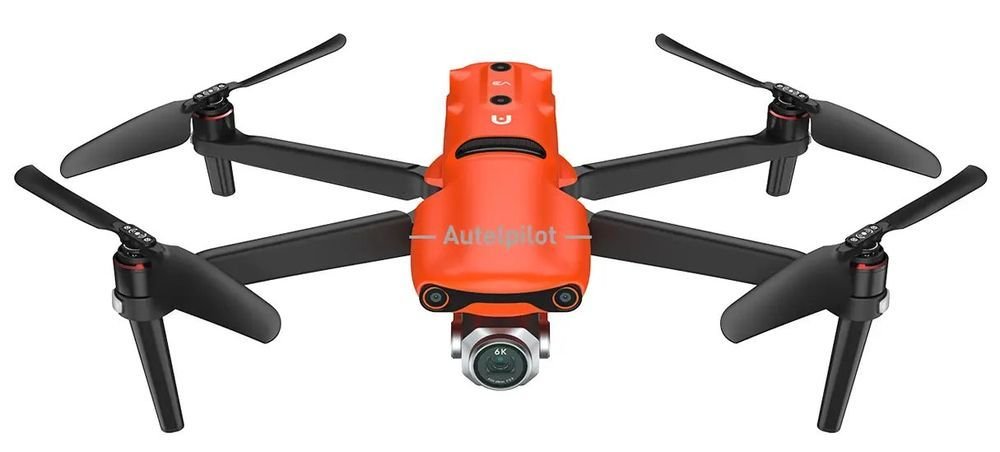 08. Autel EVO II ProBest heavy-duty pro pick | Rugged professional work | 1-inch 20MP, 6K/30; 1,191 g, the heavyweight here | View on Amazon |
 09. DJI Mini 4 ProBest travel photography | Travelers who shoot stills seriously | 48MP stills, DNG RAW; 1/1.3-inch sensor ceiling | View on Amazon |
 10. Parrot AnafiBest for unique angles | Unique angles and quiet work | 180 degree tilt gimbal, lossless zoom; 21MP smaller sensor | View on Amazon |
Look closer
Our 10 picks, explained
These picks come from desk research, not hands-on testing: we compared manufacturer spec sheets line by line, then cross-checked owner feedback and published reviews to see which stills claims hold up for working photographers.
DJI Mavic 4 Pro
Photographers buy sensors, and the Mavic 4 Pro carries the best one flying in a folding drone. Its 4/3 Hasselblad sensor captures 100MP stills in RAW with the dynamic range to pull detail from bright skies and deep shadow in a single frame, which is exactly what landscape work demands. Two telephoto cameras, at 70mm and 168mm equivalents, let you compress ridgelines and isolate subjects without moving the drone. The adjustable aperture helps manage light without leaning only on ND filters. It flies 51 minutes per battery, and the Infinity gimbal rotates for framing freedom. The costs are physical: 1,063 g in the bag and registration duties almost everywhere you fly.
- Takeoff weight
- 1,063 g
- Flight time
- 51 min
- Camera
- 4/3 Hasselblad CMOS, 100MP stills, 6K/60 HDR
Reasons to choose it
- 100MP RAW stills with huge crop room
- Three lenses from wide to 168mm tele
- 51 minute flights for patient light
Trade-offs to know
- 1,063 g means registration almost everywhere
- Flagship cost class
Choose this if: stills are the product and prints are large.
Consider another option if: you need the same discipline under 250 g, the DJI Mini 5 Pro is the travel-weight answer.
DJI Mini 5 Pro
Most travel photography fails on the hike, not at the viewpoint: the camera left behind shoots nothing. The Mini 5 Pro answers with a 1-inch 50MP sensor in a 249.9 g body, shooting DNG RAW stills that hold up to cropping and careful grading, plus a rotating gimbal for true vertical compositions. Low light is where it separates itself from smaller minis, holding shadow detail at dusk when travel scenes peak. Flight time is 36 minutes on the standard battery; the 52 minute Plus pack lifts it over 250 g, so treat battery choice as a legal decision, not just a stamina one. One fixed wide lens is the creative limit.
- Takeoff weight
- 249.9 g with standard battery
- Flight time
- 36 min (52 min with Plus battery)
- Camera
- 1-inch CMOS, 50MP, DNG RAW
Reasons to choose it
- 1-inch sensor, 50MP DNG stills
- Strong dusk and low-light files
- True vertical stills and video
Trade-offs to know
- Single fixed wide lens
- Plus battery crosses 250 g
Choose this if: you hike to your locations and still want printable files.
Consider another option if: you shoot from one spot and want maximum detail, the DJI Mavic 4 Pro resolves a full 100MP.
DJI Air 3S
Landscape photographers think in focal lengths, and the Air 3S is the most flexible stills tool here after the flagships. The main camera is a 1-inch 50MP sensor shooting RAW stills with strong dynamic range, and the 70mm medium telephoto changes the kind of photos you can make: layered ridges, patterns in fields, subjects picked out of a scene without flying closer. Both cameras shoot stills you can print, and 42 GB of internal storage means a forgotten card never cancels a sunrise. Flight time stretches to 45 minutes with omnidirectional sensing and LiDAR watching the surroundings. The 724 g weight brings registration duties in most countries.
- Takeoff weight
- 724 g
- Flight time
- 45 min
- Camera
- 1-inch 50MP wide plus 70mm telephoto
Reasons to choose it
- Two genuinely useful stills lenses
- 45 minute flights, 42 GB storage
- Full sensing plus LiDAR
Trade-offs to know
- 724 g, registration in most places
- Telephoto sensor is smaller than the main
Choose this if: you compose with focal length, not just position.
Consider another option if: weight rules your kit, the DJI Mini 5 Pro keeps 1-inch stills under 250 g.
DJI Mavic 3 Pro
Before the Mavic 4 Pro arrived, this was the stills flagship, and its argument is unchanged: three cameras, three ways of seeing. The 4/3 Hasselblad main sensor shoots 20MP RAW stills with the color science photographers trust, the 70mm medium telephoto handles portraits of places, and the 166mm telephoto pulls distant detail into the frame, from lighthouse tops to wildlife at a respectful distance. For photographers, that reach is a composition tool no amount of cropping a wide shot fully replaces. Flight time is 43 minutes, and the platform is mature and well understood. Against the Mavic 4 Pro you give up the 100MP sensor and the newer gimbal, and at 958 g it is no lighter on the trail.
- Takeoff weight
- 958 g
- Flight time
- 43 min
- Camera
- 4/3 20MP wide, 70mm and 166mm telephotos
Reasons to choose it
- Three lenses, unmatched reach
- Proven 4/3 Hasselblad stills
- 166mm tele for distant detail
Trade-offs to know
- 958 g working weight
- Main sensor is 20MP in a 100MP era
Choose this if: telephoto composition is central to your style.
Consider another option if: maximum resolution matters more than reach, the DJI Mavic 4 Pro doubles the megapixels.
Autel EVO Lite+
Autel built the EVO Lite+ around a control stills photographers actually use: a real adjustable aperture, from f/2.8 to f/11, on a 1-inch 20MP sensor. That means managing depth and shutter speed optically, stopping down for front-to-back landscape sharpness instead of reaching for a filter every time the light changes. Stills are RAW, video runs to 6K/30, and the low-light performance of the big sensor holds up at dusk. Flight time is a strong 40 minutes. The honest gaps are ecosystem ones: fewer accessories, a smaller owner community, and an app experience that feels a step behind the class leaders. The camera itself does not feel behind at all.
- Takeoff weight
- 835 g
- Flight time
- 40 min
- Camera
- 1-inch CMOS, 20MP, 6K/30, f/2.8 to f/11
Reasons to choose it
- Adjustable aperture, rare on drones
- 1-inch 20MP RAW stills
- 40 minute flights
Trade-offs to know
- Smaller accessory ecosystem
- App polish trails the leaders
Choose this if: you want flagship stills discipline without DJI.
Consider another option if: lens choice matters more than aperture control, the DJI Air 3S carries two cameras.
DJI Mavic 3 Classic
Strip the Mavic 3 series of its telephoto cameras and you get the Classic, and for many landscape photographers nothing important is lost. The 4/3 Hasselblad sensor shoots 20MP RAW stills with 12.8 stops of dynamic range, the same file that made the Mavic 3 line a photographer’s benchmark, and 5.1K video is there when you need it. Flight time matches the flagship line at 46 minutes, and the airframe shares the series’ mature sensing and handling. What you give up is the 70mm and 166mm reach, plus the newer generation’s refinements. As the range has aged, the Classic has become the sensible entry into 4/3 drone photography: buy the sensor, skip the lenses you will not use.
- Takeoff weight
- 895 g
- Flight time
- 46 min
- Camera
- 4/3 Hasselblad CMOS, 20MP, 5.1K/50
Reasons to choose it
- Full 4/3 Hasselblad RAW stills
- 46 minute flights
- The value route into the Mavic 3 sensor
Trade-offs to know
- No telephoto camera
- 895 g, registration applies
Choose this if: you shoot wide landscapes and want the 4/3 file for less.
Consider another option if: you will miss telephoto reach, the DJI Mavic 3 Pro adds both telephoto cameras.
DJI Air 2S
Ask photographers which older drone still earns its keep and the Air 2S is the usual answer. The reason is the sensor: a full 1-inch 20MP CMOS shooting RAW stills, the same class of file that far newer and lighter drones still cannot match. For landscapes and real estate work, that file quality at its current market position is the whole argument. Video runs to 5.4K/30 with a 10-bit log profile, and the 595 g body is meaningfully easier to carry than the flagships. Age shows in the details: 31 minute rated flights, older transmission technology, and a platform DJI has moved on from. As a stills-first buy, it remains easy to defend.
- Takeoff weight
- 595 g
- Flight time
- 31 min
- Camera
- 1-inch CMOS, 20MP, 5.4K/30
Reasons to choose it
- True 1-inch sensor, 20MP RAW
- Lighter than the flagships at 595 g
- Strong value on the current market
Trade-offs to know
- 31 minute flights, older link
- Platform no longer current
Choose this if: you want a real 1-inch stills file without flagship spend.
Consider another option if: you want the current generation instead, the DJI Air 3S adds a telephoto and 45 minutes.
Autel EVO II Pro
Some photo work happens in kind weather from a viewpoint, and some happens on construction schedules and exposed ridges. The EVO II Pro was built for the second kind. Its 1-inch 20MP sensor shoots RAW stills with an adjustable aperture, video oversamples at 6K/30 for cropping room, and the airframe is a substantial, work-first design with 40 minute rated flights. The V3 version weighs 1,191 g, which rules it out as a casual carry and brings full registration duties, but rewards professionals with a platform that feels unhurried and durable. Against the EVO Lite+ you trade portability for toughness and video headroom; against DJI you trade ecosystem polish for independence from it.
- Takeoff weight
- 1,191 g (V3)
- Flight time
- 40 min
- Camera
- 1-inch CMOS, 20MP, 6K/30
Reasons to choose it
- Work-grade build and 40 minute flights
- 1-inch RAW stills with adjustable aperture
- 6K video headroom for cropping
Trade-offs to know
- Heaviest pick here at 1,191 g
- Full registration and transport duties
Choose this if: the drone is a work tool first and a camera second.
Consider another option if: the same brand in a lighter body appeals, the Autel EVO Lite+ keeps the 1-inch sensor at 835 g.
DJI Mini 4 Pro
For travel photographers, the Mini 4 Pro is the compromise that rarely feels like one. Its 1/1.3-inch sensor captures 48MP stills in DNG RAW, so the files take real editing: highlight recovery, shadow lifting, cropping for composition. True vertical shooting suits the way travel photos are shared, and omnidirectional sensing plus ActiveTrack 360 make it a capable flying camera as well as a stills one. It flies 34 minutes per standard battery and links over O4 at up to 20 km. The step down from the Mini 5 Pro is sensor size: in flat daylight the gap is small, but at dusk the 1-inch camera pulls clearly ahead. For one-bag travel, this is the stills drone most people should buy.
- Takeoff weight
- Under 249 g with standard battery
- Flight time
- 34 min (45 min with Plus battery)
- Camera
- 1/1.3-inch CMOS, 48MP, DNG RAW
Reasons to choose it
- 48MP DNG stills under 249 g
- True vertical shooting
- Full sensing and tracking
Trade-offs to know
- Sensor a class below the 1-inch picks
- Plus battery crosses 250 g
Choose this if: travel weight matters but your stills must edit well.
Consider another option if: dusk is when you shoot most, the DJI Mini 5 Pro brings the 1-inch sensor.
Parrot Anafi
Every other drone here looks down or level. The Anafi’s gimbal tilts 180 degrees, so it can look up: under bridges, into canopies, along cliff faces from below. For photographers hunting compositions nobody else brings home, that single feature keeps this older drone on the list. It also offers a lossless zoom for stills from its 21MP sensor, shoots DNG RAW stills, and flies quietly for 25 minutes at just 320 g. Be clear about the ceiling: the sensor is smaller than the 1-inch class, video is 4K HDR rather than class-leading, and Parrot has long since moved its focus to enterprise models. As a specialist second camera for strange angles, it still has no substitute.
- Takeoff weight
- 320 g
- Flight time
- 25 min
- Camera
- 21MP, 4K HDR, 180 degree tilt gimbal
Reasons to choose it
- Shoots upward with 180 degree tilt
- Lossless zoom for stills
- Quiet and light at 320 g
Trade-offs to know
- Smaller sensor than the leaders
- Platform no longer Parrot’s focus
Choose this if: you collect angles other photographers cannot get.
Consider another option if: all-round stills quality matters more, the DJI Mini 4 Pro is the modern travel pick.
Buy with confidence
How to choose a drone for still photography
Four checks that separate a real stills camera from a video drone with a photo mode.
01. Sensor size beats megapixels
A 1-inch sensor with 20MP will outshoot a tiny sensor boasting 48MP in anything but flat noon light, because each pixel gathers more light. Read the sensor size first and the resolution second, and treat very high megapixel counts on small sensors as a cropping feature, not a quality guarantee for large prints.
02. RAW is the photographer’s non-negotiable
Every pick here shoots DNG RAW stills, and that is deliberate. RAW files hold the highlight and shadow detail that landscape light demands, and they take grading without falling apart. If a drone shoots JPEG only, it is a video tool with a photo mode attached, not a stills camera, whatever the brochure says.
03. Lenses change the photographs, not just the specs
A telephoto is a creative tool: it compresses mountain layers, isolates subjects and keeps a respectful distance from wildlife. Dual and triple camera drones like the Air 3S, Mavic 3 Pro and Mavic 4 Pro multiply your compositions from a single flying position. Wide-only drones are lighter and cheaper, but you compose by moving the aircraft instead.
04. Match weight to how you reach locations
Flagship sensors live in flagship bodies: the Mavic 4 Pro is 1,063 g before spare batteries and a case. If your photography starts with a hike, the sub-250 g 1-inch drone you actually carry outperforms a flagship left at the trailhead. Decide by your last ten shoots, not by the one dream assignment.
Behind the recommendations
How we selected these products
This guide is built on desk research, not hands-on testing. We compared official manufacturer spec sheets for every current drone with a serious stills claim, then cross-checked the shortlist against owner feedback and published reviews, with particular care on real photo resolution versus advertised figures. Specs were rechecked against the sources below in October 2026. Where a figure is a lab rating, such as flight time, we treat it as a ceiling, not a promise.
- Sensor and file: physical sensor size, native photo resolution, RAW (DNG) support and dynamic range, all taken from manufacturer data.
- Lens set: focal lengths available for stills, aperture control and zoom type, compared like for like across brands.
- Limitations: we did not shoot with these drones for this guide, and manufacturers measure resolution and flight time under ideal conditions, so confirm the exact model and its current specs before buying.
Common questions
Before you buy
Which drone camera is best for printing large photos?
The Mavic 4 Pro, and it is not close on paper: its 4/3 sensor captures 100MP RAW stills, which hold detail at large print sizes and survive cropping. The 1-inch class, including the Mini 5 Pro, Air 3S, EVO Lite+ and Air 2S, prints well at moderate sizes from native files. Whatever you fly, shoot at base ISO in good light for gallery work.
Is 48MP on a small sensor as good as 20MP on a 1-inch sensor?
No, not for quality, though it can help with cropping. The 48MP figures on 1/1.3-inch and 1/2-inch sensors come from small pixels that gather less light, so noise arrives earlier and dynamic range is narrower. A 20MP 1-inch file is cleaner and grades further in editing. Treat high megapixel counts on small sensors as composition flexibility, and judge cameras by sensor size first.
Do all of these drones shoot RAW photos?
Yes. Every pick on this list records DNG RAW stills alongside JPEG, which was a deliberate selection rule for a photography guide. RAW matters because drone scenes are high contrast: bright skies over dark ground. A RAW file lets you recover both ends in editing instead of choosing which one to lose at the moment of capture, and it is the single biggest quality lever you control.
Does the 250 g limit matter for photography drones?
It matters for where and how easily you can fly, not for image quality. Sub-250 g models like the Mini 5 Pro and Mini 4 Pro skip registration in many countries, which simplifies travel work. The bigger sensors live in heavier bodies that need registration almost everywhere. Many photographers run both: a mini for travel and a flagship for planned shoots close to home.
Pick the sensor your prints deserve
Start with the DJI Mavic 4 Pro if stills are the work: its 100MP 4/3 files are in a class of their own. Choose the Mini 5 Pro when the camera must travel under 250 g, and the Air 3S when two lenses matter more than either extreme.
Sources and verification
Product specifications and claims in this guide were checked against the following sources, listed by name as a record of what was consulted.
- DJI Mavic 4 Pro, Mini 5 Pro, Air 3S, Mavic 3 Pro, Mavic 3 Classic, Air 2S and Mini 4 Pro official specifications (dji.com)
- Autel EVO Lite+ and EVO II Pro official specifications (autelrobotics.com)
- Parrot Anafi official specifications (parrot.com)
- Manufacturer user manuals for each shortlisted drone (DJI, Autel, Parrot)
- Published reviews and owner feedback for the shortlisted models, cross-checked in October 2026