

A burr coffee grinder is a specialized kitchen device designed to crush coffee beans into uniform particles using two revolving abrasive surfaces known as burrs. Unlike traditional chopping machines that hack beans into random sizes, this precision instrument shears the coffee to a specific dimension. This article explores how these devices operate, why particle uniformity matters, and how upgrading your morning routine transforms every cup.
Understanding the Mechanics: How Burr Grinders Operate
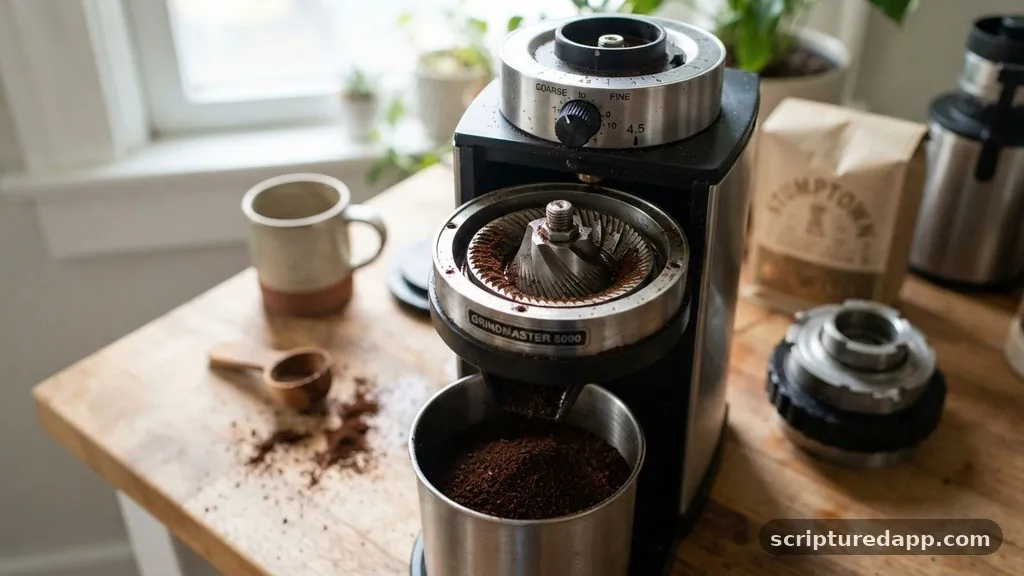
A burr coffee grinder operates using two revolving abrasive surfaces, traditionally made of stainless steel or ceramic, positioned at a precise micro-distance from one another. When you drop whole coffee beans into the hopper, gravity feeds them into the chamber where they are caught between the stationary and moving burrs.
As the motor or hand crank turns, the beans are steadily crushed and sheared rather than aggressively hacked apart. This mechanical shearing action is the core secret behind why a quality coffee grinder completely alters your extraction dynamics.
The space between the two burrs dictates the ultimate grind size, which you can adjust manually by turning a dial or collar. When the burrs are positioned closely together, they fracture the beans into microscopic dust suitable for pressurized espresso extraction.
When moved further apart, they crack the coffee into coarser granules resembling sea salt, which is ideal for a French press or cold brew pitcher. Because the gap remains uniform across the entire grinding surface, the resulting output features remarkably few fines or boulders, ensuring balanced extraction during brewing.
Furthermore, manual and electric coffee grinders engineered with burr sets operate at significantly lower revolutions per minute than their spinning-blade counterparts. This reduction in speed prevents excessive frictional heat from building up inside the grinding chamber.
Heat is the natural enemy of fresh coffee, as thermal stress prematurely bakes the volatile aromatic compounds right out of the bean before water ever touches them. By keeping the beans cool, a burr apparatus preserves the delicate floral, fruity, or chocolaty notes inherent to specialty harvests.
Burr Grinders Versus Blade Grinders: A Clear Distinction
The marketplace offers two primary categories of crushing mechanisms, yet seasoned baristas almost universally dismiss blade grinders in favor of true burr systems. A standard blade machine relies on a propeller-style metal blade spinning at hyper-velocity in the center of a cup, much like a household kitchen blender.
This chaotic motion means some coffee beans get pulverized into powder while others remain large chunks, creating an erratic mix of boulder-sized pieces and fine dust. This physical inconsistency wreaks havoc on your extraction, leading to simultaneous over-extraction and under-extraction.
When you brew coffee containing unevenly sized fragments, water rushes through the large chunks too quickly, leaving those areas tasting sour and weak. Simultaneously, the ultra-fine dust gets over-extracted, releasing bitter, astringent compounds that coat your tongue.
A dedicated burr grinder eliminates this problem by ensuring that every single particle shares nearly identical dimensions. To help visualize the mechanical differences between these two technologies, review the comparison table below.
| Feature | Blade Grinder | Burr Grinder |
|---|---|---|
| Mechanism | High-speed spinning propeller | Two revolving abrasive surfaces |
| Particle Size | Inconsistent (powders and chunks) | Uniform and precise |
| Heat Generation | High (cooks the beans) | Low (preserves delicate flavors) |
| Price Range | Inexpensive (budget-friendly) | Moderate to high investment |
Beyond the technical extraction flaws, blade-style units are notoriously difficult to clean and lack any real capacity for micro-adjustments. You are left guessing how long to hold down a button, shaking the device manually to encourage stubborn chunks to move closer to the blades. Upgrading to a specialized unit shifts your entire approach from guesswork to precision, allowing you to replicate your favorite morning brew day after day with absolute reliability.
Conical Versus Flat Burr Sets
When shopping for a conical burr grinder or a flat-burr alternative, you are choosing between two distinct geometric configurations that shape the coffee bed. Conical burrs feature a central cone-shaped grinding element nested inside a matching toothed ring.
Beans feed naturally down through the vertical opening, making this design highly efficient, quieter, and exceptionally popular for domestic kitchen countertops. They tend to produce a slightly bimodal particle distribution, which many coffee enthusiasts praise for adding pleasant body and complexity to filter brews.
The Anatomy of Flat Burrs
Flat burrs consist of two horizontal, ring-shaped discs facing one another, with teeth cut into the matching flat surfaces. Coffee beans enter the exact center of the top burr and are forced outward toward the perimeter by centrifugal force.
This design requires a more powerful motor and a larger housing footprint, which is why flat-burr systems dominate commercial cafes and high-end specialty home setups. They excel at producing a unimodal particle distribution, meaning almost every fragment is precisely the exact same size, yielding incredible flavor clarity in lighter roast profiles.
- Conical Burr Benefits: Generally quieter operation, less heat retention, lower retention of leftover grounds, and more affordable price points for entry-level models.
- Flat Burr Benefits: Unrivaled flavor separation, superior clarity in cup profiles, and professional-grade particle precision favored by specialty coffee judges.
- Material Choices: Stainless steel offers sharp, clean cuts and durability, while ceramic burrs resist wear and tear over thousands of cycles while running cool.
Understanding these geometric nuances helps you align your equipment purchases with your personal palate preferences. If you adore bright, tea-like African coffees with sparkling acidity, a flat-burr system highlights those tasting notes brilliantly. If you prefer rich, heavy-bodied South American coffees with deep chocolate undertones, a conical setup delivers that luxurious mouthfeel effortlessly.
The Physics of Particle Consistency
The ultimate goal of any coffee grinder is achieving absolute uniformity across the entire dose of dry grounds. When hot water hits coffee bed structures containing uniform granules, the extraction rate remains steady from the first second of blooming until the final drip subsides.
This predictability allows you to dial in your extraction time, water temperature, and coffee-to-water ratio with scientific precision. Without this consistency, tinkering with your brewing recipe becomes an exercise in frustration because the baseline variable keeps shifting.
Microscopic analysis of ground coffee reveals that erratic crushing creates jagged shards that pack together unevenly inside your filter basket or French press carafe. Water always follows the path of least resistance, meaning it will channel through loose pockets and completely ignore tightly packed clusters of fine powder.
A high-end burr grinder prevents channeling by producing clean-cut, pebble-like particles that stack loosely and evenly. Water flows through this structured bed at an optimal, uniform speed, extracting the sweet, aromatic soluble oils while leaving harsh, over-roasted bitterness behind.
Achieving this level of physical precision requires rigid tolerances in the manufacturing of the burr carrier assembly. Premium machines feature heavy-duty metal housings that prevent the burrs from shifting or wobbling under the immense physical pressure of crushing dense, light-roast beans. When you invest in a machine built with tight mechanical tolerances, you are paying for structural stability that translates directly into a cleaner, sweeter cup in your mug every single morning.
Selecting the Right Machine for Your Kitchen
Choosing a dependable device requires balancing your daily brewing habits, counter space availability, and financial investment. If you primarily brew a large pot of drip coffee for the family each morning, you need a machine with a large hopper and a fast motor that handles batch volumes smoothly. Conversely, if you pull delicate double shots of espresso, you need stepped or stepless micro-adjustments that let you alter your grind size by fractions of a millimeter to control extraction time.
Manual hand-cranked models offer an incredible entry point for budget-conscious enthusiasts who do not mind spending forty seconds exercising their arms before breakfast. These portable units feature steel burrs rivaling electric machines, making them perfect for travel, camping, or minimalist kitchens without counter space for bulky appliances. Electric variants, on the other hand, provide instant gratification with programmable timers, digital scales, and touch-screen interfaces that streamline your pre-work routine.
Maintenance is another vital factor to consider before purchasing your hardware. High-end machines require periodic cleaning using specialized cleaning tablets or soft brushes to remove old coffee oils that turn rancid over time. Selecting a model with easily removable burr assemblies ensures that deep-cleaning takes minutes rather than turning into a frustrating mechanical chore that deters you from proper upkeep.
Addressing Common Misconceptions About Coffee Preparation
A frequent myth surrounding home brewing is that spending hundreds of dollars on beans makes up for using a substandard crushing device. In reality, a mediocre grinder processing a world-class, single-origin geisha bean will produce a bitter, muddy cup because the erratic fines over-extract. Conversely, an exceptional grinding mechanism can make even supermarket-bought beans taste remarkably vibrant and balanced by extracting them cleanly without harsh bitterness.
Another common point of confusion involves the myth that electric motors burn coffee beans during normal grinding operations. While industrial-scale commercial grinders running continuously can generate minor warmth, standard home use generates negligible heat, provided the burrs are sharp and spinning at appropriate speeds. The real enemy of freshness is oxygen exposure, which is why grinding your coffee immediately before brewing matters far more than minor thermal fluctuations during the crushing process.
Finally, many buyers worry that burr units are too complicated to operate or calibrate for everyday family use. Modern domestic equipment is engineered with intuitive color-coded dials, clear markings for different brew methods, and safety interlocks that prevent operation when hoppers are removed. Transitioning from pre-ground coffee or cheap blades to a dedicated burr system is straightforward, rewarding, and permanently elevates your appreciation of specialty brews.
Frequently Asked Questions
What is the main difference between a burr coffee grinder and a blade grinder?
A burr grinder crushes coffee beans uniformly between two revolving abrasive surfaces to produce consistent particles. A blade grinder uses a spinning propeller that chops beans randomly, creating an uneven mix of fine powder and large chunks that ruins brewing extraction.
Do I really need a dedicated burr grinder for home brewing?
Yes, if you want to experience the true flavor profile of specialty coffee beans. Uniform particle size prevents bitter over-extraction and sour under-extraction, allowing you to unlock sweet, complex notes that cheap blade machines completely destroy.
Should I choose a conical burr or a flat burr system?
Conical burrs are generally quieter, more energy-efficient, and budget-friendly, making them ideal for everyday home use and milk-based drinks. Flat burrs offer superior flavor clarity and uniform extraction, which is why commercial cafes and connoisseurs often prefer them.
How often should I clean my coffee grinder?
You should brush out loose grounds weekly and run specialized cleaning pellets or remove the burrs for a deep clean every one to three months. This prevents rancid coffee oils from building up and spoiling the fresh taste of your morning brew.
Conclusion
Investing in a dedicated burr coffee grinder is the single most impactful upgrade you can make to your daily brewing routine. By replacing chaotic chopping blades with precise mechanical shearing, you unlock the true aromatic potential locked inside fresh beans.
Whether you prefer a quick hand-cranked model for travel or a high-end electric flat-burr station, the resulting flavor consistency transforms every cup into a café-quality experience. Take the next step in your coffee journey by selecting a machine that matches your lifestyle, dial in your favorite beans, and taste the remarkable difference that precision grinding brings to your mug.
Best Coffee Grinders Hub guide bestcoffeegrindershub.com choosing the right grinder BestCoffeeGrindersHub.com Best Coffee Grinders Hub reviews top coffee grinder brands Best Coffee Grinders Hub reviews BestCoffeeGrindersHub.com top coffee grinder brands choosing the right grinder top coffee grinder brands best coffee grinder guide Best Coffee Grinders Hub buying guide best coffee grinder guide choosing the right grinder check out this buying guide Best Coffee Grinders Hub guide BestCoffeeGrindersHub.com Best Coffee Grinders Hub buying guide coffee grinder reviews and ratings bestcoffeegrindershub.com bestcoffeegrindershub.com choosing the right grinder Best Coffee Grinders Hub check out this buying guide BestCoffeeGrindersHub.com bestcoffeegrindershub.com choosing the right grinder Best Coffee Grinders Hub guide burr vs blade grinder guide