

Every single cup of coffee you brew depends heavily on the condition of your equipment, making how to clean a coffee grinder an essential skill for any home barista. Over time, leftover coffee beans leave behind stubborn oils and fine particles that go rancid, quietly ruining the flavor of your morning brew. Neglecting this crucial maintenance task also forces your motor or manual crank to work much harder, shortening the lifespan of your prized kitchen appliance.
Learning how to properly clean a coffee grinder transforms your daily routine from a guessing game into a reliable path toward better-tasting coffee. Whether you use a manual hand mill or a motorized powerhouse, mastering the upkeep of your burrs and chambers guarantees a consistently vibrant extraction every time you brew.
Understanding Your Equipment: Blade Versus Burr Grinders
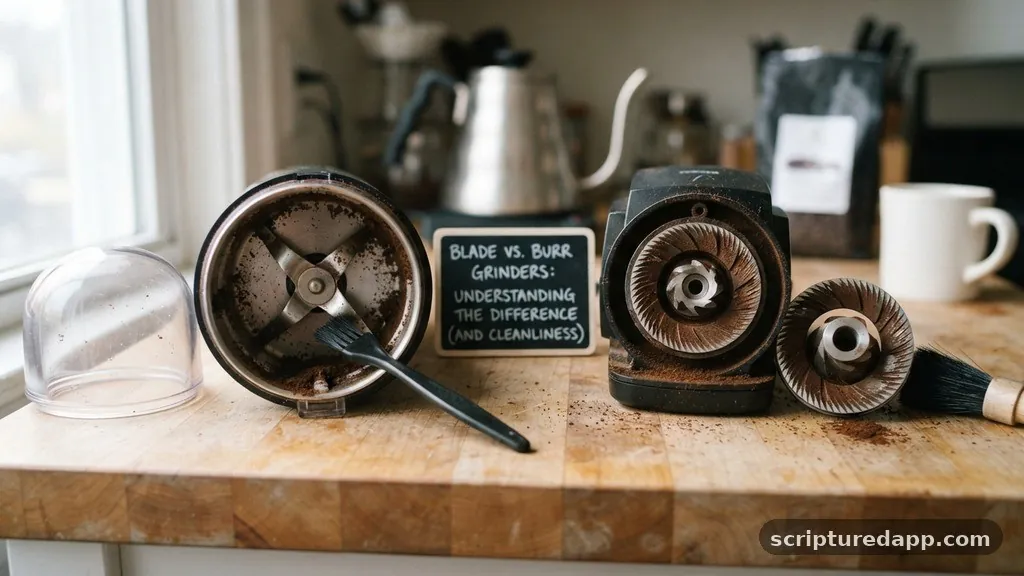
To clean a coffee grinder effectively, you must first identify whether you own a blade grinder or a burr grinder. Blade grinders function like tiny food processors, using a spinning metal propeller to chop beans into uneven pieces.
Because they feature simple housing units with fewer intricate parts, cleaning them is usually a fast, straightforward process involving a soft cloth and a dry wipe. Conversely, burr grinders crush beans between two revolving abrasive surfaces, offering incredible grind uniformity at the cost of trapping fine particles in hard-to-reach niches.
Burr grinders demand a much more methodical approach because coffee oils cling tenaciously to the metallic teeth. Flat burrs and conical burrs both require regular disassembly to clear away accumulated residue that ordinary wiping cannot reach. Understanding your specific machine type dictates your cleaning schedule, solvents, and tools, ensuring you never accidentally damage delicate internal calibration rings or alignment mechanisms during routine upkeep.
Essential Tools and Materials for Deep Maintenance
Gathering the right supplies before you start prevents frustration and protects your machine from accidental scratches. A stiff-bristled pastry brush or a dedicated grinder brush is your primary weapon against trapped chaff and stale grounds. You will also want a clean microfiber cloth, some lint-free paper towels, and a toothpick or wooden skewer for dislodging stubborn clumps tucked inside narrow corners.
- Dedicated grinder brush: Firm natural or synthetic bristles sweep away loose residue without scratching metal or plastic parts.
- Microfiber cloth: Ideal for wiping down exterior housing units and polishing hopper surfaces to a streak-free shine.
- Wooden toothpicks: Perfect for gently teasing out compacted coffee dust from threading and screw recesses.
- Compressed air: Useful for blasting out microscopic particles from inaccessible motor housings and ventilation grates.
Avoid using harsh chemical detergents or abrasive scouring pads, as these will leave chemical odors that permanently taint your beans. Plain warm water and mild dish soap are acceptable only for fully removable plastic hoppers and grounds bins, provided they are thoroughly dried before reattachment.
Step-by-Step Instructions for Cleaning a Burr Grinder
To thoroughly clean a coffee grinder with a burr mechanism, begin by unplugging the unit and removing the bean hopper. Twist and lift out the top burr assembly, revealing the grinding chamber where stale oils and compacted fines accumulate in dense layers. Use your brush to sweep away loose debris from both burr surfaces, brushing downward to prevent dust from falling into the lower motor housing.
For a deeper maintenance cycle, many enthusiasts turn to specialized grinder cleaning pellets made from compressed cereal grains. Running these food-safe tablets through the mechanism absorbs trapped oils and scours away old residue without introducing moisture to the metal. Always run a small handful of sacrificial coffee beans through the machine afterward to flush out any lingering dust or tablet remnants before your next proper brew.
| Grinder Type | Cleaning Frequency | Recommended Method | Key Risk |
|---|---|---|---|
| Blade Grinder | Weekly | Wipe with damp cloth and dry | Moisture reaching motor |
| Conical Burr | Bi-weekly | Brush and specialized tablets | Misaligning burr carrier |
| Commercial Flat Burr | Monthly | Full disassembly and vacuum | Damaging delicate wiring |
Addressing the Rice Debate: Fact Versus Fiction
One of the most persistent myths surrounding how to clean a coffee grinder involves running raw rice through the blades or burrs. While proponents claim that hard rice grains act as an abrasive scrub to scour away old coffee oils, modern baristas strongly advise against this practice. Rice is significantly harder than coffee beans, which places immense, unintended stress on electric motors and can easily chip or dull precision-cut burrs.
Furthermore, raw rice releases a fine, starchy dust that cakes onto internal surfaces when it encounters residual oils, creating a gummy paste that is remarkably difficult to remove. If you want a natural, food-safe alternative to commercial cleaning tablets, plain rolled oats are a much softer, safer option that absorbs oils without threatening your equipment’s structural integrity.
Establishing a Consistent Routine Maintenance Schedule
Maintaining peak performance requires breaking your upkeep into manageable daily, weekly, and monthly intervals. After each session, a quick brush of the chute and a wipe of the dosing cup prevents oil buildup from hardening into a varnish-like film. Neglecting this brief habit allows stale flavors to cross-contaminate your fresh beans, turning even the most expensive single-origin roast into a bitter disappointment.
Once a month, perform a comprehensive breakdown where you remove the burrs, inspect the alignment shims, and wipe down every internal surface. Regular deep cleaning ensures your motor runs cooler, your grind remains uniform, and your morning cup tastes just as vibrant as the roaster intended.
Troubleshooting Common Coffee Grinder Issues
Sometimes routine maintenance uncovers unexpected mechanical quirks that require immediate attention to prevent permanent failure. If your motor hums but the burrs refuse to spin, chances are a stray pebble or an overly compacted clump of grounds has jammed the mechanism. Unplug the device immediately, remove the hopper, and carefully extract the obstruction using wooden tools rather than metal screwdrivers.
Another frequent issue is excessive static electricity causing grounds to fly everywhere during the dosing process. Wiping the inside of your plastic chute with a slightly damp paper towel, known in the coffee community as the Ross Droplet Technique, virtually eliminates static cling and keeps your coffee station impeccably tidy.
Frequently Asked Questions
Can I put water directly inside my coffee grinder to wash it?
Never pour water directly into an electric coffee grinder or submerge the motor base. Moisture will ruin internal electrical components and cause metal burrs to rust rapidly. Only removable plastic parts like hoppers and bins should ever be washed with water.
How often should I deep clean my coffee grinder?
If you brew daily, aim for a light brushing weekly and a full burr disassembly every month. Home users who grind infrequently can stretch deep cleaning sessions to every two months without noticeably affecting flavor quality.
Is it safe to use white rice for cleaning burrs?
Using raw rice is strongly discouraged because it is too hard for most residential grinders, risking chipped burrs and overworked motors. Starchy rice dust also forms a gummy paste when mixed with old oils inside the chamber.
Why does my freshly ground coffee taste bitter even after cleaning?
Lingering rancid oils trapped deep inside the burr carrier threads or stale dust in the exit chute can still taint your flavor profile. Ensure you flush the system with a handful of cheap beans after every cleaning cycle.
Conclusion
Mastering how to clean a coffee grinder is a simple yet transformative habit that elevates your daily brewing experience. By dedicating just a few minutes each week to brushing away stray particles and wiping down critical surfaces, you protect your equipment investment and guarantee consistently delicious extractions. Take a moment today to inspect your machine, clear out the stale residue, and taste the remarkable difference proper maintenance makes in your cup.
how to choose the right coffee grinder how to choose the right coffee grinder top coffee grinder brands Best Coffee Grinders Hub this coffee grinder guide Best Coffee Grinders Hub reviews bestcoffeegrindershub.com Best Coffee Grinders Hub Best Coffee Grinders Hub guide Best Coffee Grinders Hub reviews Best Coffee Grinders Hub guide Best Coffee Grinders Hub reviews Best Coffee Grinders Hub Best Coffee Grinders Hub coffee grinder buying tips Best Coffee Grinders Hub reviews bestcoffeegrindershub.com coffee grinder buying tips Best Coffee Grinders Hub buying guide Best Coffee Grinders Hub coffee grinder reviews and ratings this coffee grinder guide best coffee grinder guide check out this buying guide burr vs blade grinder guide Best Coffee Grinders Hub buying guide coffee grinder buying tips Best Coffee Grinders Hub buying guide this coffee grinder guide