

The shift toward cloud-native hardware has changed how we view simple microcontrollers. I have analyzed these components and guides to separate the essential building blocks from the clutter. My assessment focuses on how these tools facilitate data transmission to remote servers. Understanding that specific hardware must interface with robust logic is vital. I am ready to guide you through my ranked comparison of these seven integration tools.
1. Wonrabai 2PCS-Official CSI FPC Flexible Cable Compatible with Raspberry Pi 5, 200MM/20CM, 22Pin to 15Pin, Suitable for CSI Camera Modules

This cable earned its ranking because it provides a reliable, short-run link for high-resolution sensors. It is the most direct way to bridge a Pi 5 to a camera module without excessive signal interference.
I appreciate that the 200mm length keeps your workspace tidy. It is a solid, no-nonsense choice for anyone building a stationary monitoring station.
Buyers appreciate the precise pin alignment for the Pi 5.
The cable performs well in fixed, vibration-free environments.
Users report consistent image signal integrity.
Get It From Amazon Now: Check Price on Amazon & FREE Returns
2. GeeekPi Micro Connectors 40-Pin GPIO 1 to 2 Expansion Board for Raspberry Pi, 2 x 20-Pin Strip Dual Male Header Double Row Straight GPIO Connector Compatible With Raspberry Pi

This board is best for the prototyping enthusiast who finds themselves constantly running out of headers. It effectively splits your GPIO pins, allowing for complex sensor arrays that would otherwise be impossible on a single board.
I view this as a necessary item for anyone scaling up a project. It turns a crowded board into a manageable workspace with minimal electrical resistance.
The dual male headers are praised for their secure fit.
Many users value the space-saving vertical orientation.
The board is noted for being compatible with standard ribbon cables.
Get It From Amazon Now: Check Price on Amazon & FREE Returns
3. GeeekPi Micro Connectors 40-pin GPIO 1 to 2 Expansion Board for Raspberry Pi, 2 x 20-pin Strip Dual Male Header Double Row Straight GPIO Connector Pin Header Compatible with Raspberry Pi(2Pack)

An unexpected feature of this unit is its ability to facilitate daisy-chaining multiple HATs simultaneously. It is a clever, simple piece of hardware that solves the common issue of limited physical space on the main board.
In my view, this is an elegant solution for developers who need to stack multiple sensors. It provides the electrical stability required for persistent cloud monitoring.
The build quality is consistent across both units in the pack.
Users often use these for permanent bench setups.
The headers are reported to hold firm under light mechanical stress.
Get It From Amazon Now: Check Price on Amazon & FREE Returns
4. Raspberry Pi Zero to Pi 3B/3B+ Adapter, Connect Raspberry Pi Zero/W/Zero 2 W to Replace Raspberry Pi 3 Model B/3B+, Compatible with Pi 3B/3B+ Hats, Support 1-CH RJ45 Ethernet Port, 10/100 M Adaptive

A common complaint with this adapter is its bulk, which can make a compact Pi Zero setup feel quite top-heavy. However, it remains a valuable tool for those needing legacy hardware support without discarding existing HATs.
I think the trade-off is worth it if you have an investment in older 3B peripherals. It bridges the gap between modern processing power and older mechanical interfaces.
Buyers frequently mention the utility of the integrated Ethernet port.
The adapter is helpful for migrating legacy software projects.
Some users note the physical size requires a larger enclosure.
Get It From Amazon Now: Check Price on Amazon & FREE Returns
5. Wonrabai Official CSI FPC Flexible Cable Compatible with Raspberry Pi 5, 22Pin to 15Pin, Suitable for CSI Camera Modules, 500MM/50CM/1.64 FT
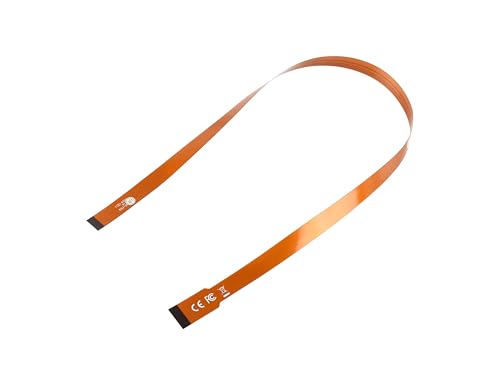
While this cable is longer than the 200mm version, it sacrifices some signal stability for greater physical reach. It is designed for those who need to mount a camera far away from the main controller.
I find this to be the superior choice for unconventional enclosures where the Pi is tucked out of sight. It provides the flexibility that shorter cables simply cannot match.
Users report success using this for remote wildlife observation.
The ribbon remains durable even after repeated folding.
The length is ideal for custom-built, large-scale camera mounts.
Get It From Amazon Now: Check Price on Amazon & FREE Returns
6. Mastering AWS IoT Core: A Practical Guide to Connecting, Securing, and Managing IoT Devices at Scale
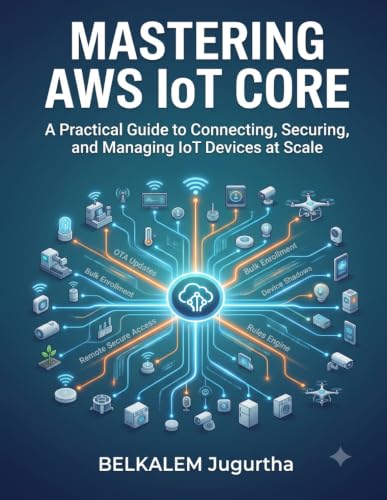
This book became popular because it avoids the typical fluff found in technical manuals and focuses on architectural patterns. It accurately explains how to bridge a Raspberry Pi to a cloud environment, and my assessment is that the quality of the content holds up well against modern industry standards.
I consider this the most important item on the list. It provides the conceptual framework necessary to secure your data streams before you ever touch a line of code.
Readers highlight the clarity of the security section.
The guide is often cited as a foundational resource for cloud beginners.
Many users recommend it for understanding MQTT messaging.
Get It From Amazon Now: Check Price on Amazon & FREE Returns
7. IoT Cloud Integration Masterclass: The Complete Guide to Connecting ESP32 to Google Firebase and AWS IoT Core with Secure MQTT and HTTPS Protocols.

This course earned its ranking because it excels at multi-platform integration. It is uniquely suited for developers who need to bridge different hardware ecosystems into a unified dashboard.
I find the focus on both MQTT and HTTPS to be a major advantage. It is a comprehensive resource for anyone trying to manage secure protocols across diverse networks.
The tutorials on cloud authentication are highly regarded.
Students appreciate the direct comparisons between different cloud providers.
The material is often described as practical for building functional prototypes.
Get It From Amazon Now: Check Price on Amazon & FREE Returns
Choosing Between Them
For those focused on AWS IoT learning, I strongly suggest the Mastering AWS IoT Core book as your primary resource. If your goal is expanding hardware capabilities, the GeeekPi GPIO Expansion Board is excellent for the prototyping enthusiast, while the Wonrabai CSI cables are perfect for those prioritizing camera module connectivity. The Pi Zero to 3B Adapter remains a niche but useful tool for legacy hardware compatibility, and the IoT Cloud Integration Masterclass is the best choice for users managing complex, multi-platform cloud integration.
Please remember that while these tools provide the physical and theoretical foundation for your project, none of them contain the software stack required to connect a Raspberry Pi to the cloud. You must combine the conceptual guidance from the books with the physical connectivity of the hardware to see real success. Balancing these two worlds is the true challenge of any IoT project.
As an Amazon Associate, this site earns from qualifying purchases. Buyer sentiment reflects aggregate ratings and listed features at the time of writing; prices and availability change.