
The term babushka is frequently misunderstood by English speakers, often leading to confusion between a person, an object, and a style of dress. At its core, the word is a Russian noun that translates directly to “grandmother.”
However, its application within Slavic culture is far more nuanced, spanning generations of familial affection, historical symbolism, and evolving fashion trends. To truly grasp the babushka meaning, one must look beyond the surface level of simple translation and investigate the linguistic roots, the cultural weight of the term, and how it has migrated into the Western lexicon, often carrying connotations that were never intended by native speakers.
Linguistic Roots and Literal Translation
In the Russian language, the word babushka is a diminutive form of the noun “baba,” which historically referred to a woman, often one of lower social standing or a peasant woman. Over time, the suffix “-ushka” was added as a term of endearment, essentially softening the word and transforming it into a affectionate way to address or refer to one’s grandmother.
In the context of a dictionary definition, it is strictly a kinship term. When a Russian child uses the word, they are expressing the same level of familiarity and warmth that an English speaker might associate with “nana,” “grammy,” or “granny.”
The linguistic evolution of the term is fascinating because it reflects the structure of Russian familial hierarchies. While “babushka” is the standard term, there are even more diminutive forms, such as “babulya,” which would be the equivalent of calling someone “grandma” or “granny” in a highly informal, loving manner.
Understanding that the term is rooted in domestic, familial life is essential to identifying the semantic gap that often occurs when the word is exported to non-Slavic cultures. In its original environment, it is rarely, if ever, used as a pejorative or a descriptor for a fashion accessory.
The Confusion with the Babushka Scarf
One of the most persistent misconceptions in the English-speaking world is that a “babushka” is a type of headscarf. If you ask a native Russian speaker about their “babushka,” they will point to their grandmother; if you point to a headscarf and call it a “babushka,” they will likely be confused or correct you.
The babushka meaning in English has been conflated with the worn head covering that is traditionally associated with elderly women in rural Slavic regions. This style, characterized by a triangular piece of fabric tied under the chin, became synonymous with the word in the Western consciousness during the mid-20th century.
This semantic drift occurred as Western travelers and media observed older women in villages wearing these scarves for warmth and modesty. Because these women were often grandmothers, the association was made that the scarf itself was called a “babushka.” In reality, the Russian word for a headscarf is “platok” or “kosynka.”
The misapplication of the term is a classic example of cultural shorthand where an external observer mislabels an item based on the person wearing it. While this usage is now deeply embedded in English, it remains a misnomer from a strictly linguistic perspective.
Cultural Significance in Russian Society
To understand the weight of the term within its native culture, one must recognize the pivotal role the grandmother plays in the Russian family structure. Historically, the babushka has been the backbone of the household, particularly during times of political upheaval, war, or economic hardship. She is often the primary caregiver, the keeper of traditional recipes, and the source of emotional stability.
In this light, the term carries a sense of profound respect and reliance. It is not merely a label for an old woman; it is a title that commands authority within the domestic sphere.
The societal expectation for a grandmother is to be self-sacrificing and deeply involved in the upbringing of the next generation. Unlike in some Western cultures where the elderly might be relegated to independent living, the Russian babushka is typically the center of gravity for the entire family. Her influence extends to social values, religious traditions, and the transmission of folklore.
When a Russian speaker uses the word, they are invoking a lifetime of labor, survival, and maternal love. This deep-seated cultural reverence is exactly what is lost when the term is reduced to a fashion trend or a slang descriptor for a head covering.
The Matryoshka Doll Misconception
Another area where the babushka term is frequently misused is in relation to the famous nesting dolls, known as matryoshka dolls. Many people mistakenly refer to these wooden figures as “babushka dolls.” While the dolls frequently depict a woman in traditional dress—including the aforementioned headscarf—the name of the toy is derived from the name “Matryona,” which was a popular female name in Russia, associated with the concept of a mother or a large, fertile woman.
The confusion is understandable given that the dolls often represent a grandmother figure holding her descendants. However, referring to them as “babushka dolls” is a linguistic error. The things that people see in shops, especially in tourist areas of cities like Moscow or St.
Petersburg, are officially designated as matryoshka. The persistence of the “babushka doll” label in the West further complicates the meaning of the word for English speakers, as it reinforces the idea that the term refers to an object or a specific aesthetic rather than a human relationship.
Evolution of the Term in English Slang
In recent years, the use of the term in English has shifted again, particularly within the realms of fashion and internet culture. We now see the term used in new york fashion circles to describe a specific style of layering a silk headscarf, often paired with oversized sunglasses.
This aesthetic has been popularized by celebrities and influencers, who may use the term to evoke a sense of “vintage” or “Eastern European chic.” In this context, the meaning has been entirely detached from the original intent, becoming a signifier of luxury or irony rather than tradition.
Furthermore, in some online communities, the term has been used in a slang capacity, occasionally as a lighthearted or even patronizing way to describe someone who is acting “old” or “grumpy.” This is a significant departure from the respectful, affectionate roots of the word.
When used in this way, it can border on ageist, though it is usually intended as a joke. It is important for speakers to recognize that while language is fluid and definitions change based on use, there is a distinct difference between the respectful, familial term used in Russia and the appropriated, aestheticized version used in the West.
Comparative Table of Terminology
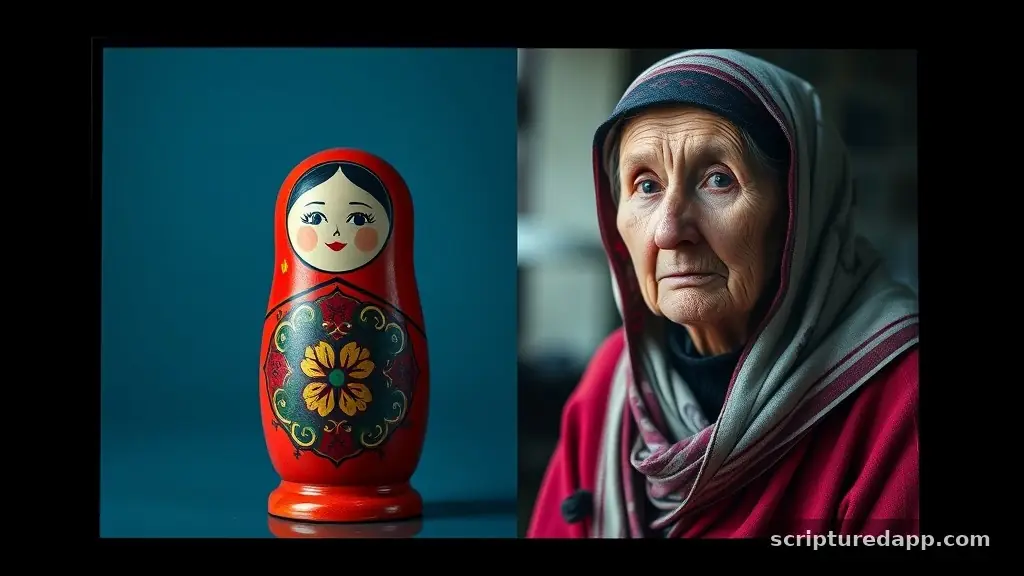
To clarify the distinctions between the actual Russian terms and the common misconceptions held by English speakers, the following table provides a breakdown of the correct terminology versus the popular, albeit incorrect, labels.
| Concept | Correct Russian Term | Common English Misconception |
|---|---|---|
| Grandmother | Babushka | Babushka |
| Headscarf | Platok / Kosynka | Babushka |
| Nesting Doll | Matryoshka | Babushka Doll |
| Aged Woman | Pozhilaya zhenshchina | Babushka |
The Role of the Babushka in Modern Families
Even as society modernizes, the role of the grandmother remains vital. In many families, the babushka acts as the primary link between the past and the future. She preserves the history of the family, often holding onto stories that would otherwise be lost to time.
Her address to the family—her advice, her warnings, and her blessings—is often treated with a level of seriousness that is rare in more individualistic cultures. This dynamic is not simply about being “old,” but about being the custodian of the family’s identity.
In urban areas, the dynamics may have changed, but the emotional core remains. Even if a grandmother does not live in the same apartment as her grandchildren, she is often the first person called for childcare or for help with cooking.
The examples of this intergenerational bond are visible in the way Russian families gather for major holidays, where the grandmother is typically at the head of the table, directing the flow of the meal and ensuring that traditions are upheld. The list of responsibilities she takes on is long, ranging from knitting sweaters to navigating the complexities of modern bureaucracy for her children and grandchildren.
Cultural Appropriation vs. Appreciation
The transition of the word into Western fashion raises interesting questions about cultural appropriation. Is it offensive to wear a headscarf and call it a “babushka”? Generally, most Russians do not find the fashion trend itself inherently offensive, but they may find the ignorance of the word’s true meaning to be tedious.
When the term is used to describe a fashion accessory, it strips the word of its human element. It reduces a woman’s life experience and her role in society to a piece of clothing.
However, many cultural exchanges involve the adoption of foreign terms into new contexts. The key lies in awareness. If someone is aware that they are using the term in a way that differs from its original Russian definition, the situation is one of linguistic borrowing.
The friction occurs when the user assumes that their Westernized definition is the correct one, effectively erasing the original cultural context. As with many words that migrate across borders, the time has come for a more nuanced understanding that respects the origin while acknowledging the reality of globalized language.
Addressing Topical Gaps: Is the Term Offensive?
A common question that arises in the list of inquiries regarding this term is whether it is offensive. To answer this, one must look at the intent and the audience. Within Russia, calling an elderly woman “babushka” is generally polite, though some women may prefer to be addressed by their name and patronymic, especially in professional or formal settings.
It is not an insult, but it is a label that marks age. In the wrong context, it can feel like a reminder of one’s invisibility as an older person.
Outside of Russia, the term is rarely offensive because the people using it are often unaware of the potential for it to be perceived as a label for an “old woman.” When used as a fashion term, it is usually harmless, though it may trigger a sense of cultural dissonance for native speakers. The concern regarding offensiveness usually stems from the fear that the term “babushka” is being used to stereotype or minimize the status of older women.
As long as the term is used with awareness of its roots as a term of endearment, it is generally benign. You can find more detailed linguistic resources on the Library of Congress website regarding Slavic cultural heritage.
The Importance of Context in Usage
Ultimately, the babushka meaning is entirely dependent on the context in which it is used. If you are in a village in Siberia, the word refers to a specific, cherished family member. If you are in a high-fashion boutique in Paris or New York, it refers to a trend.
The danger lies in the confusion between these two worlds. By understanding that the word is a kinship term first and a fashion descriptor second, we can avoid the pitfalls of cultural misinterpretation.
Language is a living thing, and it is natural for words to evolve as they travel. However, the preservation of the original meaning is essential for maintaining a connection to the culture from which the word emerged. When we use the term, we should be mindful of the “grandmother” at the heart of it.
We should see the person, not just the scarf or the doll. By acknowledging the depth of the word, we honor the tradition and the people who have carried it through centuries of history.
FAQ Section
Is babushka a term of endearment?
Yes, in its native Russian context, babushka is a term of endearment for a grandmother. It is used to convey warmth, respect, and familial affection, similar to how English speakers use “nana” or “granny” to refer to their own grandmothers with love.
Why do people say babushka when referring to a headscarf?
People often mistakenly call a headscarf a “babushka” because they have seen older Slavic women, who are grandmothers, wearing headscarves tied under their chins. This association led Western observers to label the garment itself with the name of the person wearing it, creating a persistent misnomer.
What is the male equivalent of babushka?
The male equivalent of babushka is “dedushka,” which translates to grandfather. Just as “babushka” is a term of endearment, “dedushka” is used to refer to one’s grandfather with the same level of respect and familial warmth found in the Russian family structure.
Is it offensive to use the word babushka in a fashion context?
It is generally not considered offensive, but it can be seen as ignorant or culturally insensitive if the speaker is unaware of the word’s true meaning. While the fashion trend is distinct, native speakers may find the misuse of their kinship term as a clothing label to be frustrating.
Meta Description: Discover the true babushka meaning. Learn about its Russian origins, why it is not a headscarf, and how to use this term of endearment correctly.