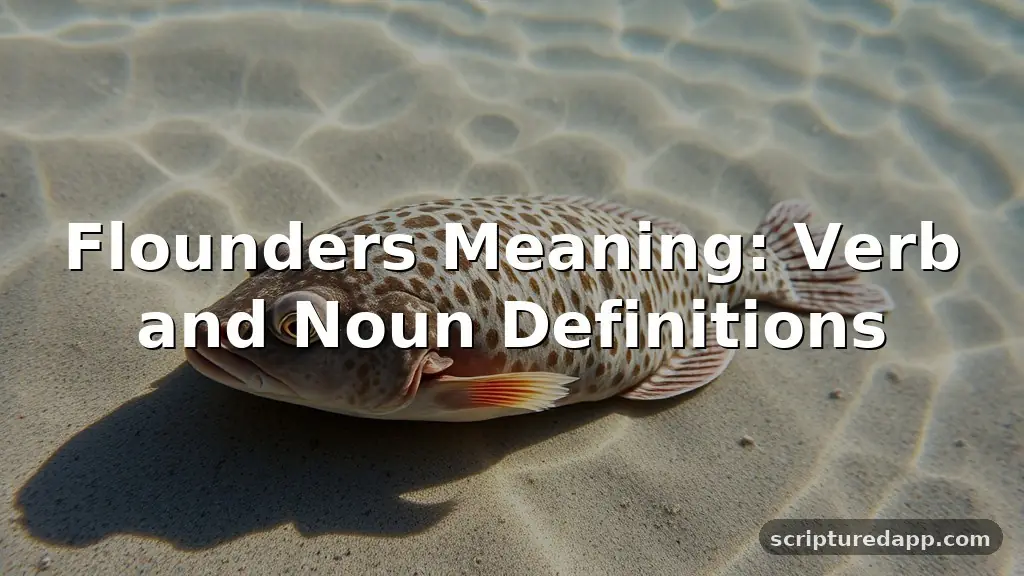

When someone asks about the flounders meaning, they are often caught between two very different worlds: the silent, sandy floor of the ocean and the frantic, messy reality of human failure. It is a word that carries a heavy, double-sided weight. You might hear it in a fishing report or a performance review, and the context changes everything.
At its core, the term serves as both a noun for a specific group of flatfish and a verb describing a state of clumsy, ineffective movement. Understanding how these definitions split and occasionally overlap is key to using the word with precision.
The Biological Reality of the Flounder
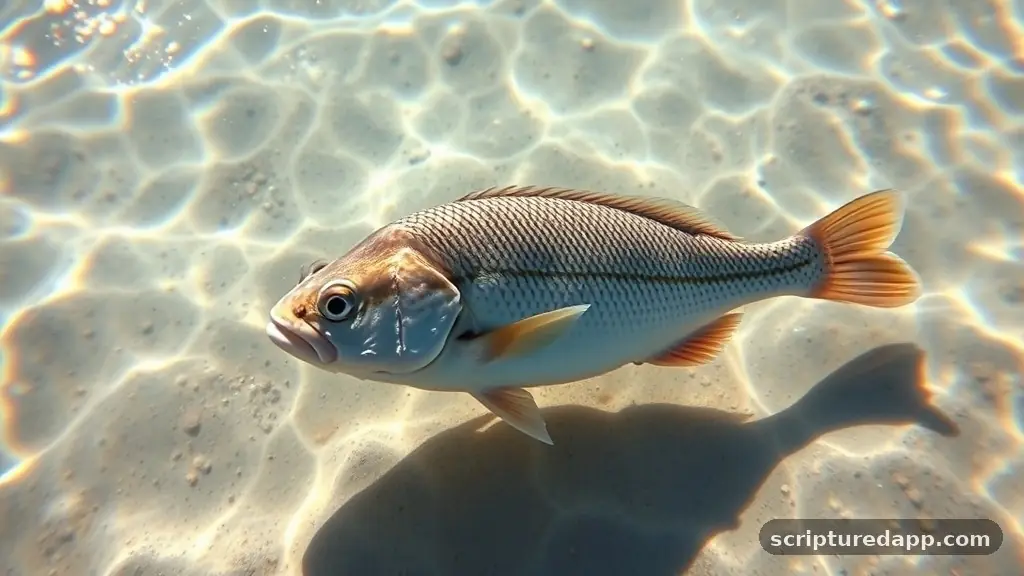
The noun form of the word refers to a diverse group of flatfish species, most notably the European flatfish and various Atlantic varieties. These creatures are masters of disguise. A flounder begins its life swimming upright like any other fish, but as it matures, one of its eyes migrates to the other side of its head.
This physiological shift allows the fish to lay flat against the seabed, burying itself in sediment to avoid predators and ambush prey. It is an evolutionary marvel, really. They are essentially specialized predators that have sacrificed traditional symmetry for the sake of survival in the benthic zone.
When you see a flounder in the wild, you are looking at an organism that has perfected the art of blending in. Their skin cells, known as chromatophores, adjust pigment to match the texture and color of the seafloor beneath them. This biological adaptation is why the word can sometimes imply a lack of distinctiveness.
If you are just another face in the crowd, you might be figuratively mimicking the way these fish hide in plain sight. However, the primary biological meaning remains firmly rooted in the ichthyological classification of these bottom-dwelling, asymmetrical fish.
The Verb: When Movement Becomes a Struggle
As a verb, the meaning shifts from biology to behavior. To flounder is to struggle mentally, physically, or financially with a task or situation. It implies a lack of grace.
Imagine someone trying to walk through deep, thick mud; they are moving, but they aren’t making much progress. Their legs flail, their balance is off, and they look entirely uncoordinated.
This is the essence of the word. It isn’t just about failing; it is about failing in a way that looks messy, disorganized, and often desperate.
In a business context, you might hear that a company is floundering. This doesn’t mean they are about to close their doors immediately, but it does suggest that their leadership is confused, their strategy is inconsistent, and they are essentially “thrashing about” trying to find a solution that works. They are losing momentum.
Unlike a deliberate pivot, which is a calculated change in direction, a period of floundering is marked by a lack of control. It is a state of reactive behavior rather than proactive leadership.
Commonly Confused Words: Founder vs. Flounder
One of the most frequent points of confusion for English speakers is the difference between founder and flounder. These are commonly confused words that often get swapped by mistake. While they share a similar phonetic quality, their meanings are distinct.
To founder is to sink, collapse, or fail completely. Think of a ship that hits an iceberg; it founders.
It goes down. If a project founders, it is effectively dead in the water.
Flounder, on the other hand, is about the struggle that leads up to a potential collapse. You might flounder for weeks before you actually founder. You can think of it like this: if you are in the water, you are floundering as you splash around trying to stay afloat.
If you stop moving and sink to the bottom, you have foundered. People often mix these up in writing because both words deal with themes of failure and instability, but the intensity of the outcome is the primary differentiator. If you are uncertain which one to use, ask yourself if the subject is still fighting or if the situation has reached its terminal point.
Linguistic Origins and Etymology
The history of the word is a bit of a linguistic puzzle. Most etymologists believe the noun (the fish) comes from the Old French word flondre, which likely has Germanic roots. It describes the flat shape of the animal.
Interestingly, the verb form is thought to be an alteration of the word “founder,” possibly influenced by “blunder.” This explains why the two words are so frequently linked in the minds of native speakers. It is a classic example of how language evolves through the collision of similar-sounding terms.
When you look at a dictionary entry for this word, you’ll notice the shift from the 16th century to today. Initially, the verb was used primarily to describe horses that were stumbling or struggling in mud. Over time, the usage expanded to include human behavior.
This evolution is a perfect snapshot of how our vocabulary shifts from physical descriptions of the natural world to abstract metaphors for human performance. We took a word that described a horse failing to find its footing and turned it into a way to describe an employee who cannot quite grasp a new software platform.
Synonyms and Nuanced Usage
Choosing the right word can change the entire tone of your writing. If you want to describe someone struggling without using the word flounder, you have a few options, but each carries a slightly different shade of meaning.
- Stumble: Suggests a momentary lapse in progress or a minor mistake.
- Thrash: Implies wild, energetic, but largely ineffective movement.
- Struggle: A broad term that can apply to any difficult effort.
- Blunder: Specifically points to a mistake caused by carelessness or stupidity.
- Languish: Suggests a slow, inactive state of failing rather than a frantic one.
Using “flounder” is specific because it captures the mix of high effort and low output. If you describe someone as “stumbling,” the reader assumes they will likely recover quickly.
If you say they are “floundering,” the reader senses a more prolonged, chaotic period of difficulty. It is a more evocative term than “failing” because it paints a picture of the person’s frantic attempts to regain their balance.
The Metaphorical Symbolism of the Fish
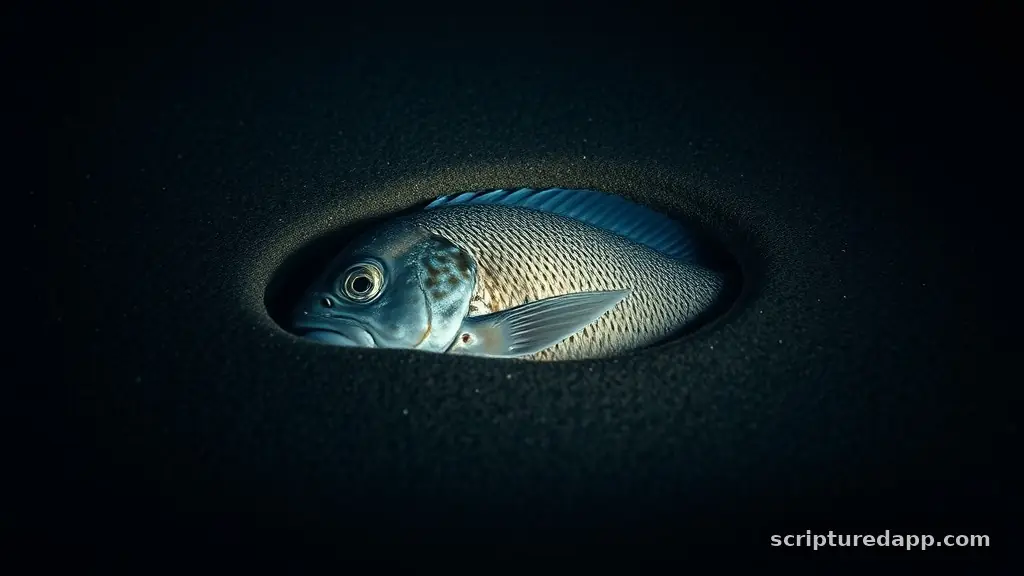
Beyond the dictionary definitions, the fish itself has taken on a symbolic life. In some cultures, the flat nature of the fish is seen as a symbol of humility or being “down to earth.” Because they live at the very bottom of the ocean, they are often associated with the hidden, unspoken parts of the psyche.
They represent the things we bury in the sand of our subconscious. If you are writing creatively, using the imagery of a flounder can suggest a character who is hiding their true nature, lying in wait for the right moment to strike.
This is a stark contrast to the verb form, which is almost always negative. One suggests patient, strategic concealment, while the other suggests panicked, aimless effort. It is rare to see both meanings play against each other in literature, but when they do, it creates a powerful irony.
A character might be “floundering” in their social life while being as still and calculating as a “flounder” in their professional life. This duality is something you should keep in mind if you are looking to add layers to your prose.
Topical Gaps: Addressing the Nuances
Most discussions about this term stop at the basic definition of “to fail.” However, there is a specific, often ignored nuance regarding the difference between “floundering” and “failing.” If you fail, you have reached an end state.
You didn’t reach the goal. Floundering is a process.
It is the middle ground between the start of an endeavor and the final result. In professional environments, identifying that someone is “floundering” is a diagnostic tool—it implies that they are still within the “save zone” where intervention can still turn things around.
Another gap in common knowledge is the usage of the word in navigation. Sailors sometimes talk about a vessel “floundering” in shallow water, which is a distinct usage from the standard dictionary definition of struggling. It implies that the boat is losing its ability to navigate effectively because the water is too thin.
This is a technical usage that bridges the gap between the animal (which lives in shallow water) and the verb (which implies a loss of control). It is a rare, context-specific application that highlights the deep history of the term in maritime English.
Comparison of Terms
To help clarify the differences between these related concepts, the following table breaks down how they function in different contexts.
| Term | Primary Context | Core Meaning | Tone |
|---|---|---|---|
| Flounder (Noun) | Biology | A type of flatfish | Neutral/Scientific |
| Flounder (Verb) | Performance | To move or act clumsily | Negative/Concerned |
| Founder (Verb) | Failure | To sink or collapse | Terminal/Serious |
| Blunder (Verb) | Behavior | To make a foolish error | Judgmental |
Looking at this data, you can see that the choice of word significantly influences the reader’s perception of the situation. If you tell a manager that a project is “floundering,” you are asking for help. If you tell them it has “foundered,” you are delivering a post-mortem report.
The Importance of Context in Vocabulary
Language is rarely static. The way you use “floundering” depends entirely on your audience. In a casual conversation, saying you are “floundering” at your new job sounds honest and relatable.
In a formal cover letter, it might sound like a lack of confidence. You need to be careful with words that carry such strong emotional weight. The word implies a lack of competence, and that is a difficult label to shake off once it is attached to your work or reputation.
When you are checking a dictionary entry, you will see that the word is often categorized as a verb of motion. Yet, in the real world, it is almost exclusively used to describe mental or logistical states.
It is a metaphorical extension that has become so common we barely notice it. Always consider if your usage is leaning into the physical, muddy origins of the word or if you are using it to describe a complex, abstract struggle.
Developing Your Writing Style
If you want to use this word effectively, try to pair it with specific details. Instead of saying “the team was floundering,” try “the team was floundering under the weight of conflicting deadlines and unclear priorities.” The extra detail explains why the struggle is happening.
It turns a vague accusation into a clear, actionable observation. This is the hallmark of a good writer—taking a common word and grounding it in reality.
Don’t be afraid of using the word, but don’t lean on it too heavily. Because it is a strong, descriptive term, it can lose its impact if it appears in every paragraph. Use it when you need to emphasize the struggle aspect of a situation.
If you just mean “failing,” use “failing.” If you just mean “confused,” use “confused.”
Save “floundering” for those moments when the chaos is palpable, when the person or entity is clearly trying but failing to find their footing. That is where the word does its best work.
FAQ
What does it mean when a person is described as floundering?
When a person is described as floundering, it means they are struggling to complete a task or navigate a situation. They are likely acting with confusion, lack of direction, or an inability to make progress, often appearing disorganized or desperate in their efforts to succeed.
Is there a difference between floundering and failing?
Yes, there is a distinct difference. Failing implies that a specific goal was not reached or that the process has ended. Floundering refers to the period of difficulty and unproductive struggle that occurs before a final outcome is reached. It is a process, not a final result.
Can you use the word flounder to describe a fish and a struggle in the same sentence?
You can, though it is usually for comedic or literary effect. For example, “The flounder continued to flounder in the shallow tide pool as the water receded.” This uses the noun form for the animal and the verb form to describe its physical struggle to stay wet.
Why do people confuse flounder and founder?
They are commonly confused words because they share a similar sound and both relate to states of instability or failure. However, they are not synonyms. To flounder is to struggle, while to founder is to sink, collapse, or reach a point of total failure.
Meta Description: Discover the true flounders meaning. Learn the difference between the flatfish noun and the verb describing a struggle, plus tips on usage.