
The rpm meaning is shorthand for revolutions per minute. It serves as a standard unit of measurement for rotational speed or the frequency of a repeating event occurring within a sixty-second window. Whether you’re looking at a car dashboard, a centrifuge in a laboratory, or the spinning platter of a legacy hard drive, the concept remains consistent: it measures how many times a full circle is completed in that specific timeframe.
While most people instinctively link this term to automotive performance, its application spans across mechanical engineering, data storage technology, and even specialized fitness programs. Understanding how this metric functions helps you interpret the operational limits of the machines you interact with daily.
The Mechanics of Rotational Velocity
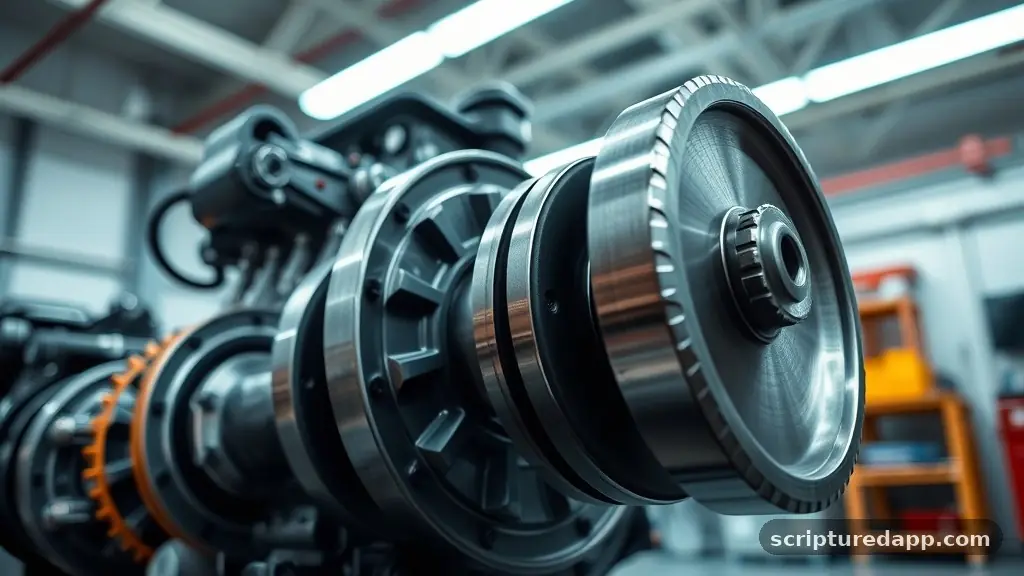
At its core, the rpm meaning relates to the physics of rotational motion. When an object rotates around a fixed axis, we define its speed not by how far it travels in a straight line, but by how many complete cycles it finishes over time. Think of a bicycle wheel.
If you spin it and it makes one full turn in a second, that would be 60 revolutions per minute. This measurement is crucial because it allows engineers to predict the centrifugal forces acting on a component. As speed increases, the stress on materials grows exponentially, which is why industrial equipment often has strict operating ceilings.
In mechanical systems, this unit helps us manage output efficiency. If a motor spins too slowly, it might not generate enough torque to perform its intended task. Conversely, if it spins too fast, the internal friction can lead to premature wear or catastrophic failure.
By maintaining a specific count, systems can stay within a “sweet spot” where they operate smoothly without wasting energy or damaging their internal parts. It’s a balancing act that relies on precise calibration, often managed by sensors that report back to a controller.
RPM Meaning in the Context of Internal Combustion Engines
When you see a tachometer in a vehicle, it’s displaying the engine speed in thousands of revolutions. The rpm car metric tells you how fast the crankshaft is spinning. Inside the engine, pistons move up and down, turning the crankshaft in a rhythmic cycle.
Every time a cylinder completes its four-stroke process—intake, compression, combustion, and exhaust—the crankshaft rotates. The tachometer captures this data and presents it to the driver, offering a window into how hard the engine is working at any given moment.
Most modern passenger cars operate within a range of roughly 700 to 6,000 revolutions. At idle, the engine stays at the lower end of this spectrum, often between 600 and 1,000, just enough to keep the alternator charging and the oil pump circulating fluid. When you press the accelerator, you’re signaling the throttle to open wider, allowing more air and fuel into the cylinders.
This creates more energy per cycle, forcing the crankshaft to spin faster. Drivers often watch this gauge to determine the optimal time to shift gears in a manual transmission, ensuring the engine stays in the power band where it produces the most efficient output.
Topical Gaps: Beyond the Tachometer
Most discussions about this topic focus exclusively on cars, but there are significant nuances regarding how this metric is applied in other technical fields. One often overlooked area is the role of rpm in hard disk drives (HDDs). In computing, the platter speed directly correlates to latency.
A drive spinning at 7,200 revolutions per minute can access data significantly faster than one spinning at 5,400. This is a critical distinction for server administrators who need to balance performance against heat generation and power consumption.
Another nuance involves the measurement of “events” rather than physical rotations. In some medical or industrial monitoring contexts, the term is used to describe the frequency of cyclic events that aren’t necessarily circular. For example, a heart rate could technically be measured in this way, though we typically use beats per minute (BPM) for biological systems.
Recognizing that the rpm meaning is fundamentally about frequency allows for a broader application of the term. Engineers use this for everything from cooling fan speeds in computers to the rotation of a washing machine drum during a spin cycle, where the goal is to extract water through centrifugal force.
Comparing Operational Ranges
Different machines require vastly different rotational speeds to function effectively. A high-performance engine for a race car might redline at 10,000 or more, while a massive ship engine might only turn at a few hundred. Below is a comparison of typical ranges found in common machinery.
| Application | Typical Range (RPM) | Primary Purpose |
|---|---|---|
| Car Engine (Idle) | 600 – 1,000 | Stability and Oil Pressure |
| Hard Disk Drive (Desktop) | 7,200 | Data Access Speed |
| Electric Drill (High Speed) | 2,000 – 3,000 | Boring and Fastening |
| Industrial Centrifuge | 10,000 – 30,000 | Separation of Materials |
How Engines Manage Stress and Heat
High speeds are not always better. When an engine spins at the upper limit of its range, it encounters significant stress. Friction between metal parts increases, generating intense heat.
If the cooling system cannot dissipate this heat fast enough, the metal can warp, or the oil film that protects the bearings might break down. This is why manufacturers set a “redline” on the tachometer. It serves as a safety barrier to prevent the engine from destroying itself.
Advanced engine management systems help mitigate this risk by adjusting fuel injection and ignition timing. They monitor the current state of the engine and make micro-adjustments every millisecond.
If the system detects that the engine is approaching a dangerous threshold, it might cut power or limit the throttle opening. This is a special feature of modern electronic engine control units (ECUs), which prioritize longevity while still allowing the driver to get the performance they need for passing or merging.
The Role of RPM in Efficiency and Fuel Economy

Driving habits heavily influence fuel consumption, and the tachometer is your best tool for tracking this. Generally, keeping the engine at a lower speed is more fuel-efficient because it reduces the number of combustion events per mile.
When the engine spins faster, it consumes more fuel to keep up with the increased cycle rate. This is why highway driving is typically more efficient than city driving; you can maintain speed while the engine stays in a lower, more comfortable range.
However, there’s a limit to this logic. If you “lug” the engine—meaning you keep it at too low a speed while under a heavy load, like driving uphill in too high a gear—the engine has to work much harder to maintain its momentum. This can cause vibrations and potential internal damage.
Finding the balance is key. Most drivers find that keeping the engine in the lower-to-mid range of its power band provides the best mix of responsiveness and economy.
You can find more detailed information on engine efficiency at the official U.S. Department of Energy fuel economy site.
RPM in Professional and Industrial Settings
In a professional workshop, the rpm meaning dictates the choice of tools. If you’re using a drill press to bore through hard steel, you need a slow speed to prevent the bit from overheating and losing its temper.
If you’re using a router for woodworking, you need high speeds to achieve a clean, smooth cut. Using the wrong setting can ruin the material or, worse, cause the tool to kick back, creating a safety hazard for the operator.
This is why industrial machinery often comes with variable speed drives (VSDs). These controllers allow the operator to fine-tune the speed of the motor to match the specific task.
It’s a level of precision that wasn’t possible decades ago. By adjusting the frequency of the electrical current supplied to the motor, operators can achieve exact rotational speeds, ensuring that the machine performs at its peak without unnecessary wear on the bearings or the cutting edges of the tooling.
The Psychology of RPM in Fitness
You might have encountered this term in a gym environment, specifically during indoor cycling classes. In this context, the rpm meaning is used to guide the intensity of the workout.
Instructors will often shout out “keep your cadence up” or “aim for 80 revolutions per minute.” This is essentially a way to standardize the effort across a room full of people with different fitness levels.
By focusing on the number of pedal strokes, the cyclist is forced to maintain a consistent rhythm, which is better for cardiovascular health than erratic, high-resistance bursts. It also helps in tracking progress over time.
If you can maintain a higher cadence at the same resistance level, it’s a clear indicator that your endurance is improving. It turns a physical activity into a data-driven experience, allowing individuals to measure their performance against their own previous benchmarks.
Common Misconceptions and Technical Errors
One common mistake people make is assuming that a higher number on the tachometer always equates to more power. This isn’t necessarily true.
While horsepower is derived from torque multiplied by speed, an engine might reach its peak power at a specific point in the range and then drop off. Pushing it past that point just creates noise and heat without actually helping you go faster.
Another error is confusing speed with velocity. While they are related, they aren’t the same. Velocity implies a direction, whereas revolutions per minute is purely a measure of the rate of rotation.
People also frequently underestimate how much force is generated by high-speed rotating parts. A small balancing weight being off by just a few grams can cause massive vibrations at high speeds, which can tear a machine apart. This is why precision balancing is such a critical part of the manufacturing process for anything that spins.
The Future of Rotational Measurement
As we move toward electric vehicles and smarter industrial systems, the way we monitor rotation is changing. Electric motors don’t have the same mechanical limitations as internal combustion engines.
They can reach their maximum torque almost instantly and maintain high speeds with very little vibration. This changes the rpm meaning from a limiting factor to a performance variable that can be manipulated in real-time with software.
We are likely to see more “smart” systems that adjust their speed based on sensor input, not just from the engine, but from the environment. Imagine a car that monitors the road surface and adjusts the motor speed to optimize traction, or a factory robot that slows down when it detects a human worker nearby. The core concept of counting rotations will remain, but the way we interact with that data will become increasingly automated and integrated into the broader digital ecosystem.
FAQ
What does the redline on a car’s tachometer mean?
The redline marks the maximum safe operating speed for the engine. Crossing into this zone causes excessive heat and mechanical stress, which can lead to permanent damage. It is a protective limit set by the manufacturer to ensure the engine remains reliable over its expected lifespan.
Does a higher RPM always mean the car is faster?
Not necessarily. While increasing speed within the power band generates more power, engines have a peak efficiency point. Pushing past this point often results in diminishing returns, increased fuel consumption, and significant engine wear without providing a corresponding increase in actual vehicle speed or acceleration.
How does RPM affect the performance of a hard drive?
In traditional hard disk drives, higher counts allow the read/write heads to access data sectors more frequently. A 7,200-rpm drive can locate and retrieve information faster than a 5,400-rpm drive, which directly translates to quicker boot times and faster file loading for the computer user.
Why do fitness instructors focus on RPM during cycling?
Instructors use this metric to ensure participants maintain a consistent and effective cardiovascular pace. By tracking pedal rotations, riders can standardize their effort, improve their endurance, and measure their progress over time, making the workout more effective and data-driven compared to just riding by “feel” alone.
Meta Description: Discover the true rpm meaning. Learn how revolutions per minute impacts car engines, industrial machinery, data storage, and even your fitness goals.