
The leavening meaning revolves around the process of incorporating gas into a mixture to make it light, airy, and voluminous. Whether you are a home cook working on your first loaf of sourdough or a curious reader wondering why a recipe calls for specific chemicals, the term describes a fundamental transformation in culinary chemistry. At its core, the process relies on the expansion of gases—usually carbon dioxide—trapped within a matrix of proteins or starches.
Without this step, most of our favorite breads, cakes, and pastries would be dense, heavy, and frankly, quite difficult to chew. It is the invisible force that turns a flat, sad disc of flour and water into a towering, crusty loaf of artisanal bread.
The Biological Foundation of Leavening
When we talk about biological leavening, we are almost always talking about yeast. This single-celled fungus consumes sugars present in the flour and releases carbon dioxide and ethanol as byproducts. This is the oldest form of leavening known to human civilization.
When you mix flour, water, and yeast, you create a dough where the yeast begins to feed. As the yeast works, the carbon dioxide gas gets trapped inside the gluten network—the elastic protein structure formed when wheat flour meets water. This gas pressure causes the dough to expand, which is what we see when a loaf doubles in size during proofing.
Different strains of yeast act at different speeds. Commercial active dry yeast is bred for consistency and vigor, while wild yeast cultures—like those found in a sourdough starter—are more temperamental and complex. You’ll need to pay attention to your ambient temperature, as yeast is a living organism that thrives in warmth but can be killed by excessive heat.
If you’re looking for a formal definition of leavening, you will find it described as the process of causing dough or batter to rise. It is a slow, methodical dance between microbiology and physics.
Chemical Leavening Agents and Their Reactions
Chemical leavening agents offer a faster alternative to biological ones. Instead of waiting hours for yeast to produce gas, chemicals like baking powder and baking soda react almost instantly upon contact with moisture or heat. These are inorganic compounds that trigger a controlled chemical reaction.
Baking soda is essentially sodium bicarbonate; it is a base. For it to create gas, it requires an acidic ingredient in the recipe—such as buttermilk, lemon juice, or yogurt. When these two meet, they produce bubbles of carbon dioxide immediately.
Baking powder is a bit more sophisticated. It is a complete leavening agent because it contains both the base (baking soda) and the acid (usually cream of tartar or a similar salt) already mixed together. Most modern versions are double-acting, meaning they release some gas when they get wet and a second, larger burst of gas when they are exposed to the heat of the oven.
This ensures that your cake doesn’t collapse before the structure has had time to set. Understanding the difference between these two is the secret to moving from a novice baker to someone who actually understands the mechanics of their oven.
Mechanical Leavening: Creating Air Naturally
Sometimes, you don’t need a chemical or a fungus to do the heavy lifting. Mechanical leavening involves physically trapping air inside a mixture. Think about a classic sponge cake or a delicate soufflé.
The baker beats eggs—specifically the whites—until they form stiff, glossy peaks. This process creates a foam, which is essentially a massive network of tiny air bubbles protected by egg proteins. When this foam is folded into a batter, those millions of tiny bubbles serve as the leavening.
When you put that cake in the oven, the air inside those bubbles expands due to the heat. Because the batter is thick enough to hold the bubbles in place, the cake rises as the heat sets the structure. You can also achieve a form of mechanical leavening through lamination, which is the technique used in puff pastry or croissants.
By layering butter and dough, you create thin sheets of fat that trap steam during baking. As the water in the butter turns to steam, it forces the layers apart, creating those iconic, flaky sheets of pastry. It is a mechanical process that relies on water vapor rather than carbon dioxide.
The Role of Steam in Leavening
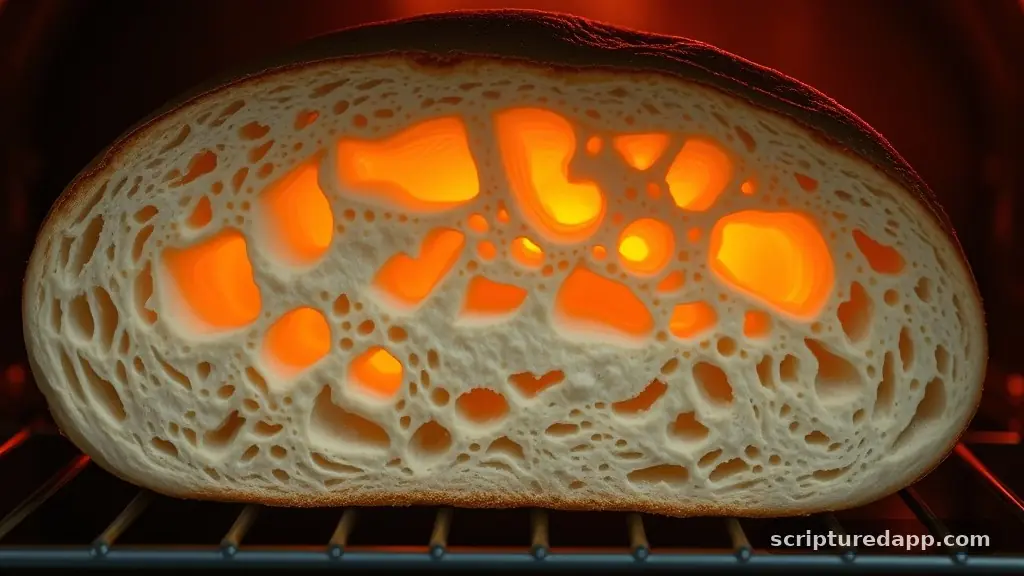
Steam is perhaps the most overlooked leavening agent in the kitchen. Every time you bake something with a high water content, steam is working to lift your product. This is critical in items like choux pastry, popovers, and even high-hydration bread crusts.
When the temperature of your oven hits the boiling point of water, the moisture within the dough or batter vaporizes. Because gas occupies significantly more volume than liquid, this rapid expansion pushes the dough upward.
You’ll need a hot oven to make this work effectively. If the oven isn’t hot enough, the steam will leak out before the structure of the item has had time to harden. This is why many bread recipes call for a blast of steam at the beginning of the bake, or why you might use a Dutch oven to trap the moisture released by the bread itself.
The steam keeps the crust soft, allowing the bread to expand fully before the heat creates a rigid, browned exterior. It is a fascinating intersection of thermodynamics and baking.
Comparing Leavening Methods
Choosing the right method depends entirely on the texture you want to achieve. Each method has specific strengths and limitations that you should consider before you start mixing your ingredients.
| Method | Mechanism | Primary Use | Speed |
|---|---|---|---|
| Biological | Yeast fermentation | Breads, pizza dough | Slow (hours) |
| Chemical | Acid-Base reaction | Cakes, cookies, muffins | Fast (minutes) |
| Mechanical | Air/Steam expansion | Soufflés, puff pastry | Immediate |
As shown in the table, the choice of agent dictates your timeline. You cannot replace yeast with baking powder in a loaf of bread and expect the same results. The biological process provides flavor development that chemical agents simply cannot replicate.
Yeast creates complex organic acids during its long rest, which contribute to the deep, tangy flavor profiles of artisanal sourdough. Chemical agents, by contrast, are neutral in flavor, which is exactly what you want when making a delicate vanilla sponge cake.
Topical Gaps: Nuances Often Ignored
One aspect of leavening meaning that is rarely discussed in casual tutorials is the role of altitude. At high altitudes, the air pressure is lower. This means that gas bubbles expand much more aggressively than they do at sea level.
If you follow a standard recipe for a cake at 5,000 feet, it might rise too quickly and then collapse before the center is set. This is a common source of frustration for mountain dwellers. The solution involves reducing the amount of leavening agent or increasing the flour content to provide more structural support.
Another nuance is the “shelf life” of leavening agents. People often assume that a tin of baking powder lasts forever, but it actually loses its potency over time. If you have a can that has been sitting in your pantry for two years, your muffins might come out as dense as hockey pucks.
You can test your powder by mixing a small amount with hot water; if it doesn’t fizz aggressively, it is time for a new container. These small, technical details are often the difference between success and failure in the kitchen.
The Etymology and Linguistic Evolution

The word “leaven” has deep roots. It comes from the Latin levare, which means “to raise.” This is the same root that gives us the word “levitate.”
It is a beautiful way to describe the process, as the bread literally defies gravity as it rises. Throughout history, the concept of leavening has been a metaphor for transformation. In many cultural and religious contexts, the presence or absence of leaven has carried significant weight, often symbolizing purity or the passage of time.
In modern English, we use the term in a variety of ways. We might say a serious conversation was “leavened” by a bit of humor, meaning the humor lightened the mood. This usage mirrors the culinary process: just as a small amount of yeast lightens a heavy mass of dough, a small amount of wit can lighten a heavy situation.
Understanding the etymology helps clarify why the word has such staying power in our language. It isn’t just about baking; it’s about the act of making something heavy into something light.
Common Mistakes in Leavening
Even experienced cooks run into trouble with leavening. A common error is over-mixing. If you mix your batter too vigorously after adding the leavening agent, you will pop all the air bubbles you worked so hard to create.
This is especially true with cakes. You want to fold ingredients gently to maintain the structure.
Another issue is improper temperature. Using water that is too hot for yeast will kill it instantly, while using water that is too cold will cause the yeast to remain dormant, leading to a long, frustrating wait for a rise that never happens.
You should also watch out for “dead” yeast. If your yeast is old or has been stored in a warm, humid environment, it might not be viable. Always bloom your yeast in warm water with a pinch of sugar first.
If you don’t see foam forming within ten minutes, don’t use it. Starting a baking project with inactive yeast is a waste of ingredients and time. Paying attention to these small, actionable steps will drastically improve your consistency in the kitchen.
The Intersection of Texture and Taste
Texture is arguably the most important element of a baked good, and it is entirely dependent on the leavening method. A dense, chewy bagel requires a very different approach than a light, airy angel food cake.
The size and distribution of the gas bubbles determine the final “crumb” of your bread. A large, open crumb—often called an “open structure”—is highly prized in sourdough bread because it indicates a long, healthy fermentation and careful handling of the dough.
By contrast, a cake needs a fine, uniform crumb. This is achieved by using chemical leaveners and ensuring the ingredients are well-emulsified. The fat in the cake coats the flour particles, which helps prevent the gluten from forming long, tough strands.
This keeps the cake tender. When you understand the leavening meaning in this context, you stop seeing recipes as a list of rules and start seeing them as a set of variables you can manipulate. You can adjust the amount of air or the speed of the rise to get exactly the texture you prefer.
Future Trends in Leavening Technology
While the basics of yeast and chemical reactions remain the same, modern food science is looking at new ways to manipulate structure. There is a growing interest in using alternative proteins and hydrocolloids to stabilize air bubbles more effectively. This is particularly important in the world of gluten-free baking.
Without the elastic network of gluten, trapping gas is incredibly difficult. Researchers are experimenting with various gums and plant-based proteins to mimic the performance of wheat, allowing for gluten-free breads that actually have a decent rise.
These innovations are making it possible for people with dietary restrictions to enjoy high-quality baked goods that were previously impossible to produce at home. It’s an exciting time to be interested in the science of food.
As we learn more about the microscopic interactions during the baking process, we can refine our techniques and get better results in our own kitchens. The core concept of leavening remains a cornerstone of human nutrition, and it continues to evolve alongside our technology.
Frequently Asked Questions
What is the simplest way to test if my baking powder is still active?
To test baking powder, stir half a teaspoon into a small cup of hot water. If it creates a vigorous, immediate fizzing reaction, it is still potent. If the reaction is weak or non-existent, the leavening agent has expired and should be replaced for best results.
Why does my bread collapse after it rises?
Bread often collapses if it is over-proofed, meaning the yeast has consumed all the available sugar and the gluten structure has become too weak to hold the gas. It can also happen if the oven temperature is too low, preventing the structure from setting before the bubbles burst.
Can I substitute baking soda for baking powder?
You cannot substitute them directly because they work differently. Baking soda is a base and needs an acid, whereas baking powder is a complete system. If you use baking soda without an acid, your food will taste metallic and won’t rise properly.
Does altitude really affect how my cakes rise?
Yes, altitude has a significant impact. At higher elevations, the air pressure is lower, allowing gases to expand much faster. This can cause cakes to rise too quickly and collapse. Bakers at high altitudes often need to decrease leavening agents and increase oven temperatures.
The process of leavening is a beautiful blend of art and science that defines the quality of our daily bread. By understanding how yeast, chemical agents, and mechanical forces work together, you can take control of your baking and achieve consistent, professional results.
Whether you are working with a simple dough or a complex pastry, the principles remain the same. Keep experimenting, keep observing, and you will eventually master the variables that make for a perfect rise every single time.
Meta Description: Discover the leavening meaning and how biological, chemical, and mechanical agents transform dough into light, airy, and delicious baked goods.