

As an Amazon Associate I earn from qualifying purchases. If you buy through links in this article, we may earn a commission at no extra cost to you.
These are the 10 best drones under the hundred-dollar line with the longest flight time, ranked honestly. Flight time is the spec this class loves to stretch, so we ranked by the manufacturer’s per-battery figure first, then by how many batteries the kit includes. Be clear-eyed before you start: this is toy-class endurance, where 20 minutes on one battery is a headline result and most flights last closer to 10.
Short on time?
Start with these three picks
The longest single battery, the strongest brushless folder, and the little coder that still out-flies most toys.
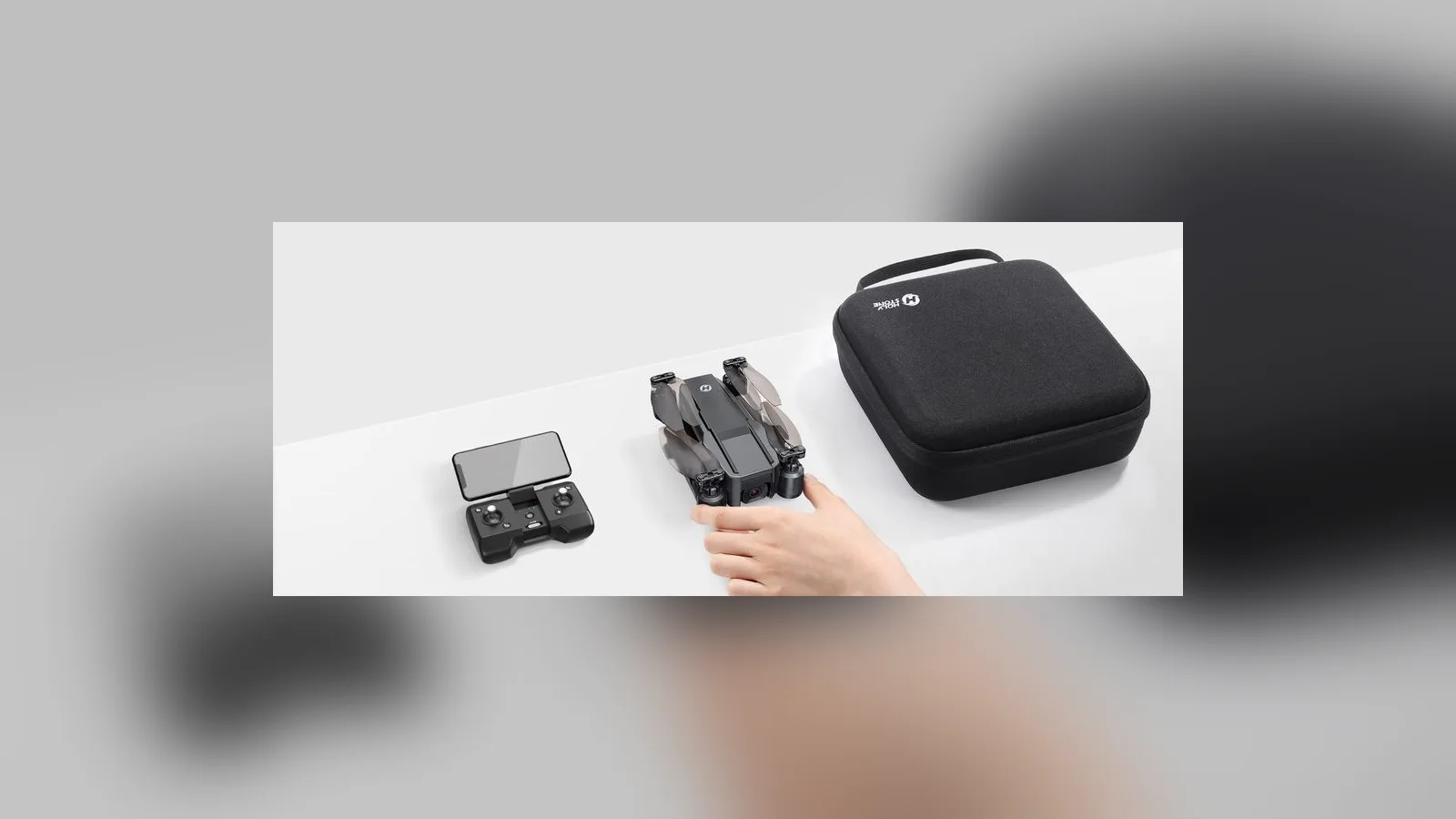
Holy Stone HS440
The endurance champion of this class: a foldable 1080p camera drone rated at 20 minutes per battery, with two batteries in the box for around 40 minutes of session time. Add a tilting camera and a carry case, and it is the easiest recommendation here.
View on Amazon Read the full review ↓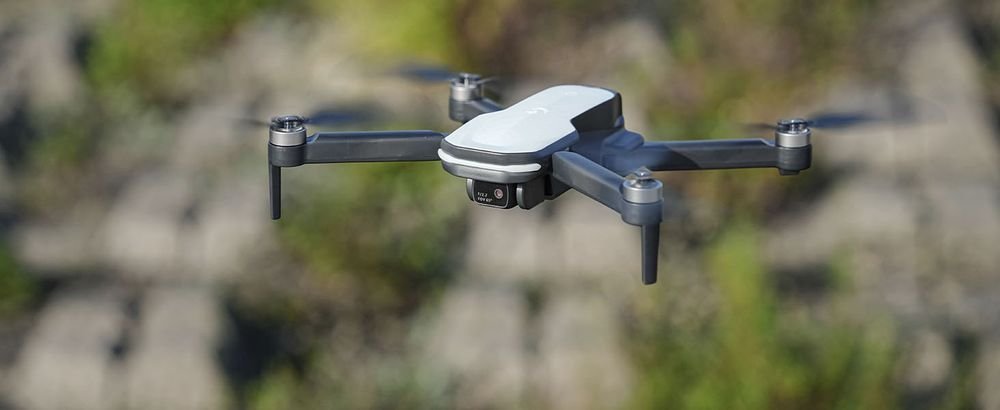
Holy Stone HS280D
The tough one: brushless motors, optical flow positioning and a rated 14 minutes per battery, with two batteries for about 28 minutes a session. It folds, shoots 1080p and weighs just 164 g, so it travels as easily as it flies.
View on Amazon Read the full review ↓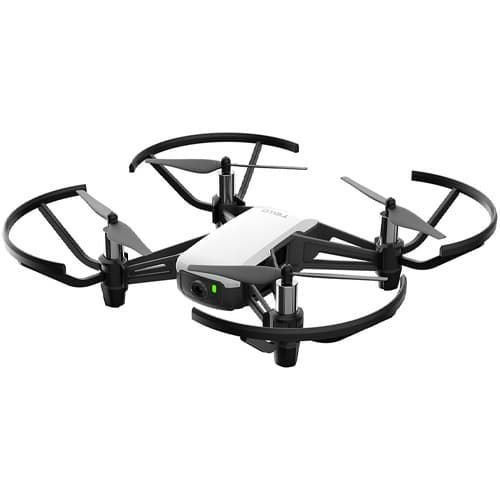
Ryze Tello
The smart toy: DJI flight technology in an 80 g frame, a rated 13 minutes per battery, 720p video and Scratch block coding that turns flight time into programming lessons. It flies with a stability nothing else at this level matches.
View on Amazon Read the full review ↓The shortlist
Compare all 10 at a glance
Read the two time columns the way pilots do: minutes per battery is the flight you get, batteries in the box is the session you get.
| Product / award | Best fit | Key decision point | Check current offer |
|---|---|---|---|
| 01. Holy Stone HS440Best overall | Anyone who wants the longest flights this budget allows | 20 minutes per battery, the best figure in this class | View on Amazon |
| 02. Holy Stone HS280DBest brushless pick | Outdoor learners who fly in light wind | Brushless motors plus 14 minutes per battery | View on Amazon |
| 03. Ryze TelloBest for coding and learning | Students, coders and careful first-time pilots | 13 minutes with DJI-grade stability and coding support | View on Amazon |
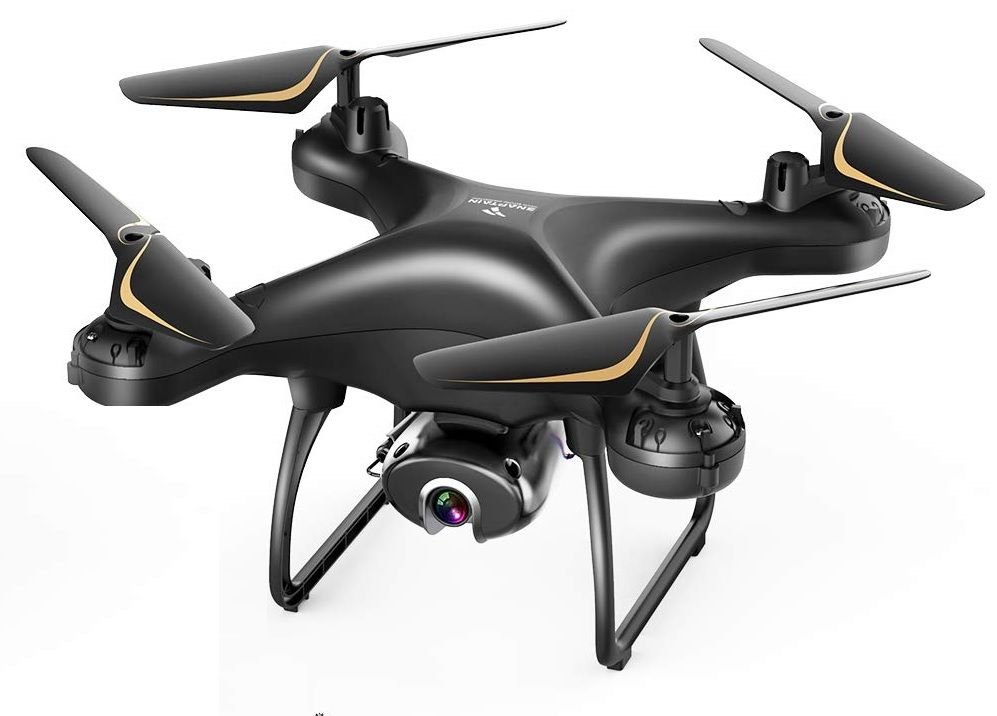 04. SNAPTAIN SP650Best two-battery session | Beginners who want longer sessions and a bigger frame | 12 minutes per battery, two batteries, 1080p camera | View on Amazon |
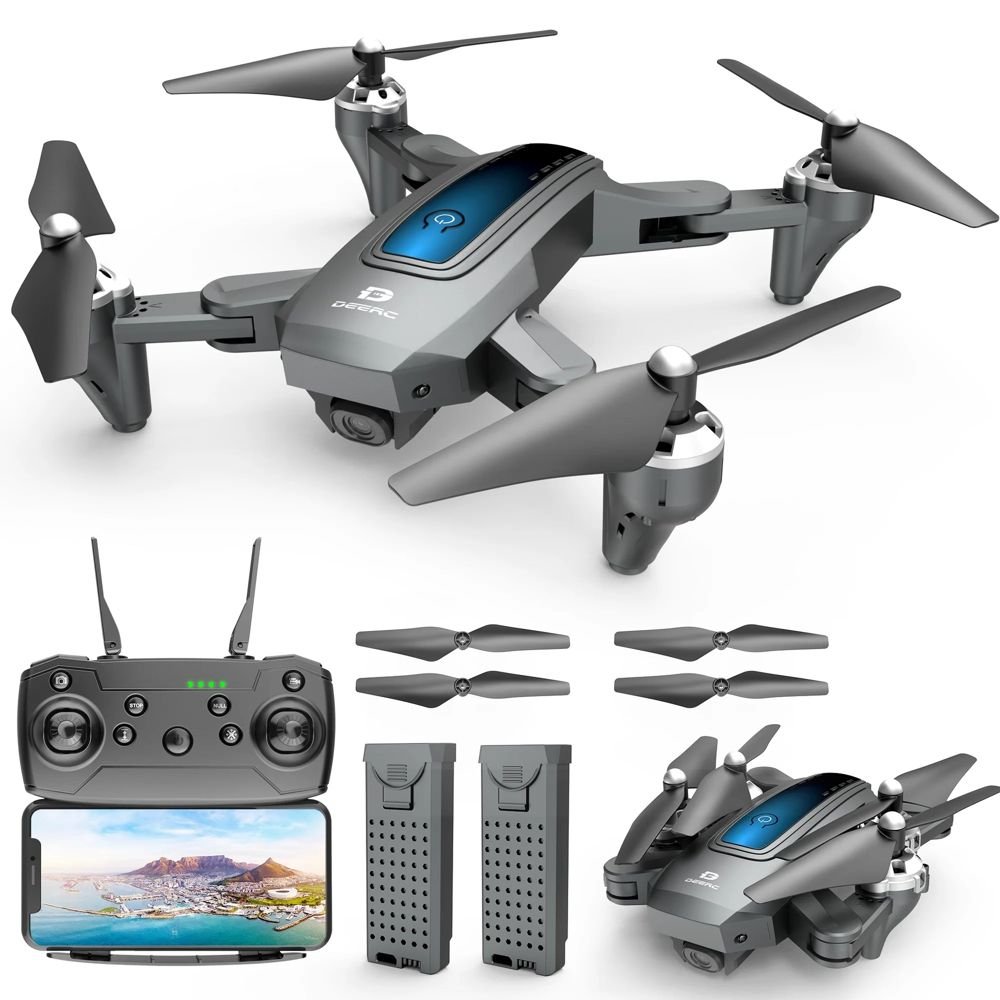 05. DEERC D10Best folding all-rounder | Adults and teens wanting a folder with a decent camera | 12 minutes per battery and 2K still photos | View on Amazon |
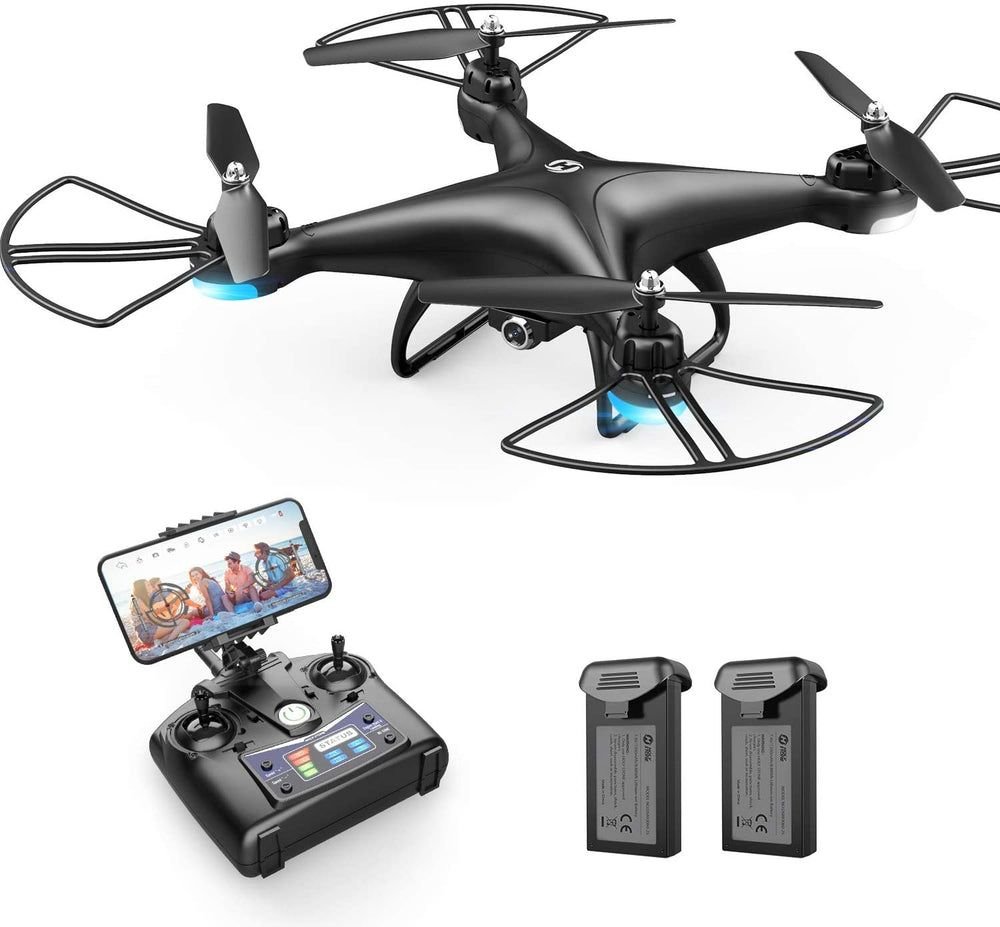 06. Holy Stone HS110DBest first FPV feed | Beginners who want a live phone view on a budget | 10 minutes per battery with a 1080p live feed | View on Amazon |
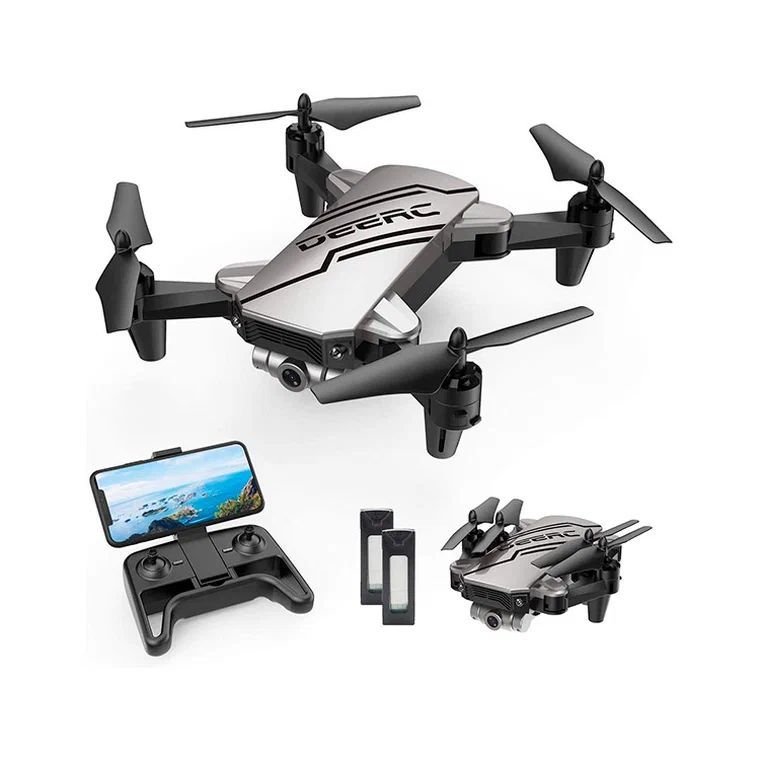 07. DEERC D20Best for young beginners | Kids and families starting out together | 10 minutes per battery in a tough 69 g folder | View on Amazon |
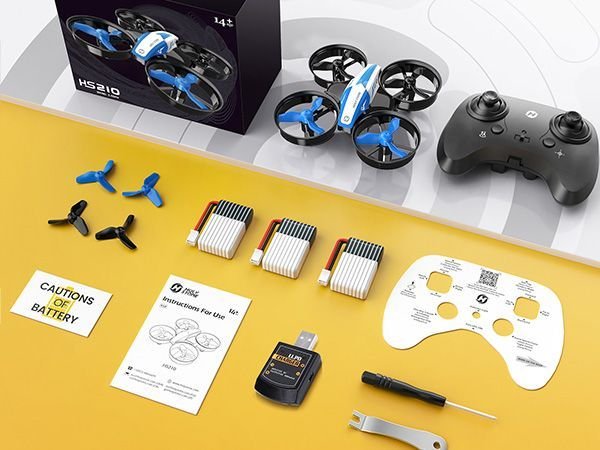 08. Holy Stone HS210Best indoor trainer | Indoor practice and stunt flying at home | Three batteries turn 7-minute flights into 21-minute sessions | View on Amazon |
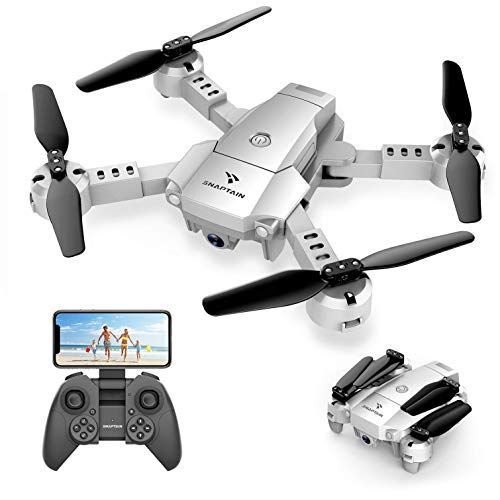 09. SNAPTAIN A10Best pocket folder | Casual flyers who want a camera mini in a coat pocket | 7 minutes per battery from a 61 g folding mini | View on Amazon |
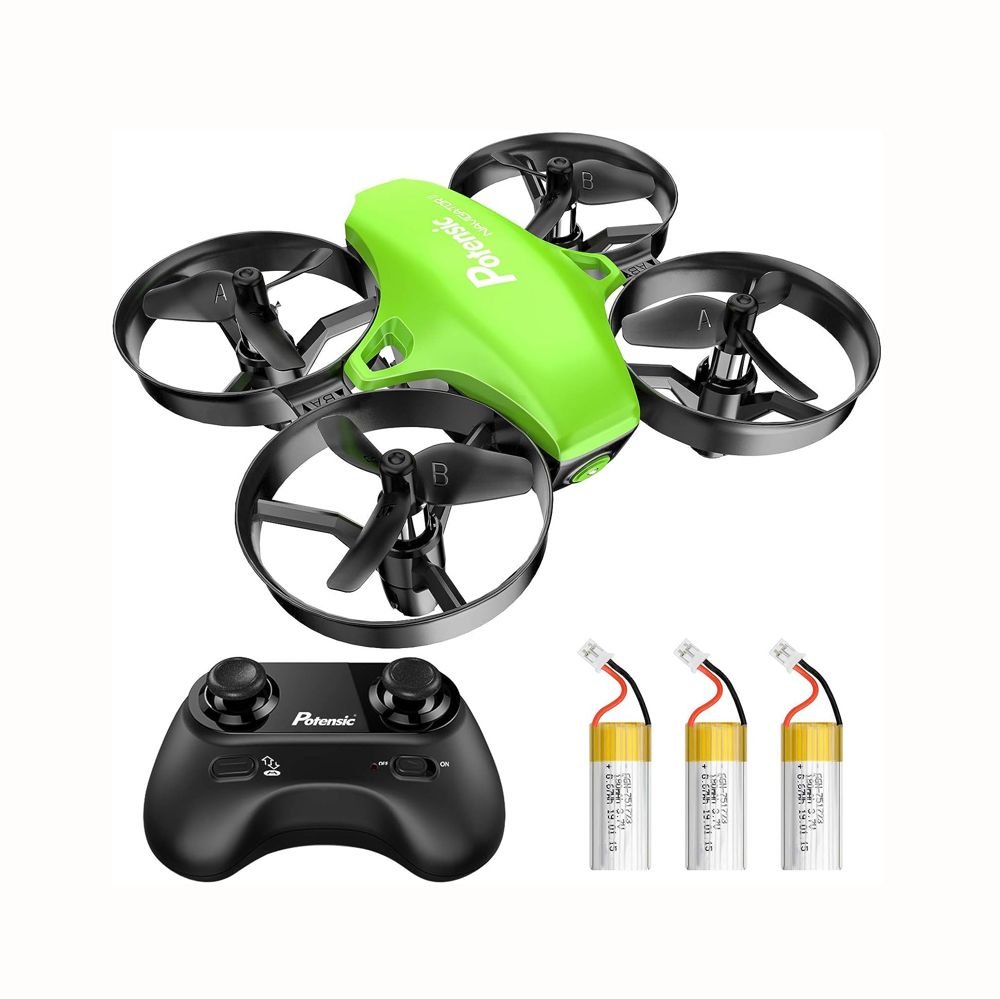 10. Potensic A20Best palm-size nano | Youngest pilots and desk-to-garden indoor fun | Three batteries stretch a 25.8 g nano to about 18 minutes | View on Amazon |
Look closer
Our 10 picks, explained
These picks come from desk research, not hands-on testing: we compared manufacturer spec sheets and manuals for rated flight time and battery counts, then cross-checked owner feedback and published reviews to see which ratings hold up outside the lab.
Holy Stone HS440
Most drones at this level treat 10 minutes as a good result, so the HS440’s rated 20 minutes per battery stands out immediately. Holy Stone pairs that battery with the features learners actually use: altitude hold, headless mode, one-key takeoff and landing, and a camera that tilts from the transmitter so framing does not mean repositioning the whole drone. It folds into a carry case with two batteries, which makes the real session about 40 minutes with a short swap in the middle. Judged on the question this page asks, though, longest flight time, it is the clear number one.
- Flight time
- 20 min per battery
- Session time
- About 40 min with 2 batteries
- Camera
- 1080p, tilts from the remote
Reasons to choose it
- Longest per-battery flight time here
- Two batteries and a carry case included
- Folding body, beginner-friendly modes
Trade-offs to know
- No GPS, so it drifts in wind
- Video is 1080p, not 4K
Choose this if: flight time is your first priority and you still want a real camera.
Consider another option if: you want brushless motors for breezy yards, the HS280D is the tougher build.
Holy Stone HS280D
The HS280D reads like a checklist of what budget drones usually skip. Its official spec sheet rates 14 minutes per 1300 mAh battery in still air, and the standard bundle carries two, so sessions run about 28 minutes. Brushless motors give it steadier outdoor manners than its toy-class rivals, and optical flow positioning plus altitude hold keeps the hover calm while you learn. The camera records 1080p with a remote-tilting lens. At 164 g it stays registration-light in most places. The honest limits are range, about 100 meters, and the lack of GPS, but for flight time with real outdoor ability, only the HS440 sits above it.
- Flight time
- 14 min per battery
- Session time
- About 28 min with 2 batteries
- Camera
- 1080p, remote tilt, 164 g all-up
Reasons to choose it
- Brushless motors, rare at this level
- Optical flow hover assist
- Two batteries included
Trade-offs to know
- About 100 m of range
- No GPS return to home
Choose this if: you fly outdoors and want endurance with stronger motors.
Consider another option if: you want the absolute longest single flight, the HS440 rates 20 minutes per battery.
Ryze Tello
Ryze built the Tello with DJI flight tech and an Intel vision chip, and years later it still hovers better than budget drones with bigger batteries. The rated flight time is 13 minutes from its 1100 mAh pack, the camera shoots 720p video and 5MP stills, and electronic stabilization keeps clips watchable. What no rival here offers is the classroom side: Scratch block coding, plus Python for older students, turns each flight into a programming exercise. Two honest catches: the price sits near the very top of this band and moves around, so check the current listing, and one battery in the box means 13 minutes is your session unless you add spares.
- Flight time
- 13 min per battery
- Camera
- 720p video, 5MP stills
- Weight
- 80 g with full propeller guards
Reasons to choose it
- Hover stability nothing else here matches
- Scratch and Python coding support
- Throw-and-go launch, fully guarded props
Trade-offs to know
- One battery in the box
- Price hugs the top of the band
Choose this if: you value stable flight and learning features over raw minutes.
Consider another option if: you want more minutes per session instead, the SNAPTAIN SP650 ships two batteries for about 24 minutes.
SNAPTAIN SP650
The SP650 sits at the large end of this class, and the size pays off in the air. SNAPTAIN rates each modular 1000 mAh battery at about 12 minutes, and with two in the box you fly roughly 24 minutes per session, swapping once. The camera records 1080p through a 120-degree lens, and the feature list covers the beginner bases: altitude hold, headless mode, one-key return, trajectory flight, voice and gesture control and 3D flips. At 125 g it feels steadier outdoors than the mini folders, though there is still no GPS, so the return button is a helper, not a guarantee. For sustained practice time at this budget, it is a strong formula.
- Flight time
- 12 min per battery
- Session time
- About 24 min with 2 batteries
- Camera
- 1080p, 120-degree lens, 125 g frame
Reasons to choose it
- Two batteries, about 24 minutes per session
- Bigger frame feels steadier outdoors
- Gesture, voice and trajectory modes
Trade-offs to know
- Slow two-hour battery charging
- No GPS positioning
Choose this if: you want longer practice sessions from a bigger, steadier toy.
Consider another option if: you want to fold it into a pocket, the SNAPTAIN A10 is the mini version of the idea.
DEERC D10
DEERC aims the D10 at grown-up beginners, and the spec sheet backs that up. Each 1000 mAh battery is rated at 12 minutes, the pair stretches sessions toward half an hour with a swap, and the folding frame packs down to pocket size between flights. The camera records 1080p video and takes 2048 x 1152 stills, respectable output for this band, and the app adds tap-fly routes, gesture control and gravity steering. Range reaches about 100 meters, altitude hold keeps things calm, and the sub-250 g weight keeps paperwork light. As an all-round balance of minutes, camera and packability, little else at this level does more.
- Flight time
- 12 min per battery
- Session time
- About 24 to 30 min with 2 batteries
- Camera
- 1080p video, 2K stills, folding 164 g body
Reasons to choose it
- Folds small, flies 12 minutes a pack
- Sharper stills than most rivals
- Tap-fly and gesture controls
Trade-offs to know
- No GPS, manual return home
- Video tops out at 1080p
Choose this if: you want a folding drone that feels grown-up and still flies long.
Consider another option if: you are buying for a younger pilot, the guarded DEERC D20 is the friendlier starter.
Holy Stone HS110D
The HS110D has introduced a generation of pilots to FPV on a budget, and its recipe still works. The camera streams a live 1080p feed to the app while recording, so you frame shots instead of guessing, and the rated 10 minutes per battery matches what owners report in calm conditions. Altitude hold, headless mode and one-key takeoff cover the basics, while gravity-sensor steering and gesture selfies keep younger pilots entertained. None of that stops it being the right first live-view drone for many buyers, especially when flight time per charge matches drones that cost more.
- Flight time
- 10 min per battery
- Camera
- 1080p with live app view
- Controls
- Remote, app, gravity and voice modes
Reasons to choose it
- Live phone FPV at a starter price
- Honest 10-minute flights
- Simple, proven beginner design
Trade-offs to know
- Fixed frame does not fold
- Short Wi-Fi video range
Choose this if: watching the live camera feed matters more than folding small.
Consider another option if: you want a folder with longer flights, the DEERC D10 adds both.
DEERC D20
The D20 is built around a simple truth: a first drone should be light, guarded and forgiving. At 69 g it bounces where heavier drones break, the folding arms tuck it into a pocket, and DEERC rates each 500 mAh battery at 10 minutes, with two in the box for 20-minute sessions. The 720p camera is enough for garden videos and first proud uploads, and the control set is pitched exactly right: one-key takeoff, altitude hold, headless mode and flips on demand. Range is a modest 40 meters, which parents tend to file under features rather than flaws. As the drone a young beginner learns orientation on, its combination of minutes and toughness is hard to beat.
- Flight time
- 10 min per battery
- Session time
- About 20 min with 2 batteries
- Camera
- 720p, folding 69 g body
Reasons to choose it
- Featherweight and crash-tolerant
- Two batteries included
- Controls pitched perfectly at beginners
Trade-offs to know
- Short 40 m range
- 720p camera only
Choose this if: a child or total beginner is the pilot.
Consider another option if: the pilot is an adult who wants more camera, the DEERC D10 is the step up in the same family.
Holy Stone HS210
Judge the HS210 by the session, not the single flight. Holy Stone ships it with three small batteries, each good for around 7 minutes, so a practice session runs about 21 minutes with two quick swaps, longer than several drones above it manage on one charge cycle. The drone itself is a tiny stunt trainer: full propeller guards, altitude hold, headless mode, 3D flips and a high-speed rotation mode, all in a palm-size frame built for living rooms and halls. There is no camera, which is the honest trade here. For learning stick control indoors through winter, its total minutes and toughness make it a smarter buy than its per-battery figure suggests.
- Flight time
- About 7 min per battery
- Session time
- About 21 min with 3 batteries
- Camera
- None, dedicated stunt trainer
Reasons to choose it
- Three batteries, long total sessions
- Fully guarded for indoor flying
- Cheap packs charge quickly
Trade-offs to know
- No camera at all
- Short individual flights
Choose this if: you want maximum stick time indoors to build real skill.
Consider another option if: you need a camera on every flight, the SNAPTAIN A10 adds one in a similar mini size.
SNAPTAIN A10
The A10 sells convenience first. It folds to a pocketable block, weighs about 61 g, and still carries a 720p camera with a live phone view, voice and gesture control, circle fly and trajectory modes. The honest cost of that size is endurance: SNAPTAIN’s little 380 mAh batteries are good for about 7 minutes each, and two in the box make sessions of roughly 14 minutes. Control range is about 80 meters on the remote, less on the phone feed, and its light weight means calm days only. It flies often precisely because it is always with you.
- Flight time
- About 7 min per battery
- Session time
- About 14 min with 2 batteries
- Camera
- 720p, folding body of about 61 g
Reasons to choose it
- Folds truly pocket-small
- Camera plus live phone view
- Voice, gesture and circle-fly tricks
Trade-offs to know
- Shortest flights among the camera picks
- Calm weather only
Choose this if: portability beats endurance and you fly in short bursts.
Consider another option if: you want the same brand with real stamina, the SP650 doubles the battery and the minutes.
Potensic A20
The A20 is a true nano, a 25.8 g quad that fits in a child’s palm, with propeller guards on every corner and controls reduced to the essentials: one-key takeoff, altitude hold, headless mode and three speeds. Potensic’s manual rates each tiny 180 mAh battery at 5 to 6 minutes, which sounds like the weakest figure here, but the box includes three of them, so a session runs 15 to 18 minutes of hops around the house and garden. There is no camera on this version, range is a room-and-garden 10 to 15 meters, and outdoors belongs to dead-calm evenings only.
- Flight time
- 5 to 6 min per battery
- Session time
- Up to about 18 min with 3 batteries
- Weight
- 25.8 g, no camera on this version
Reasons to choose it
- Three batteries included
- Tiny, guarded and very forgiving
- Cheapest route to real stick skills
Trade-offs to know
- No camera
- Very short range and flights
Choose this if: the pilot is very young, or the flying is indoors and casual.
Consider another option if: you want a camera at this size, the SNAPTAIN A10 folds nearly as small and films 720p.
Buy with confidence
How to choose for flight time on a budget
Four checks that keep endurance claims honest in the hundred-dollar class.
01. Separate per-battery time from session time
A drone that flies 12 minutes and ships one battery gives you 12 minutes. A drone that flies 7 minutes and ships three batteries gives you about 21, with two 20-second swaps. For learning, session time usually matters more, because skills build across a whole outing. For filming one continuous scene, per-battery time wins. This list ranks per-battery first and always tells you the battery count.
02. Treat every rating as a still-air ceiling
Manufacturers measure flight time hovering in windless labs. Real flights with climbs, wind corrections and a working camera typically land 20 to 30 percent shorter. A rated 20 minutes is a genuine 14 to 16 in a park, and a rated 7 can be 5 with a breeze. Buy with that discount applied and you will not feel cheated.
03. Count charging time in the bargain
Cheap batteries often charge slowly through USB cables, and some drones here need 80 minutes or more per pack. A three-battery kit only delivers its long session if the packs start full. If you fly daily, a second charging cable or a multi-pack charger is worth more than any feature on the box.
04. Match endurance to the flying you will do
Indoor stunt practice eats short flights happily, the HS210 and A20 thrive there. Garden filming wants the longest single flight you can get, which is the HS440’s 20 minutes. Coding lessons want stability more than minutes, which is the Tello’s trade. Decide the job first, then let the flight-time table pick the drone.
Behind the recommendations
How we selected these products
This guide is built on desk research, not hands-on testing. We compared official manufacturer spec sheets and user manuals for rated flight time, battery capacity and batteries included, then cross-checked the shortlist against owner feedback and published reviews. Prices were checked against current US listings in October 2026 to confirm every pick sells under the hundred-dollar line, and specs were rechecked against the sources below at the same time.
- Flight time honesty: per-battery ratings taken from manuals and spec sheets, never from listing headlines, with kit totals calculated from the batteries actually in the box.
- Price band check: every pick verified at or under the band in current US listings during October 2026; the Tello sits at the top of the band and is flagged in its review.
- Real-world discount: we note where ratings are lab figures, because wind, temperature and camera use shorten every flight in this class.
Common questions
Before you buy
How long do drones in this class really fly?
Honestly, between 5 and 20 minutes per battery. The HS440’s rated 20 minutes is the ceiling of the class, most camera models cluster around 10 to 14, and the palm-size nanos manage 5 to 7. Expect real flights to run about a quarter shorter than the rating once wind, climbing and camera use get involved. That is why battery count matters: three short packs often beat one long one for total time outdoors.
Why do some listings claim 30 or 40 minutes for cheap drones?
Usually by adding every battery in the box together, or by quoting the biggest bundle on a page whose base version ships fewer packs. This guide always separates the two numbers: per-battery time is the flight, batteries included is the session, and both come from manuals rather than listing headlines.
Does a bigger battery always mean longer flights?
Not in this class. Flight time depends on battery capacity against the drone’s weight and motor efficiency, and oversized packs make small drones heavy and sluggish. The HS280D’s 1300 mAh battery returns 14 minutes because the airframe is light and brushless. What matters is the manufacturer’s rated time for the complete drone, which is the figure used throughout this list.
How can I make a budget drone fly longer per session?
Start fully charged, fly in calm weather, and swap batteries instead of running each one flat. Keep spare packs warm in a pocket in winter, land with a small reserve rather than forcing the last seconds, and rotate packs so they age evenly. The simplest upgrade is one more genuine battery: it adds more real flying than any accessory in this class.
Pick your minutes, then pick your drone
Start with the Holy Stone HS440 if one long flight matters most: its 20 minutes per battery leads this class outright. Choose the HS280D when you fly outdoors and want brushless strength with your minutes, and keep the Ryze Tello in mind when stability and coding matter more than the stopwatch. Whichever you pick, count the batteries in the box before you judge the flight time.
Sources and verification
Product specifications and claims in this guide were checked against the following sources, listed by name as a record of what was consulted.
- Holy Stone HS440, HS280D and HS110D official specifications and manuals (holystone.com)
- Ryze Tello official specifications (ryzedji.com) and DJI store listing information
- SNAPTAIN SP650 and A10 official manuals and product pages (snaptain.com)
- DEERC D10 and D20 official instruction manuals (deerc.com)
- Potensic A20 official user manual (potensic.com), prices cross-checked against current US listings in October 2026