

As an Amazon Associate I earn from qualifying purchases. If you buy through links in this article, we may earn a commission at no extra cost to you.
These are the 10 best flight time drones you can buy in 2026, ranked by one number: each manufacturer’s rated minutes per battery. The list runs from a 51 minute flagship down to sub-250 g folders that still clear 36 minutes, and every pick was checked against its official spec sheet. Ratings are lab figures, so we note hover times and extended-battery options where brands publish them, and flag where a bigger battery changes the weight class.
Short on time?
Start with these three picks
The longest-rated flagship, the dual-camera all-rounder, and the big-sensor traveller’s favourite.

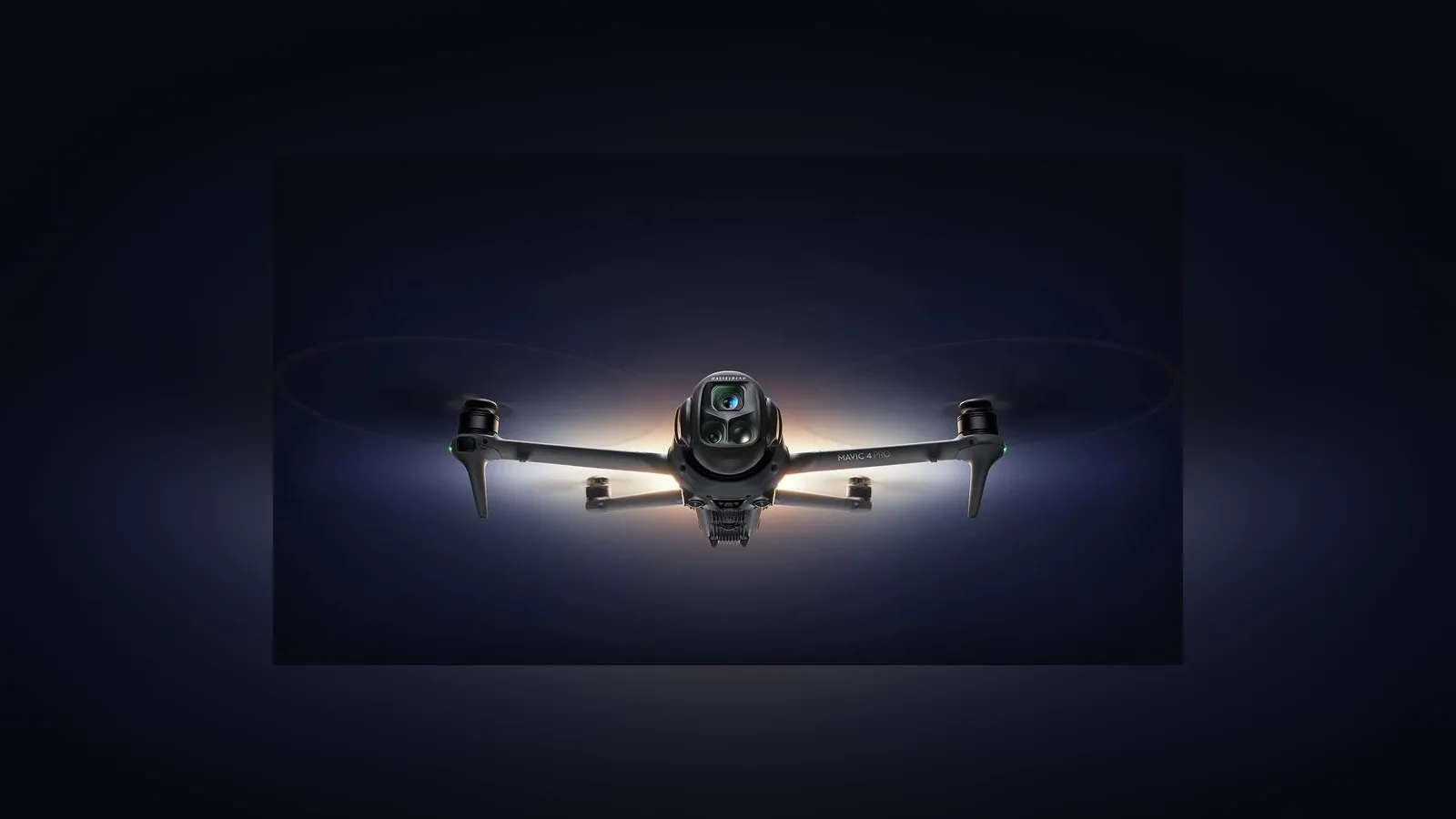
DJI Mavic 4 Pro
The endurance flagship: 51 rated minutes from a 95.2 Wh battery, a 100MP Hasselblad camera and a 360-degree gimbal. It is big, heavy and unapologetic about it, built for pilots who measure a shoot in hours, not minutes.
View on Amazon Read the full review ↓
DJI Air 3
Matches the Mavic 3 minute for minute at 46, but weighs 175 g less and carries two cameras: a 24mm wide and a 70mm medium telephoto. The endurance pick for creators who also want compression in their shots.
View on Amazon Read the full review ↓
DJI Mavic 3
The original 4/3 Hasselblad flagship still rates 46 minutes per battery, and maturity has made it the value route into big-sensor endurance. The telephoto is the weak 1/2-inch unit, best treated as a scout lens.
View on Amazon Read the full review ↓The shortlist
Compare all 10 at a glance
Ranked by rated minutes per standard battery. Where an extended battery exists, the table flags it, because it can change the drone’s legal weight class.
| Product / award | Best fit | Key decision point | Check current offer |
|---|---|---|---|
| 01. DJI Mavic 4 ProBest overall | Professional shoots that cannot pause for battery swaps | 51 min rated; the Plus-size battery and 1,063 g frame demand registration | View on Amazon |
| 02. DJI Air 3Best dual-camera endurance | Creators who want long flights and two focal lengths | 46 min rated; dual 1/1.3-inch cameras, no 4/3 sensor | View on Amazon |
| 03. DJI Mavic 3Best Hasselblad value | Photographers who want 4/3 quality and long flights for less | 46 min rated; superb main camera, modest telephoto | View on Amazon |
 04. DJI Air 3SBest 1-inch camera endurance | Low-light shooters who still need long legs | 45 min rated; 1-inch main sensor and LiDAR, 724 g | View on Amazon |
 05. DJI Mavic 3 ProBest telephoto endurance | Zoom-heavy photo and video work on long sorties | 43 min rated; triple camera, 958 g | View on Amazon |
 06. Potensic Atom 3Best sub-250 g endurance | Travellers who want long flights without registration weight | 40 min rated (50 extended); sub-250 g only with the standard battery | View on Amazon |
 07. Skyrover S1Best budget endurance | Budget buyers who refuse 30-minute flight times | 40 min max rated, 33 min hover; 245 g with a 2,560 mAh battery | View on Amazon |
 08. Autel EVO Lite+Best non-DJI endurance | Pilots who want flagship endurance outside the DJI ecosystem | 40 min rated; 1-inch 6K camera, 835 g | View on Amazon |
 09. DJI Mini 3Best lightweight endurance | Travellers who want long flights in the lightest class | 38 min rated (51 with Plus battery, which crosses 250 g) | View on Amazon |
 10. DJI Mini 5 ProBest camera per minute | Quality-first shooters who will use the Plus battery at home | 36 min rated standard; 52 min Plus battery crosses 250 g | View on Amazon |
Look closer
Our 10 picks, explained
These picks come from desk research, not hands-on testing: we compared manufacturer spec sheets line by line, then cross-checked owner feedback and published reviews to see which endurance claims hold up in real flying.
DJI Mavic 4 Pro
Endurance records usually come with camera compromises, but the Mavic 4 Pro refuses that trade. Its 4/3 CMOS Hasselblad sensor shoots 6K/60 HDR video and 100MP stills, the gimbal rotates a full 360 degrees for true vertical work, and the O4 link is rated to 30 km in FCC regions. The 51 minute figure comes from a large 95.2 Wh battery in a 1,063 g airframe, so this is a vehicle-based tool, not a pocket drone. Wind and aggressive flying will trim that number, yet even a discounted Mavic 4 Pro flight outlasts two flights from most rivals here. For mapping passes, long hyperlapses and one-take scouts, nothing else stays up as long per charge.
- Takeoff weight
- 1,063 g
- Flight time
- 51 min rated
- Camera
- 100MP 4/3 CMOS Hasselblad, 6K/60 HDR
Reasons to choose it
- Longest rated flight time on this list
- Flagship 100MP Hasselblad camera
- 360-degree rotating gimbal for vertical video
Trade-offs to know
- 1,063 g frame needs registration everywhere
- Too bulky for casual carry
Choose this if: endurance is the deciding factor and you shoot professionally.
Consider another option if: you want nearly the same stamina in a lighter, dual-camera package, the Air 3 gives up only five rated minutes.
DJI Air 3
The Air 3 is the endurance sweet spot in DJI’s line. Its 46 minute rating matches the Mavic 3 exactly, yet the airframe weighs 720 g and folds into a far friendlier travel shape. The dual camera system pairs a 24mm wide with a 70mm medium telephoto, both on 1/1.3-inch sensors shooting 4K/60 HDR, so one sortie mixes establishing shots with compressed parallax passes. Omnidirectional obstacle sensing and the O4 transmission system, rated to 20 km in FCC regions, make those long legs usable rather than theoretical. Real flights land short of 46 minutes in wind, but the margin over 30-minute class drones turns one battery into a full location scout, a sunset sequence and a spare pass for safety.
- Takeoff weight
- 720 g
- Flight time
- 46 min rated
- Camera
- Dual 1/1.3-inch CMOS, 24mm and 70mm, 4K/60 HDR
Reasons to choose it
- 46 minutes in a travel-friendly 720 g frame
- Two focal lengths on one gimbal
- Omnidirectional obstacle sensing
Trade-offs to know
- Sensors smaller than the Mavic flagships
- No variable aperture
Choose this if: you want flagship-level endurance with a telephoto for creative range.
Consider another option if: low light rules your shoots, the Air 3S swaps one rated minute for a 1-inch main sensor.
DJI Mavic 3
The Mavic 3 built its reputation on one pairing: a 4/3 CMOS Hasselblad camera with natural colour science, and a battery rated for 46 minutes. The wide camera shoots 5.1K/50 and DCI 4K/120, with an adjustable aperture for exposure control that smaller drones cannot match. The 1/2-inch telephoto is the honest weak point, fine for scouting compositions and compressed stills but softer than the Mavic 3 Pro’s dedicated medium tele. Omnidirectional sensing, a 15 km O3 link and a mature firmware history round out a package commercial pilots have trusted for years. If long flights are about returning with publishable stills, this remains the endurance value in the flagship class.
- Takeoff weight
- 895 g
- Flight time
- 46 min rated
- Camera
- 4/3 CMOS Hasselblad, 20MP, 5.1K/50
Reasons to choose it
- 46 minutes with a true 4/3 Hasselblad camera
- Adjustable aperture on the main camera
- Mature, proven platform
Trade-offs to know
- Telephoto camera is noticeably weaker
- O3 link, a generation behind O4
Choose this if: still photography and colour quality matter as much as minutes.
Consider another option if: you lean on telephoto video, the Mavic 3 Pro adds a proper medium tele for three fewer rated minutes.
DJI Air 3S
Endurance only matters if the footage at the end of the flight is worth keeping, and that is the Air 3S argument. Its 1-inch 50MP main camera gathers far more light than the Air 3’s smaller sensor, holding detail in the dawn and dusk windows when long flights pay off most. The 70mm medium telephoto stays for compressed shots, and a forward-facing LiDAR joins omnidirectional vision sensing, which means obstacle detection keeps working in light too dim for cameras alone. Real flights in coastal wind land closer to the mid-30s, but that still covers a full scout, a hero sequence and a return with margin on one battery.
- Takeoff weight
- 724 g
- Flight time
- 45 min rated
- Camera
- 1-inch CMOS 50MP wide, 70mm medium tele
Reasons to choose it
- 1-inch main sensor for dawn and dusk work
- LiDAR sensing that works in low light
- 45 minutes in a 724 g travel frame
Trade-offs to know
- One rated minute behind the cheaper Air 3
- Telephoto sensor stays 1/1.3-inch
Choose this if: you shoot at the edges of the day and need the flight time to wait for light.
Consider another option if: your budget is tighter and light is plentiful, the Air 3 matches the endurance formula for less.
DJI Mavic 3 Pro
Most long-endurance drones carry one camera and ask you to fly closer for detail. The Mavic 3 Pro inverts that: stay back, zoom in, and let the 43 minute battery cover the patience that telephoto work demands. The 4/3 Hasselblad wide handles establishing shots, the 1/1.3-inch 70mm medium tele is the best telephoto DJI has put on a folding drone, and the 166mm tele compresses landscapes and isolates subjects without a noisy approach. All three share one colour pipeline, so cuts match. At 958 g it is a deliberate professional tool with omnidirectional sensing and an O3+ link rated to 15 km. For property, events and nature work, its endurance is spent exactly where it counts.
- Takeoff weight
- 958 g
- Flight time
- 43 min rated
- Camera
- Triple: 4/3 Hasselblad wide, 70mm and 166mm tele
Reasons to choose it
- Three focal lengths, no lens changes
- 43 minutes for patient telephoto work
- Hasselblad colour across all cameras
Trade-offs to know
- 958 g, the second-heaviest pick here
- Long tele is stills-strong, video-softer
Choose this if: your work is built on zoom compression and distant subjects.
Consider another option if: you rarely zoom, the Mavic 3 keeps the Hasselblad and adds three rated minutes.
Potensic Atom 3
Potensic’s Atom 3 is where the endurance story jumps categories. It stays under 249 g in C0 configuration, yet the standard battery is rated for 40 minutes and the extended battery stretches the claim to 50, numbers no other sub-250 g drone on this list can match with a standard pack. The camera is serious too: a 1/1.3-inch CMOS shooting 4K/60 with HDR, plus a 48mm medium-tele mode for tighter framing. PixSync 5.0 is a tri-band link rated to 16 km with a 1080p/60 live view. Small drones in real wind return less than lab figures, and the extended battery deserves a weight check, but even discounted, this is endurance the Mini line cannot currently answer.
- Takeoff weight
- Under 249 g
- Flight time
- 40 min rated (50 min extended battery)
- Camera
- 1/1.3-inch CMOS, 4K/60 HDR
Reasons to choose it
- 40 minutes without leaving the sub-250 g class
- 1/1.3-inch sensor and 4K/60 HDR
- Tri-band link rated to 16 km
Trade-offs to know
- Extended battery figure needs a weight check
- Smaller support network than DJI
Choose this if: you want maximum minutes in a drone that skips registration in most places.
Consider another option if: brand support matters more than minutes, the Mini 3 is the proven lightweight alternative.
Skyrover S1
Skyrover publishes the two numbers most brands hide: a 40 minute maximum flight time and a 33 minute hovering figure from its 2,560 mAh battery. That honesty frames the S1 well, because even the hover rating beats the headline claims of many rivals. The rest of the package is stronger than the price suggests: a 1/2-inch Sony sensor behind an f/1.7 lens shooting 4K/60, true vertical 2.7K for social formats, and a dual-band link rated to 12 km with a 1080p/60 live view. At 245 g it sits in the lightest registration class in many countries. Wind eats those minutes faster than on heavier drones, and the brand’s support ecosystem is younger than DJI’s, but as pure minutes per purchase, little touches it.
- Takeoff weight
- 245 g
- Flight time
- 40 min rated max (33 min hover)
- Camera
- 1/2-inch Sony CMOS, f/1.7, 4K/60
Reasons to choose it
- 40 rated minutes at 245 g
- Publishes an honest hover figure too
- 4K/60 camera with true vertical mode
Trade-offs to know
- Light frame loses more time to wind
- Younger brand, thinner support network
Choose this if: you want the longest flights in this class without flagship money.
Consider another option if: you prefer a bigger brand behind the same minutes, the Atom 3 adds a larger sensor and tri-band link.
Autel EVO Lite+
Every endurance list needs an honest non-DJI option, and the EVO Lite+ is it. The 1-inch 20MP sensor shoots 6K/30 and 4K/60 through an adjustable f/2.8 to f/11 aperture. Autel rates the battery at 40 minutes maximum and 38 hovering, figures that hold up respectably in mixed flying thanks to the efficient 835 g airframe. What you trade away is ecosystem: fewer accessories, a smaller repair network and an app a step behind DJI Fly. What you gain is freedom from geofencing unlocks. For professionals flying authorised work in controlled airspace, that trade often makes sense.
- Takeoff weight
- 835 g
- Flight time
- 40 min rated
- Camera
- 1-inch CMOS, 6K/30, adjustable aperture
Reasons to choose it
- 1-inch sensor with 6K/30 and adjustable aperture
- 40 minute rating that holds up well
- No geofencing database
Trade-offs to know
- Thinner accessory and repair ecosystem
- Heavier than the Air series
Choose this if: you want flagship endurance and image quality without DJI’s ecosystem rules.
Consider another option if: app polish and accessories matter more, the Mavic 3 matches the big-sensor brief inside DJI.
DJI Mini 3
The Mini 3’s party trick is arithmetic: DJI squeezed a 38 minute standard battery into a 249 g drone, longer than the Mini 4 Pro flies, by leaving out omnidirectional obstacle sensing. For endurance-focused travellers that trade still makes sense, because the camera did not suffer: a 1/1.3-inch 48MP sensor shooting 4K HDR video, with a gimbal that rotates for true vertical clips. The Plus battery stretches the rating to 51 minutes, but it lifts takeoff weight past 250 g and changes the drone’s legal class in many countries, so treat it as a home-market option. Downward-only sensing means positioning discipline is on you. Neither flaw touches the core promise: more minutes per gram than any DJI before the Atom 3.
- Takeoff weight
- 249 g
- Flight time
- 38 min rated (51 min with Plus battery)
- Camera
- 1/1.3-inch CMOS, 48MP, 4K HDR
Reasons to choose it
- 38 minutes at exactly 249 g
- Plus battery option reaches 51 minutes
- True vertical shooting for social formats
Trade-offs to know
- No omnidirectional obstacle sensing
- Plus battery crosses the 250 g line
Choose this if: you fly DJI and want the longest standard-battery time in the Mini class.
Consider another option if: you want the same trick with a bigger sensor and newer link, the Mini 5 Pro trades two minutes for a 1-inch camera.
DJI Mini 5 Pro
The Mini 5 Pro is this list’s most interesting endurance story. Its standard battery is rated at 36 minutes, respectable but unremarkable, and at 249.9 g it only just holds the sub-250 g line. Fit the Intelligent Flight Battery Plus, though, and the rating jumps to 52 minutes, the highest number anywhere in this guide, at the cost of crossing into registration weight. Which battery defines the drone depends entirely on where you fly. The rest needs no caveats: a 1-inch 50MP sensor with 4K/120 slow motion, a rotating gimbal for true vertical video, omnidirectional sensing with forward LiDAR, and an O4+ link rated to 20 km. For home-market creators who can use the big battery freely, no sub-250 g alternative comes close to this mix of minutes and image quality.
- Takeoff weight
- 249.9 g with standard battery
- Flight time
- 36 min rated (52 min with Plus battery)
- Camera
- 1-inch CMOS, 50MP, 4K/120
Reasons to choose it
- Plus battery rating of 52 minutes leads this guide
- Best camera in the sub-250 g class
- Full sensing suite plus LiDAR
Trade-offs to know
- Standard battery is the shortest rated here
- Plus battery changes its legal class
Choose this if: image quality leads and the Plus battery is legal where you fly.
Consider another option if: you need the minutes without the weight asterisk, the Mini 3 flies 38 minutes on its standard pack.
Buy with confidence
How to choose a long-endurance drone
Minutes on a spec sheet are only the start. Four checks that decide how long you actually stay airborne.
01. Read the rating like an engineer
Rated flight time is a lab figure: no wind, steady gentle speed, sea level, mild temperature. Hover time, where published, is more honest, and Skyrover’s S1 shows why: 40 minutes maximum against 33 hovering. Budget a 25 to 35 percent discount for real conditions.
02. Count batteries, not just minutes
A 46 minute drone with one battery flies less in a day than a 34 minute drone with three. Bundles, charging hubs and car charging decide your daily total more than the per-battery record. Two or three standard batteries usually beat one extended pack, and keep the drone in its lightest legal class.
03. Watch what the big battery changes
Extended batteries are the quiet trap here. DJI’s Plus batteries push the Mini 3 and Mini 5 Pro past 250 g, and Potensic’s extended pack deserves the same scale check. Cross that line and registration rules change in many countries. If the sub-250 g class is why you bought the drone, the standard battery is your real figure.
04. Match endurance to the mission
Mapping, inspection and hyperlapses reward maximum minutes per battery: Mavic 4 Pro and Mavic 3 territory. Travel rewards light weight and quick launches, where the Atom 3 and Mini 3 shine. Chasing dawn and dusk light rewards sensor size more than minutes: the Air 3S argument. Buy the endurance profile you will actually spend.
Behind the recommendations
How we selected these products
This guide is built on desk research, not hands-on testing. We compared official spec sheets for every current drone with a credible endurance claim, ranked the shortlist by rated minutes per standard battery, then cross-checked the figures against owner feedback and published reviews. Specs were rechecked against the sources below in October 2026. Where a brand publishes both a maximum and a hover figure, we list both, because the gap between them is the honest part of the claim.
- Flight time: rated minutes per standard battery from manufacturer spec sheets, with hover figures and extended-battery ratings noted separately wherever the brand publishes them.
- Camera and weight: sensor size, video modes and takeoff weight compared like for like, since endurance bought with a weak camera or a registration-heavy frame is a different product.
- Limitations: we did not fly these drones for this guide. Lab ratings assume ideal conditions, so treat every figure as a ceiling and confirm the exact bundle and battery before buying.
Common questions
Before you buy
Why is my drone’s real flight time shorter than the rating?
The rating is a lab best case: still air, gentle constant speed, mild temperatures, flown until empty. Real flying adds wind, climbs, hovering, obstacle sensing and a landing reserve, which together remove a quarter to a third. Cold shortens lithium output further. A drone rated at 40 minutes delivering 28 to 32 in mixed use is behaving normally.
Is one long battery better than several standard ones?
For one continuous shot, yes: mapping passes, hyperlapses and one-take scouts reward the biggest single rating. For a day of shooting, usually no. Several standard batteries keep the drone in its lightest class, let you rotate charging, and survive one pack failing. Most pilots here are better served by two or three standard batteries.
Does the extended battery change my drone’s legal class?
It can. DJI’s Plus batteries lift the Mini 3 and Mini 5 Pro over 250 g, moving them into registration-required categories in many countries, including stricter EU class rules. The drone flies the same; the paperwork changes. Check your aviation authority’s rules for the weight you will fly at, not the weight on the box.
Which of these drones flies longest in wind?
Weight and motor authority decide it. The Mavic 4 Pro and Mavic 3 family hold position and pace best when it blows, with the smallest real-world discount. Sub-250 g drones like the Atom 3 and Mini 3 still deliver useful time in a breeze, but strong coastal wind can halve their practical endurance. At exposed locations, rank the heavier picks higher.
Choose the endurance profile that fits your flying
Start with the DJI Mavic 4 Pro if one battery must cover the whole job. Choose the Air 3 for nearly the same stamina in a lighter frame, or the Atom 3 for 40 rated minutes under 250 g. Budget real flight time a quarter below the rating.
Sources and verification
Product specifications and claims in this guide were checked against the following sources, listed by name as a record of what was consulted.
- DJI Mavic 4 Pro, Air 3, Air 3S, Mavic 3, Mavic 3 Pro, Mini 3 and Mini 5 Pro official specifications (dji.com)
- Potensic Atom 3 official specifications (potensic.com)
- Skyrover S1 official specifications (skyroverdrone.com)
- Autel EVO Lite+ official specifications (autelrobotics.com)
- Manufacturer user manuals for each shortlisted drone (DJI, Potensic, Skyrover, Autel Robotics)
- Published reviews and owner feedback for the shortlisted models, cross-checked in October 2026